Iran Sets Sweeping New Demands to Reopen the Strait of Hormuz After UAE Tanker Is Struck by a Missile
Iran demands U.S. concessions to reopen vital oil route after tanker attack

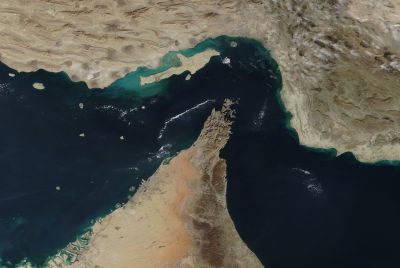
TEHRAN, Iran — Iran laid out a sweeping new list of conditions Saturday for reopening the Strait of Hormuz, hours after the United Arab Emirates said one of its oil tankers was targeted by a missile while transiting the strategic waterway, deepening a standoff that has disrupted global energy markets for months.
Mohammad Bagher Zolghadr, secretary of Iran's Supreme National Security Council, said in a statement carried by Iranian state media that the United States must lift its naval blockade of the strait, end sanctions against Iran, withdraw its military forces from the region, pay war reparations and release frozen Iranian assets before Tehran will allow the waterway to reopen. The council also demanded an end to U.S. attacks on Iran's regional allies and to threats against the Iranian government.
"Until America corrects its behavior, the Strait of Hormuz will not be reopened," Zolghadr's statement read. He added that the demands reflect what he called "the demands of the Iranian people, which they have loudly proclaimed during 160 days of steadfast presence in the field and in the streets."
The list of conditions was not independently verified by news organizations, and the White House did not immediately respond to a request for comment.
Tanker attack raises the stakes
The demands followed an attack on a vessel affiliated with Abu Dhabi's state-owned National Oil Company, or ADNOC, which was targeted by a missile earlier Saturday while moving through the strait. ADNOC said in a statement that the strike "resulted in no injuries, and the situation has been brought under control." The United Arab Emirates condemned the attack in a post on social media platform X, saying it "condemns in the strongest terms the targeting of an ADNOC-affiliated tanker while it was passing through the Strait of Hormuz."
Emirati authorities said Iran fired the missile as part of a broader campaign of attacks on commercial shipping, and ADNOC said more than a dozen of its vessels have been struck by missiles and drones while transiting the strait since the U.S. and Israel launched their war against Iran in February. The company said one crew member has been killed and 20 others wounded across those attacks. A separate vessel east of the Omani town of Khasab was also struck by a projectile Saturday, causing a fire that was extinguished, with the ship and its crew reported safe.
A fragile diplomatic track
The new demands complicate a diplomatic push that, as recently as this week, senior U.S. officials had described as close to producing a deal. Iran said separately Saturday that it was nearing an agreement with Oman on managing navigation through the strait. Iranian Foreign Minister Abbas Araghchi said the two nations, which both border the waterway, were close to settling on what he called the determination of a transit route, under which inbound traffic would move through Iranian waters and outbound traffic through Omani waters.
Oman said discussions with Iran were continuing in "a positive and constructive atmosphere," and it condemned attacks on ships in the strait. But Iranian officials were careful to separate any Iran-Oman navigation arrangement from the broader question of when the strait might return to normal international traffic. Zolghadr insisted that would not happen without American concessions on the war itself.
U.S. Vice President JD Vance, in an interview with Fox News on Saturday, said Iran and its Gulf neighbors — particularly Oman — have been discussing measures to ensure safer shipping through the strait, including a traffic scheme, demining efforts and a commitment from Iran not to fire on commercial vessels. "We don't trust. We verify," Vance said, adding that the U.S. would judge Iran by its actions rather than its statements.
Iranian state media floats restrictive draft plan
Complicating matters further, Iranian state media published a draft plan this past week that would bar U.S. and Israeli vessels from the strait entirely and block other nations Iran considers hostile from transiting until compensation is paid. That proposal remains under review by Iran's parliament, according to the state outlet Fars.
Economic fallout continues
The strait, an open and untolled international waterway before the U.S.-Iran war began on Feb. 28, has been a flashpoint for a global energy shock that has pushed up gasoline prices, worsened inflation and stoked concern over strained oil reserves. Ship traffic through Hormuz fell 33% on Friday compared with the previous day, with most vessels rerouting through Iranian waters, according to trade intelligence firm Kpler.
Oil prices rose Friday as traders awaited an agreement the Trump administration had suggested was imminent. Brent crude, the international benchmark, gained more than 1% to close at $83.55 a barrel, while U.S. West Texas Intermediate rose about 1% to settle at $78.18 a barrel. Even with Friday's gains, prices fell more than 7% for the week amid uncertainty over the negotiations.
Treasury Secretary Scott Bessent had told reporters earlier in the week that a deal to reopen Hormuz with freedom of movement could come within days, a timeline echoed by President Donald Trump and Secretary of State Marco Rubio. No such agreement had been finalized as of Saturday.
Weeks of escalation
The current standoff follows a volatile stretch in the conflict. A brief pause in fighting after a June 17 memorandum of understanding between Washington and Tehran gave way to weeks of renewed attacks and counterattacks. On Thursday, Iran's parliament speaker and chief negotiator, Mohammad Bagher Ghalibaf, accused Trump of staging what he called "theater diplomacy," writing on X: "'Massive attack coming ... wait, never mind, they want to negotiate.' That's theater diplomacy on loop."
That jab came days after Trump called off planned strikes and said the outlines of a deal had already been settled with Tehran — a claim Iranian officials rejected, saying no such talks were underway.
The conflict has also widened beyond the Iran-U.S. standoff. Elsewhere in the region Saturday, Yemen's military launched an attack on the country's Iran-backed Houthi rebels, and Turkey's parliament approved a Kurdish peace bill, underscoring how the instability triggered by the Hormuz standoff continues to ripple across the broader Middle East.
© Copyright 2026 IBTimes AU. All rights reserved.
- Recommended For You