US Justice Department Formally Joins Musk's Legal Fight Against EU's €120 Million Fine on Platform X
The Justice Department says Brussels exceeded its authority, while EU officials defend the Digital Services Act enforcement action against the social media platform.
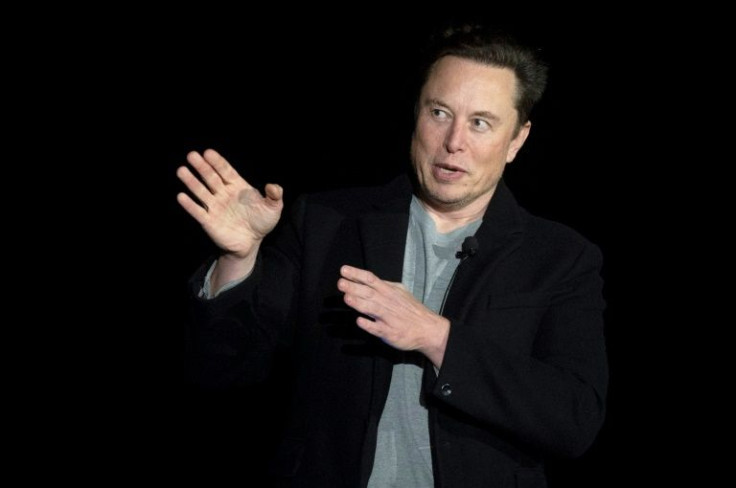
WASHINGTON — The United States government said Thursday it has formally sought to join a legal challenge filed by Elon Musk seeking to overturn a €120 million fine the European Union imposed on his social media platform X, escalating a transatlantic dispute over how far European regulators can reach into American technology companies.
The U.S. Department of Justice filed an application with the European Union's General Court supporting X's effort to annul the penalty, according to Reuters. Assistant Attorney General Brett Shumate of the Justice Department's civil division explained the government's position in a statement. "The European Commission inappropriately attempted to expand its regulatory authority to reach American companies not present or operating within its jurisdiction," Shumate said.
The European Commission fined X €120 million, or approximately $136.51 million, on December 5, 2025, marking the first non-compliance penalty issued against a very large online platform under the bloc's Digital Services Act. Following a two-year investigation, EU regulators identified three separate violations: X's paid blue-checkmark verification system, which the Commission said misled users by suggesting meaningful identity verification without actually confirming who controlled an account; a lack of transparency around the platform's advertising practices; and restrictions preventing outside researchers from accessing public data on the platform. X filed its formal appeal against the fine on February 16, 2026, with Musk and associated entities named in the filing alongside the company itself.
Thursday's filing marks the first instance of the U.S. government seeking to intervene in a legal challenge to a Digital Services Act enforcement action before the General Court, a step that legal observers have said represents an early test of how aggressively the law can be applied to companies operating primarily outside the European Union. The Justice and State Departments coordinated the application, according to reporting on the filing, a detail that some observers have said signals the Trump administration views the case as a matter of foreign relations and economic sovereignty rather than simply a favor extended to Musk individually. The EU's General Court must first determine whether the United States has a sufficient legal interest to intervene before Washington would be permitted to present its jurisdictional and corporate-law arguments directly within the litigation.
The dispute has drawn sharp public criticism from senior Trump administration officials in the months since the fine was first announced. Vice President JD Vance criticized the European Commission even before the fine's formal announcement, writing on X that the platform was being punished "for not engaging in censorship," and adding, "The EU should be supporting free speech not attacking American companies over garbage." Vance separately declared, "The days of censoring Americans online are over." Secretary of State Marco Rubio described the fine as "an attack on all American tech platforms and the American people." Musk responded directly to Rubio's comments on X with a single word: "Absolutely." Responding separately to the European Commission's own social media post announcing the fine, Musk wrote a blunt, uncensored expletive dismissing the decision. Musk has separately argued that European Union technology regulations stall technological progress, and has previously drawn a controversial historical comparison, describing the bloc's regulatory approach as reminiscent of a "Fourth Reich."
European officials have firmly rejected the characterization that the fine amounts to censorship or unfair targeting of American companies. European Commission spokesman Thomas Regnier told reporters in Brussels that the enforcement action was not directed at any specific company or country. "Not targeting anyone, not targeting any company, not targeting any jurisdictions based on their color or their country of origin," Regnier said. "Absolutely not. This is based on a process, democratic process." EU Technology Chief Henna Virkkunen defended the substance of the Commission's findings directly, saying, "Deceiving users with blue checkmarks, obscuring information on ads and shutting out researchers have no place online in the EU." Virkkunen added that the Commission was simply "holding X responsible for undermining users' rights."
The Digital Services Act's reach extends to platforms based outside the European Union as long as they serve a sufficient number of EU users, an extraterritorial scope that forms the core of the jurisdictional argument the United States is now contesting in its filing. Washington's position holds that the European Commission is effectively regulating an American business from Brussels, based on nothing more than the fact that European users access the platform's services.
X is not the only major U.S. technology company to face scrutiny under the European Union's broader tech regulatory framework. The Digital Services Act has also prompted investigations into Meta Platforms and Amazon, while Apple was separately fined €500 million under a related law, the Digital Markets Act, over allegations of anti-competitive practices within its App Store; Apple is currently appealing that penalty. Critics of X's content moderation practices have separately pointed to what they describe as an increase in hate speech, misinformation and non-consensual sexually explicit content circulating on the platform since Musk's 2022 acquisition, concerns that have fed into broader European scrutiny of the platform beyond the specific violations cited in December's fine.
Neither the European Commission nor X immediately responded to media requests for comment specifically addressing the U.S. government's decision to formally intervene in the case. With the EU's General Court now set to determine whether Washington's application to join the litigation will be accepted, the case is likely to continue serving as a closely watched flashpoint in the broader, ongoing tension between the Trump administration and European regulators over the treatment of major American technology companies operating within the European Union.
© Copyright 2026 IBTimes AU. All rights reserved.
- Recommended For You