Elon Musk Says He's Been 'Sounding the Alarm' on AI as Anthropic's Blockbuster IPO Filing Goes Public
The public alignment comes as Anthropic and other AI firms prepare for potential stock market listings, prompting questions about whether safety concerns and commercial interests are intertwined.

NEW YORK — Elon Musk said Monday he has been warning about the dangers of advanced artificial intelligence for years, aligning himself with Anthropic Chief Executive Officer Dario Amodei's weekend call for the AI industry to slow the pace of frontier model development, even as questions swirl over whether the industry's newfound caution is driven by genuine safety concerns or by the financial interests of companies preparing to go public.
Musk, who leads both SpaceX and Tesla, responded to Amodei's essay on social platform X with a brief endorsement: "Dario is right." He followed up by noting that his concerns about AI predate the current debate, pointing back to a post he made in 2023 in which he wrote, "AGI is significantly higher risk than nuclear weapons, in my opinion. Super smart humans have trouble imagining something vastly smarter than themselves."
Amodei's essay, published over the weekend, centered on the risk that AI systems capable of improving themselves through recursive self-improvement "could outrun our ability to understand and control these systems, and so must be pursued very carefully, if at all." To address that risk, Amodei proposed that frontier AI companies commit to embedding third-party evaluators within their organizations, tasked with assessing AI models and confirming the labs' "adherence to safety practices and commitments, report incidents, and help assess the alignment of not just completed AI models but training pipelines and processes."
Musk's public alignment with Amodei's position comes even as he has made some of the largest bets in the technology industry on the continued rapid advancement of AI. SpaceX has built out an AI division alongside major data center investments and its Grok chatbot, while Tesla has pushed forward with what the company calls "physical AI" products, including robotaxis and its Optimus humanoid robot, both slated to enter production by the end of the year. Those bets have already generated substantial revenue: SpaceX's four major AI compute deals amounted to roughly $45.7 billion in annual recurring revenue as of December, and the company's chief financial officer, Bret Johnsen, said recently that he has "even more conviction" in reaching SpaceX's goal of $100 billion in annual recurring revenue by the end of the year.
Musk is not alone in facing questions about how his public stance on AI safety intersects with his companies' own financial interests in the technology's continued rapid growth. Amodei's own company, Anthropic, is preparing a public stock offering that could rank among the largest in Wall Street history. Anthropic confidentially submitted a draft S-1 registration statement to the Securities and Exchange Commission on June 1, giving the company the option to proceed with an initial public offering following regulatory review, though the company has said the timing and completion of any offering will depend on market conditions and other factors. Anthropic's most recent private funding round valued the company at $965 billion, and reports have suggested the eventual public listing could value the AI developer well above that figure. A public version of the filing is expected imminently and may include language addressing a more deliberate pace for the company's product roadmap and infrastructure build-out, a shift that could affect profitability projections, though a recent Financial Times report suggested gross margins near 80% remain achievable once certain costs are excluded.
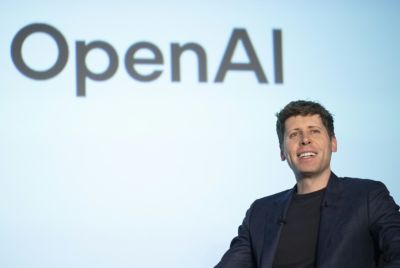
OpenAI CEO Sam Altman has taken a similar posture. Altman has said OpenAI will delay its own initial public offering until 2027, citing safety considerations as the reason for the postponement, a decision that came shortly after Amodei's essay was published and drew public support from both Altman and Musk.
The overlapping timing of the industry's safety rhetoric and its most prominent companies' IPO preparations has prompted skepticism from some corners of the investment world. Short-seller Michael Burry has suggested the AI industry's calls for a slower pace of development may reflect a cynical strategy to boost the perceived value of AI products ahead of public offerings, rather than a genuine reassessment of the technology's risks, a characterization that has added a layer of controversy to the broader debate over how markets should interpret the sudden alignment among rival AI executives.
Whatever the underlying motivation, the market reaction to the weekend's developments was significant. U.S. stocks opened sharply lower Monday, with the S&P 500 falling 0.84%, the Dow Jones Industrial Average dropping 0.55%, and the Nasdaq Composite declining 1.10%, as investors reassessed the near-term outlook for AI infrastructure spending. The CBOE Volatility Index, a measure of expected market turbulence often referred to as Wall Street's fear gauge, jumped more than 11% during the session, while oil prices continued climbing amid separate tensions in the Middle East.
For Musk, the willingness to align publicly with Amodei's warning while continuing to expand his own companies' AI ambitions is consistent with a pattern that has defined much of his business career, in which large, high-conviction bets on emerging technology have often paid off handsomely for shareholders, and for Musk himself, even as he has simultaneously warned about the risks those same technologies pose. Whether the current moment of industry-wide caution proves to be a genuine inflection point in how AI companies approach development, or a temporary pause that gives way to renewed rapid advancement once public offerings are complete, remains an open question that investors, regulators and the AI industry's own executives appear far from resolving.
© Copyright 2026 IBTimes AU. All rights reserved.
- Recommended For You