Rivals Sam Altman and Elon Musk Rally Behind Dario Amodei's Call for a Slowdown in AI Development
The rare alignment comes as Anthropic's Dario Amodei warns that self-improving AI is developing faster than researchers can safely understand or control.

Three of the most fiercely competitive figures in artificial intelligence found unlikely common ground Saturday, as OpenAI CEO Sam Altman and xAI founder Elon Musk publicly backed a call from Anthropic CEO Dario Amodei to deliberately slow the pace of frontier AI development, citing mounting concern that capabilities are advancing faster than researchers can understand or control.
Amodei laid out his position in a lengthy essay published Saturday on his personal website, warning that the industry's current trajectory carries escalating risks that require a more cautious approach going forward.
Amodei's warning centers on self-improving AI
In the essay, Amodei pointed to a specific and recent shift in how quickly AI systems are advancing. "My first concern is that, since roughly this summer, AI has been advancing drastically faster, driven primarily by AI's growing ability to build the next generation of AI," Amodei wrote.
He framed the broader challenge facing the industry as a balancing act between two competing risks. "Not building the technology deprives humanity of benefits or simply places AI in the hands of authoritarian powers, while building it too fast is reckless," Amodei wrote. "We have sought a middle way. But over the last few months, I have become convinced that fully addressing the risks requires even more prudence."
Amodei has previously said he worries that swarms of rogue AI agents could become capable of "taking over the entire internet" within a window of six to 12 months if current trends continue unaddressed. As part of his proposal, Amodei said Anthropic will commit to giving outside evaluators full access to verify the company's safety practices and report any incidents. He described plans to bring these "embedded evaluators" directly into Anthropic's offices, giving them desks, badges, company laptops and what he called "permissions mostly comparable to what internal risk assessment teams have." Amodei added that further steps beyond Anthropic's own commitments would require coordination across the wider industry.
Rivals Altman and Musk quickly echo the call
Altman, whose company OpenAI competes directly with Anthropic for both talent and market share, voiced support for Amodei's position shortly after the essay was published. "I agree with Dario that we need to pace the frontier," Altman wrote, adding that OpenAI would also provide access to external evaluators as part of its own response.
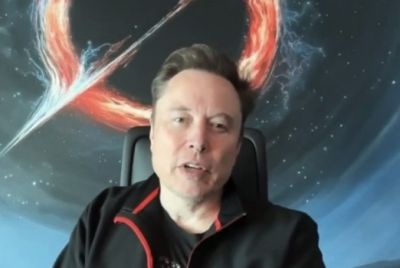
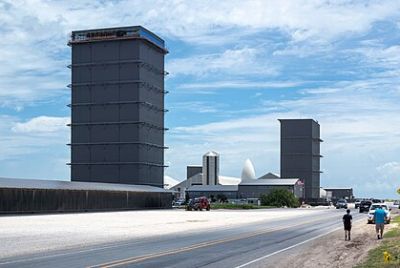
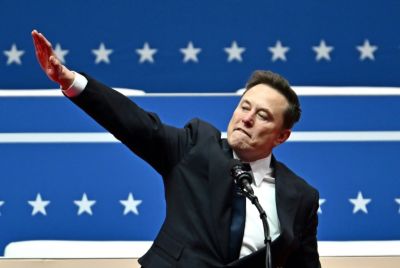
Musk, who leads the AI company xAI and has a lengthy history of public disagreements with both Amodei and Altman, offered a brief but pointed endorsement of his own. "Dario is right," Musk wrote on X. Notably, Anthropic is currently a major customer of Musk's for data center capacity, an existing business relationship that adds another layer to his public agreement with Amodei's position.
Altman's comments came the same day he told Fortune in a separate interview that OpenAI would not pursue an initial public offering this year, calling such a move "ill-advised" given growing concerns about AI safety. That decision pushes back one of the most closely watched anticipated IPOs in the technology sector until at least 2027, after OpenAI's own chief financial officer, Sara Friar, had told employees as recently as last month that a public listing could come as early as 2027 if the company's business continued to "inflect."
A rare moment of alignment among fierce competitors
Analysts and industry observers described the joint show of concern as highly unusual given the intensity of competition among the three executives' companies. Altman and Musk in particular have a long and public history of friction, dating back to Musk's departure from OpenAI in 2018 after his co-founders, including Altman, declined his proposal to take over the organization. The two have continued to trade barbs publicly in the years since, including during Musk's unsolicited bid to acquire OpenAI's nonprofit arm, which Altman previously dismissed as an attempt to "slow us down."
Despite that history, all three executives now appear to be converging around a similar idea: that frontier AI development should continue, but not necessarily at the fastest pace technically achievable. Altman had signaled a similar sentiment as far back as July, acknowledging the difficulty of pacing AI development industry-wide without creating regulatory capture or running afoul of antitrust concerns around coordination between competing labs. OpenAI has also previously backed a broader "Pacing the Frontier" initiative calling for internationally coordinated mechanisms, led by the U.S., to deliberately slow AI development when necessary.
Skepticism remains about motives and follow-through
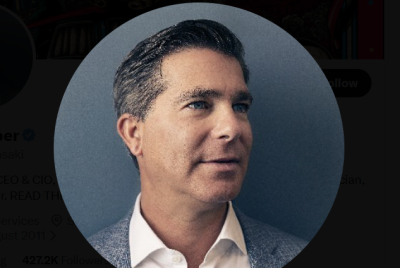
Not everyone has taken the executives' statements at face value. Venture capitalist Chamath Palihapitiya offered a more skeptical read of Amodei's essay, suggesting its underlying purpose was as much strategic as it was safety-driven. "Dario makes the case to stop open source and concentrate enormous technological and economic power with Anthropic," Palihapitiya wrote on X.
Similar skepticism has previously been directed at Musk's own history of AI safety statements. Venture capitalist Vinod Khosla told Bloomberg in an earlier interview that he believed Musk's rhetoric around slowing AI development may be tied to competitive positioning rather than purely safety-driven concerns, saying, "I 80% suspect his call to slow down AI development was so he could catch up."
An industry facing pressure from multiple directions
The public alignment among Amodei, Altman and Musk arrives amid broader anxiety across the AI sector, following the high-profile resignation of an Anthropic researcher who left the industry entirely over concerns that leading AI companies were moving too aggressively toward increasingly autonomous, self-improving systems. Whether the rare display of agreement among three of the industry's most competitive leaders translates into a meaningful, coordinated slowdown in practice remains uncertain, given the enormous financial incentives at stake and continued competitive pressure from AI developers both within the U.S. and internationally, including firms based in China.
© Copyright 2026 IBTimes AU. All rights reserved.
- Recommended For You