

Treasury Unveils New $1 Gold Coin Featuring Trump's Face for America's 250th Birthday, Sparking Debate
Treasury's new $1 coin featuring Trump raises legal questions amid US 250th anniversary celebrations.
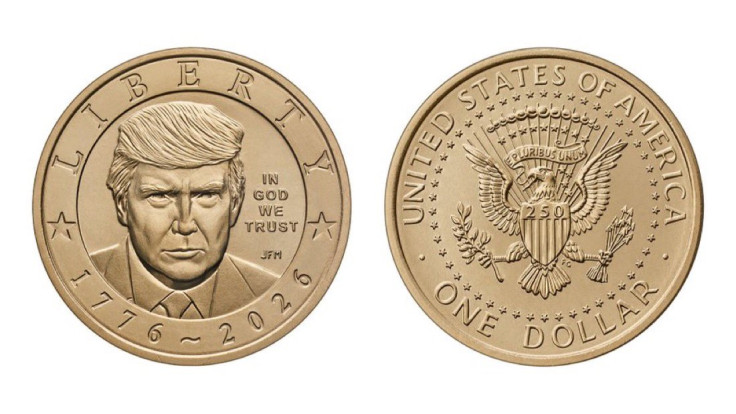
WASHINGTON — Treasury Secretary Scott Bessent unveiled new photos Wednesday of a proposed $1 gold-colored coin featuring President Donald Trump's likeness, part of a broader effort to commemorate the United States' 250th anniversary of independence, even as the design raises questions about longstanding federal restrictions on placing living presidents on U.S. currency.
Bessent shared the first-look images on social media platform X, describing the coin as a tribute to the nation's founding principles.
"As America commemorates 250 years of independence, the @usmint will begin striking this new $1 gold coin to honor the enduring legacy of liberty and a lasting symbol of patriotism," Bessent wrote. "Featuring President Trump, it celebrates the strength of American values, and the promise of a nation dedicated to preserving freedom for all."
Coin Design and Production Details
The proposed coin features Trump's image alongside the phrase "In God We Trust" and the dates "1776-2026" on the front. The reverse side reads "One Dollar." Despite its gold-like finish, the coin is made from a non-precious metal composition rather than actual gold, according to Treasury officials.
The coins are being minted at the U.S. Mint facility in Philadelphia and are expected to become available to the public in the fall. The Commission of Fine Arts, the federal body responsible for reviewing the design of U.S. currency and coinage, granted the Mint approval to proceed with production in March.
A Legal Gray Area
The Trump administration's push to feature the sitting president's likeness on circulating currency runs up against multiple existing federal restrictions. The Presidential $1 Coin Act of 2005 permits $1 coins honoring deceased presidents only, while the Circulating Collectible Coin Redesign Act of 2020 separately prohibits portraits of living people from appearing on the "tails" side of any coin. Federal law more broadly, dating back to an 1886 measure known as the Thayer Amendment, bars images of any living person from appearing on U.S. currency.
The Trump administration has argued that this particular coin sidesteps those restrictions by relying on a distinct 2020 law specifically authorizing commemorative designs tied to the nation's 250th anniversary celebrations, a legal interpretation that has drawn scrutiny from congressional critics.
Democratic Lawmakers Push Back
Several Democratic lawmakers have moved to formally block the administration's efforts to place Trump's image on U.S. currency. Sens. Jeff Merkley of Oregon and Catherine Cortez Masto of Nevada introduced legislation, referred to as the "Change Corruption Act," that would explicitly prohibit the likeness of any living or sitting president from appearing on U.S. currency of any kind.
Treasury Officials Defend the Design
Ahead of Wednesday's formal unveiling, U.S. Treasurer Brandon Beach previously defended the decision to feature Trump on the coin in a statement obtained by the Associated Press in March.
"As we approach our 250th birthday, we are thrilled to prepare coins that represent the enduring spirit of our country and democracy, and there is no profile more emblematic for the front of such coins than that of our serving President, Donald J. Trump," Beach said at the time.
Part of a Broader Currency Redesign Push
The $1 gold coin represents just one element of a broader effort by the Trump administration to reshape federal currency and other national symbols to feature the president more prominently. Bessent separately showed off a design earlier this week for a proposed $250 bill featuring Trump's face, which he described as a preparatory measure the Treasury Department has taken in case Congress eventually passes legislation authorizing the sitting president's image to appear on paper currency.
That preview of the $250 bill design followed a Washington Post report indicating the Treasury Department had pressured the Bureau of Engraving and Printing to produce mock-ups of the proposed note ahead of any formal congressional authorization.
New Passport Design Also Unveiled
Alongside the coin announcement, the administration also unveiled new limited-edition passports, dubbed "Patriot Passports," created to mark the semiquincentennial celebration. A sample image shared by Trump depicted the president standing with his fists resting on the Resolute Desk, with the text of the Declaration of Independence displayed behind him. The passport's second page includes a rendering of artist John Trumbull's well-known painting depicting the signing of the Declaration of Independence.
Historical Precedent for Presidential Imagery
While federal law generally bars living presidents from appearing on U.S. currency, there is at least one notable historical precedent involving a sitting president's image on commemorative coinage. Calvin Coolidge, the nation's 30th president, issued a half-dollar coin in 1926 that included his own likeness alongside George Washington's to commemorate America's 150th anniversary, according to records maintained by the U.S. Mint.
Part of a Broader Pattern of Institutional Changes
Wednesday's coin unveiling adds to a series of efforts by the Trump administration to leave a lasting imprint on federal institutions and symbols. Those efforts have included a push to add Trump's name to the Kennedy Center's facade, an initiative that has faced its own legal challenges. A federal judge ruled last month that Trump's name must be removed from the performing arts center's exterior, a decision the president has since appealed without success.
What Comes Next
With the coin's production already underway in Philadelphia and its public release targeted for later this fall, the ongoing legal and political debate over whether featuring a sitting president's likeness on U.S. currency violates existing federal restrictions is likely to continue playing out in Congress and potentially in the courts in the months ahead. Whether Merkley and Cortez Masto's proposed legislation gains sufficient traction to formally block the coin's release before it reaches circulation remains uncertain, given the current composition of Congress and the administration's continued defense of its legal interpretation permitting the design under the 2020 semiquincentennial commemorative coin law.
© Copyright 2026 IBTimes AU. All rights reserved.