

America Turns 250 Today: 10 Things You Must Know About the Biggest Independence Day in the Nation's History
From record-breaking fireworks to international fleet reviews, the US marks its 250th Independence Day with grand celebrations.
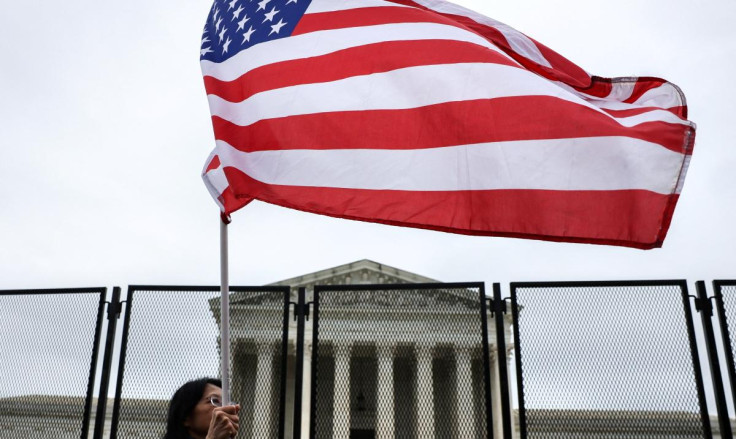
WASHINGTON — The United States is marking its 250th birthday on Saturday with a scale of celebration that no previous Independence Day has come close to matching, combining record-setting fireworks, an international fleet review, Times Square ball drops spanning every American time zone and hundreds of community events from Bristol, Rhode Island, to Hawaii. Here is everything you need to know about this extraordinary national milestone.
1. This is the most consequential July 4 since the Bicentennial in 1976. The 250th anniversary of the signing of the Declaration of Independence, known formally as the Semiquincentennial or America250, marks a milestone that arrives only once in a nation's history. Planning for the celebrations began a decade ago through a congressional, bipartisan commission. President Donald Trump also established a parallel public-private initiative called Freedom 250 to coordinate federal, state and private sector involvement. Trump himself kicked off the anniversary weekend Friday night at Mount Rushmore, delivering remarks beneath the carved faces of George Washington, Thomas Jefferson, Abraham Lincoln and Theodore Roosevelt before a fireworks display lit up the South Dakota sky.
"With a single sheet of parchment and 56 signatures, America began the greatest political journey in human history," Trump said.
2. The Times Square ball is dropping eight times, not once. In a first for the iconic New York tradition, the Times Square ball descended multiple times to mark the arrival of Independence Day across every American time zone, beginning with Guam and the Northern Mariana Islands at 10 a.m. Friday and ending in American Samoa at 7 a.m. Saturday. The event is organized by America250 chair Rosie Rios, who framed the rolling celebration in explicitly national terms.
"This is more than a countdown. It's a moment that brings the entire country together, one time zone at a time," Rios said.
3. Washington is hosting the world's largest fireworks display in history. The White House's Freedom 250 Commission planned what organizers described as the largest fireworks show ever staged, with more than 860,000 fireworks set to be launched during a 40-minute "Salute to America" show anchored near the Washington Monument. The display was designed to be visible across a substantial portion of the capital region and to be broadcast nationally.
4. Dangerous heat forced major events to be canceled or modified. A record-breaking heat dome blanketing much of the eastern United States created significant public safety complications for the celebrations. Philadelphia canceled its Salute to Independence Semiquincentennial Parade. Washington temporarily closed the Great American State Fair on the National Mall and canceled a separate planned parade. Several other cities shortened events, rerouted routes or moved portions of programming indoors as forecasters warned of real-feel temperatures reaching 100 to 115 degrees Fahrenheit across parts of the Midwest, Northeast and South. Emergency medical personnel were positioned at events throughout the affected region.
5. The world's largest fleet review is happening in New York Harbor. The United States Navy is hosting Sail250, its seventh International Fleet Review, in New York Harbor, with approximately 60 ships from 30 nations participating in what officials described as the largest maritime gathering in American history. The procession, which includes roughly 20,000 sailors and an international military flyover saluting the Statue of Liberty, represents the ocean-facing dimension of celebrations anchored primarily in the nation's capital. New York Governor Kathy Hochul framed the moment with deliberate historical weight.
"You will see a New York like you've never seen before," Hochul said. "We also have to remember that for 250 years, America has stood as that beacon of hope to the rest of the world, and here in New York City, it has always burned brightest."
6. America's first American pope delivered a birthday message. Pope Leo XIV, the first American to lead the Roman Catholic Church, used a speech on the eve of the nation's 250th birthday to accept the 2026 Liberty Medal from the National Constitution Center via livestream from the Vatican. In his remarks, the pope urged the United States to recommit to the founding principles of human dignity, liberty and national unity.
7. The World Cup is playing simultaneously on American soil. In an unprecedented overlap of national celebration and global sporting event, two World Cup matches were scheduled at American venues on Independence Day itself, with fixtures at Lincoln Financial Field in Philadelphia and NRG Stadium in Houston. Canada's round of 16 match against Morocco at Houston's NRG Stadium kicked off at 1 p.m. ET, meaning that for much of the afternoon, tens of millions of Americans were watching their co-host nation attempt to advance to the World Cup quarterfinals while simultaneously preparing for fireworks and birthday celebrations.
8. The Statue of Liberty received a spectacular light show as a French birthday gift. France, which gifted the Statue of Liberty to the United States in 1886, commissioned a 15-minute laser and light show projected onto the statue's exterior, broadcast on ABC on the eve of July 4 as a commemorative tribute from the French government. The spectacle brought the monument to life through techno music and precisely synchronized visual effects visible from across New York Harbor.
9. Bristol, Rhode Island, is celebrating its 241st consecutive Fourth of July parade. The small New England town, which lays claim to the nation's oldest Independence Day celebration, marked America's 250th with its 241st consecutive Independence Day bash, featuring at least 34 floats, a golf tournament, a beauty pageant and a gala ball. The town's double yellow line on Hope Street received its annual red, white and blue makeover, a tradition that continues year after year regardless of political climate or national mood.
10. Six mobile museums traveled to all 48 contiguous states to mark the occasion. The Freedom 250 initiative deployed six state-of-the-art "Freedom Trucks," double-wide 18-wheeler mobile museums that traveled across the country throughout the year to reach an estimated 20 million Americans at schools, libraries, national parks and community gatherings. The trucks told the story of American independence and the country's subsequent history, bringing the 250th anniversary observance to communities too small to host major events of their own, ensuring that the celebration reached well beyond the big cities and national monuments that dominate most of the day's coverage.
© Copyright 2026 IBTimes AU. All rights reserved.