

Trump Threatens to Bomb US Ally Oman as Iran Deadline Expires While Kushner Presses Netanyahu on Gaza Plan
US-Iran Peace Talks Expire Without Resolution as Trump Targets Oman
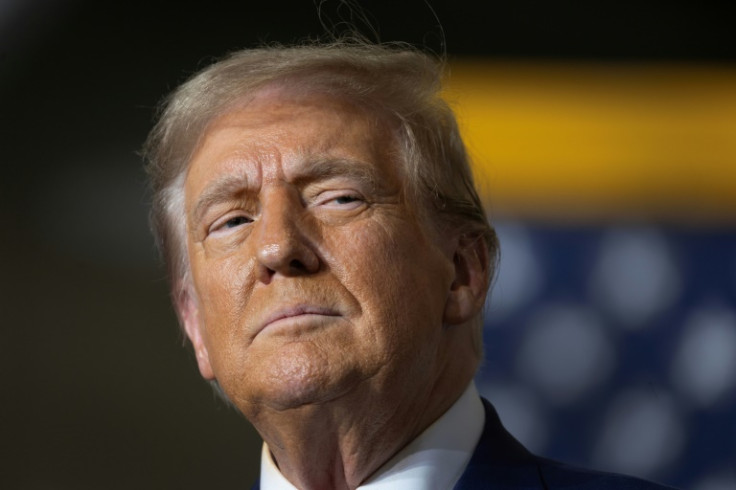
WASHINGTON — President Donald Trump threatened Monday to attack Oman, a longtime U.S. ally, if the country interferes with American efforts in the Strait of Hormuz, as a 60-day window for reaching a peace agreement with Iran expired without a clear resolution to the ongoing conflict.
"If Oman gets in the way, we'll bomb the shit out of them," Trump said in an interview with Fox News' Trey Yingst, published Monday. It marked the second time this year Trump has directed such a threat at Oman. At a Cabinet meeting in May, the president said, "Oman will behave just like everybody else, or we'll have to blow 'em up."
The renewed threat came as the 60-day deadline for the United States and Iran to reach a deal toward ending their conflict passed Monday without any concrete agreement announced. Trump said he remains unconcerned about the lack of a timeline. "They're good poker players, but they're dying," Trump said of Iran. "I have no time schedule. I'm not in a hurry."
Trump also told Fox News that his administration has established a direct backchannel with Iran's Islamic Revolutionary Guard Corps, a claim the IRGC firmly denied Monday. A spokesperson for the Revolutionary Guards told Iran's semi-official Tasnim news agency that Trump's assertion was a "lie" and "nothing more than fantasies stemming from the delusions and nightmares brought on by defeat and desperation in the war." The spokesperson added that diplomacy does not fall within the IRGC's remit and said that, "as far as we are aware, and based on statements by Foreign Ministry officials, there are currently no talks with the Americans even at that level, given Washington's broken promises and its long record of repeatedly violating its commitments."
Trump reiterated Monday that preventing Iran from acquiring a nuclear weapon remains his administration's central objective in the conflict, a stance that has at times put him at odds with advisers who have emphasized keeping global oil prices low as a competing priority. Brent crude, the global oil benchmark, climbed modestly Monday, rising 0.38% to $88.85 a barrel following the expiration of the negotiating window.
Trump's threat against Oman is not an isolated incident within his broader approach to foreign policy. According to a CNN analysis, the president has launched military strikes in seven countries during his second term alone — Iran, Iraq, Nigeria, Somalia, Syria, Venezuela and Yemen — and has threatened or left open the possibility of strikes against at least seven others, including Canada, Colombia, Cuba, Greenland, Mexico, Panama and now Oman. CNN had previously calculated in May that Trump had either attacked or threatened roughly one out of every 13 countries in the world, with Oman ranking among the earliest targets of that pattern. Analysts have noted that many of Trump's specific threats have not ultimately been carried out, even in instances when the targeted country did not meet his stated demands.
Iran's Foreign Ministry, meanwhile, said talks between Tehran and Oman regarding the future status of the Strait of Hormuz remain complex but ongoing. Foreign Ministry spokesperson Esmaeil Baghaei said Monday that several unspecified "actors trying to exert influence on this process" had contributed to delays in reaching an agreement.
Trump's comments regarding the Strait of Hormuz followed remarks he made Friday, in which he said he intends to declare the waterway a U.S. territory once the conflict with Iran concludes, which he predicted would happen "pretty soon." Maritime law experts have pushed back on the feasibility of such a declaration. Jason Chuah, a professor of maritime law at City, University of London, told CNN that "under US law, claiming territory by a Presidential declaration or decree is not enough. There are important constitutional requirements that must be cleared first," adding that "under international law, annexation is contrary to the United Nations Charter. Territories including bodies of water can only be taken through agreement or cession." Simon Baughen, a professor of shipping law at Swansea University, said any legitimate path toward such a claim would require Iran's direct consent. "Under international law, this could only be done if Iran agreed to cede its territorial waters in the strait to the US," Baughen said. "I think this is a very unlikely scenario."
Elsewhere in the region, Jared Kushner, Trump's son-in-law and senior adviser, met Monday with Israeli Prime Minister Benjamin Netanyahu for more than four hours in an effort to revive the administration's stalled Gaza ceasefire plan. According to a senior Israeli official, Netanyahu told Kushner that Israel would not withdraw any forces from Gaza or allow reconstruction to begin until Hamas fully disarms. The two also agreed that an American general would oversee the decommissioning of Hamas weaponry as a first step toward demilitarizing the territory, the official said.
Hamas has said it will not disarm unless the process is sequenced alongside an end to near-daily Israeli attacks on Gaza and a corresponding withdrawal of Israeli forces from more than half of the territory they currently occupy. According to a separate Israeli source, Netanyahu told Kushner that making progress on the administration's 15-point ceasefire plan — which Israel had previously rejected — would be "problematic" given upcoming Israeli elections at the end of October. Netanyahu also insisted Israel would not alter its ongoing policy of targeted killings against Hamas commanders, the source said.
Former British Prime Minister Tony Blair, who now serves on Trump's Board of Peace and Gaza Executive Board, also participated in Monday's talks alongside Board of Peace director Nickolay Mladenov. According to Netanyahu's office, the group agreed to establish working groups focused on disarmament as well as sanitation, clean water and public health issues in Gaza.
Adding to the volatile regional backdrop, Yemen's Iran-backed Houthi movement said Monday it had launched ballistic missiles at a Saudi military vessel and four escort ships in the Red Sea near the Yemeni port city of Mokha. The claim could not be independently verified, and Saudi authorities had not immediately responded. The reported attack follows a weekend of escalation after the Houthis declared a blockade of Saudi shipping in the Red Sea, prompting Mokha's port to suspend operations following earlier missile strikes Friday.
Separately, Iran's army has offered a bounty of 5 billion tomans, or roughly $30,000, for anyone who kills or captures a U.S. soldier and turns them over to Iranian authorities, according to the country's semi-official Mehr news agency, underscoring the continued hostility accompanying the expired negotiating deadline even as diplomatic channels, disputed or otherwise, remain nominally open between Washington and Tehran.
© Copyright 2026 IBTimes AU. All rights reserved.