

(VIDEO) Maine Couple Uses Pickup Truck to Block Charging Black Bear and Save Terrified Moose Calf From Attack
Quick-thinking couple intervenes in a wildlife chase, using their truck to protect a moose calf from a pursuing bear.
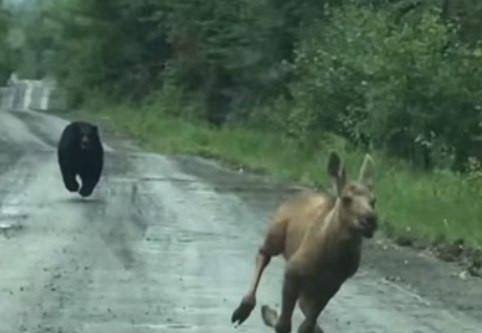
A couple in western Maine intervened in a tense wildlife encounter over the weekend, using their pickup truck to shield a young moose from a black bear that had been chasing it through the woods, according to multiple reports.
The rescue happened near Aziscohos Lake, a remote stretch of water and forest close to the Maine-New Hampshire border. The couple had spent the day kayaking when they noticed a moose calf burst out of the tree line and sprint toward the road, with a black bear closing in behind it. The calf's mother was nowhere in sight, leaving the young animal alone as the bear continued its pursuit.
With only seconds to react, the driver steered the truck between the bear and the fleeing calf, using the vehicle as a physical barrier to break up the chase. The maneuver startled the bear enough to halt its pursuit, giving the moose calf the opening it needed to escape back into the woods.
"I knew what I had to do," the driver told reporters afterward, describing the split-second decision to position the truck in the bear's path.
Neither the couple, the bear nor the moose calf was injured in the encounter, which was witnessed by others in the area before word of the rescue spread. Footage and photos of the confrontation quickly circulated online, drawing widespread attention as viewers praised the quick thinking involved in the intervention.
Wildlife officials generally advise against people inserting themselves into encounters between predators and prey, noting that such situations can be unpredictable and potentially dangerous. Black bears, in particular, can behave erratically when focused on pursuing what they perceive as a meal, and approaching wildlife on foot is typically discouraged regardless of the circumstances. Experts commonly recommend that people who come across active predator-prey encounters observe from a safe distance rather than attempt to intervene directly.
In this instance, the driver did not leave the safety of his vehicle. By using the truck itself as the barrier, he was able to interrupt the chase without placing himself or his passenger in direct physical danger, a distinction that several observers noted set the episode apart from more hazardous forms of wildlife intervention.
Moose calves are especially vulnerable to predation in their first weeks and months of life. Black bears are known to target young moose during the calving season, particularly when a calf becomes separated from its mother, as appeared to be the case in this encounter. Cow moose are typically fiercely protective of their young and will aggressively confront bears that threaten a calf, but the absence of the mother in this instance left the young moose without that natural line of defense.
Aziscohos Lake sits in a sparsely populated part of Maine's western mountains, an area known for its dense forests, remote camping access and healthy populations of moose, black bear and other wildlife. The region draws paddlers, anglers and hikers throughout the warmer months, and encounters between visitors and local wildlife, while not everyday occurrences, are not unheard of given the area's rural character and proximity to undeveloped land.
It remains unclear whether the moose calf was later reunited with its mother. The couple did not report seeing the cow moose either before or after the chase, and no further updates on the calf's condition have been made public since the initial rescue.
The encounter has since been picked up by a range of outlets covering unusual wildlife stories, with the pickup truck maneuver drawing particular attention for its simplicity and effectiveness. Commentary circulating alongside the videos has largely framed the driver's actions as an example of calm, decisive thinking under pressure, even as wildlife officials continue to stress that most encounters of this kind are best left unaddressed by bystanders.
Bear-moose interactions of this sort are a natural, if difficult to witness, part of the predator-prey dynamic in Maine's backcountry. Wildlife biologists note that such chases, while dramatic to observe, reflect ordinary survival behavior on the part of both animals: the bear seeking an opportunity for an easy meal, and the calf relying on speed and evasive movement in the absence of its mother's protection. Human intervention in these moments is rare, in part because most encounters unfold quickly and out of sight of passersby.
For the couple involved, what began as a routine day of kayaking turned into an unplanned test of quick judgment. Their decision to use the truck rather than exit the vehicle or attempt to physically deter the bear is likely one reason the episode ended without injury to any of the parties involved, according to general safety guidance from wildlife agencies that recommend staying inside a vehicle when encountering large or potentially dangerous animals.
As of the latest reports, no other details have emerged regarding the identities of the couple, the exact time of the encounter, or whether the moose calf was later spotted in the area. The story has nonetheless resonated widely online, adding to a growing list of viral wildlife encounters that have captured public attention in recent months.
Officials in Maine have not issued any specific comment on the incident, and there is no indication that any regulatory action or investigation is expected to follow, given that no animals were harmed and no laws appear to have been broken during the encounter. Wildlife advocates have used the moment as an opportunity to remind the public that while this particular intervention ended well, most experts continue to recommend that people avoid inserting themselves into similar situations whenever possible, and instead allow wildlife encounters to run their natural course from a safe distance.
© Copyright 2026 IBTimes AU. All rights reserved.