

Dubai International Airport Is Open Today and Flying Normally After Months of Iran Conflict Disruptions
Dubai International Airport returns to normalcy after months of disruption due to the U.S.-Iran conflict, with major airlines resuming regular services.
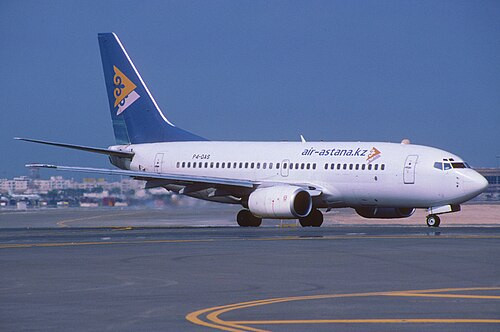
DUBAI — Dubai International Airport is open and operating normally today, Friday, July 4, with flights processing through all three of its terminals and live flight tracking data showing hundreds of active arrivals and departures across major global air corridors, including connections to Europe, South Asia, East Africa, North America and the broader Middle East.
The airport is now fully functional, handling hundreds of flights with only a small number of delays. Airlines, especially Emirates and flydubai, have resumed their normal operations.
The return to full operations represents the culmination of a difficult five-month recovery that followed the outbreak of the U.S.-Iran conflict in late February, during which Dubai International's passenger volumes, airline schedules and airspace access were all significantly disrupted even as the airport itself never formally closed.
Dubai International Airport operates 24 hours a day, 7 days a week. Flight operations may still be subject to short-notice changes depending on the regional security situation. As of this report, real-time flight boards confirmed normal operations throughout the facility.
Several major airlines continue to maintain regular services to and from Dubai, including routes operated by Emirates, flydubai, Etihad Airways, Qatar Airways, Turkish Airlines, British Airways, Lufthansa, Air India, IndiGo, and Singapore Airlines. Flights connecting Europe, Asia, Africa, and North America through Dubai remain active, although some carriers may use alternative flight paths to avoid restricted airspace.
The path to today's normal operations was neither straight nor smooth. The crisis began in late February when the escalation of the U.S.-Iran military exchange triggered a series of overlapping airspace restrictions across the Gulf region. While Dubai's airspace was never formally closed during the conflict's peak phases, the European Union Aviation Safety Agency issued a Conflict Zone Information Bulletin ordering European-regulated carriers to avoid UAE airspace, effectively grounding dozens of major international airlines that relied on Gulf routes and dramatically reducing the range of airlines operating through DXB for weeks.
The disruption traces back to late-February drone and missile attacks linked to the wider Gulf conflict, which prompted temporary airspace closures across the UAE. While a 5 April cease-fire allowed regulators to relax the most stringent flight bans, the General Civil Aviation Authority kept a one-rotation-per-day limit on many foreign carriers until at least 31 May to maintain contingency capacity.
Throughout that constrained period, Emirates and flydubai functioned as the primary pillars of connectivity at DXB, maintaining combined schedules that kept the airport from becoming a ghost terminal even as dozens of foreign carriers scaled back or suspended services entirely. Combined operational activity from Emirates and flydubai reports 417 weekend departures covering Europe, South Asia, and the Middle East.
Recovery accelerated meaningfully after the tentative U.S.-Iran ceasefire that took effect in early April, with successive airline reinstatements following as the EASA gradually softened its advisory language for UAE airspace from outright avoidance to cautionary guidance and then lifted restrictions as diplomatic stability held. British Airways resumed Dubai flights in July, initially at a reduced frequency of one daily service rather than its pre-conflict three per day, in what was described at the time as the clearest signal yet from a major European carrier that the post-crisis landscape was beginning to take shape. Qatar Airways had already resumed daily Dubai flights from late April, with Gulf carriers including Saudia also returning to the route around the same time.
The popularity of Dubai as a global tourist destination continues to grow, with data recording 19.59 million international arrivals to Dubai, a 5% increase over 2024 and the third consecutive year of record arrivals. The top source region was Western Europe, with 4.1 million arrivals representing 21% of the total, followed by the CIS and Eastern Europe and South Asia.
Operationally, DXB spans three main passenger terminals with a clear division of carriers. Emirates uses Terminal 3, flydubai and regional carriers operate from Terminal 2, and the majority of other international airlines use Terminal 1, which connects to Concourse D via an airport transit train. Passengers are still advised to verify their specific terminal assignment with their airline before traveling, as some flights were reassigned during the disruption period and not all carriers have reverted to their original gate and terminal configurations.
Dubai Airports recently completed a major Terminal 1 bridge expansion project, increasing road access capacity and improving passenger flow ahead of the peak summer travel season. The infrastructure improvement has been timed to coincide with what the airport expects will be a period of rapid demand recovery as international leisure and business travel rebounds through the summer.
For travelers arriving today or in the coming days, the practical guidance is consistent with what Dubai Airports and airline operators have communicated throughout the recovery period. Confirm your specific flight and departure time directly with your airline rather than relying solely on published schedules, arrive at the airport earlier than the minimum recommended time given that some residual administrative processes from the disruption months remain in place, and review any applicable government travel advisories for your country of origin, as national guidance on travel to the UAE has varied across different governments and may have been updated since the ceasefire took hold.
Dubai Airports recognized the airport had sustained global connectivity through regional disruption and is readying for a return of strong demand as UAE airspace restrictions ease.
As of Friday, July 4, Dubai International Airport is fully open, actively processing flights, and operating with the efficiency expected of the world's busiest international aviation hub by passenger volume, a status the facility has now been able to maintain consistently since the diplomatic de-escalation of the U.S.-Iran conflict allowed regional airspace to normalize over the course of the past several weeks.
© Copyright 2026 IBTimes AU. All rights reserved.