Is Kuwait International Airport Open Today? Here's the Latest Status After Months of War-Related Disruptions
Kuwait's aviation sector gradually recovers as airport reopens, but security threats persist.

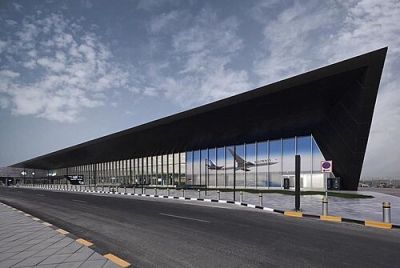
KUWAIT CITY — Kuwait International Airport is open and operating today, with both of the country's national carriers running scheduled flights, though one of its main terminals remains closed for repairs following repeated drone and missile strikes tied to the broader U.S.-Iran conflict that has disrupted Gulf aviation for much of this year.
Kuwait Airways is currently flying out of Terminal 4, while Jazeera Airways operates from Terminal 5, with both airlines maintaining largely normal schedules as the country's aviation sector continues a gradual recovery. Terminal 1, the airport's primary international facility, remains closed pending repairs after sustaining significant structural damage, and authorities have not announced a confirmed reopening date.
The airport's path back to normal operations has been anything but smooth. Since the conflict began Feb. 28 with U.S. and Israeli strikes on Iran, Kuwait's airspace and its main airport have been repeatedly disrupted by Iranian drone attacks, part of a wider pattern of strikes targeting Gulf states hosting American military installations. The airport was first forced to suspend all flights starting Feb. 28, with local carrier Jazeera Airways temporarily diverting operations to Qaisumah International Airport in Saudi Arabia, roughly two and a half hours away by road, during the closure.
Kuwait Airways and Jazeera Airways resumed limited service on April 26, operating out of Terminals 4 and 5 while Terminal 1 remained shuttered. Terminal 1 finally reopened to international traffic on June 1, allowing some foreign carriers to resume service there for the first time in months. That reopening proved short-lived. Just two days later, on June 3, Iranian drones struck the terminal directly, according to Kuwait's state news agency KUNA, causing severe damage, killing one person and injuring 63 others, including airport workers and passengers.
Kuwait's Defense Ministry said its forces detected roughly 30 ballistic missiles and drones launched by Iran that day, with several intercepted over residential areas. A ministry spokesman described the attack as targeting civilian and vital facilities, and Kuwait's foreign ministry summoned Iran's charge d'affaires to lodge a formal protest, demanding that two Iranian embassy staff leave the country within 24 hours. Iran's paramilitary Revolutionary Guard denied responsibility for the strike, with a spokesman claiming the damage was instead caused by a failed U.S. interceptor missile. U.S. Central Command rejected that account, calling it a deliberate Iranian drone attack on the airport.
Despite the severity of the June 3 strike, Kuwait Airways resumed flights from Terminal 4 within hours, reflecting the country's determination to keep at least limited air traffic moving even amid continued security threats. In the weeks since, Kuwait's General Authority of Civil Aviation has worked to bring additional capacity back online in phases. Oman Air confirmed it would restart its Kuwait flights on June 25, temporarily routing through Terminal 4 rather than its usual Terminal 1, becoming one of several foreign carriers progressively resuming service as conditions stabilize.
Sheikh Hamoud Mubarak Al Sabah, chairman of Kuwait's General Civil Aviation Authority, said the decision to reopen the country's airspace was coordinated closely with relevant domestic and international authorities to ensure operations resumed in line with the highest safety and security standards. He also credited the cooperation of aviation staff and government entities in accelerating the recovery, and specifically thanked Saudi Arabia for helping facilitate Kuwaiti carriers through its airports during the disruption, along with broader coordination among Gulf Cooperation Council members aimed at maintaining regional air traffic continuity throughout the crisis.
The broader security picture in the Gulf has shown signs of easing in recent days, even as sporadic violence has continued to test a fragile ceasefire between the United States and Iran. Tensions flared again late last week when Iran was accused of launching attack drones at commercial shipping passing through the Strait of Hormuz and firing missiles and drones at military installations in Kuwait and Bahrain, prompting renewed U.S. retaliatory strikes. By the weekend, however, U.S. officials indicated both sides had agreed to stand down from further direct attacks, with fresh negotiations between Washington and Tehran expected to resume in Doha this week, focused in part on restoring normal commercial shipping and air traffic through the broader Gulf region.
Aviation risk trackers continue to reflect the uneven nature of that recovery. According to monitoring group OPSGROUP, Kuwait's airspace has reopened and resumed limited operations after nearly two months of closure earlier this year, though the group cautions that neither Kuwait nor neighboring Iran has yet restored anything resembling normal central Middle East routing. The European Union Aviation Safety Agency has similarly softened its guidance for Kuwait and several other Gulf states from active-avoidance warnings to a recommendation that operators "exercise caution" and maintain updated risk assessments, a marked shift from the stricter warnings issued at the height of the conflict earlier this year, even as the agency continues to advise airlines against operating in Iranian, Iraqi or Lebanese airspace altogether.
For travelers with existing bookings, airline and travel industry sources continue to recommend confirming flight status directly with carriers before heading to the airport, given the airport's recent history of abrupt, security-driven schedule changes. Kuwait International Airport, located roughly 15.5 kilometers south of Kuwait City's center, typically handles more than 15 million passengers annually and serves as the primary hub for both Kuwait Airways and Jazeera Airways, connecting the country to more than 100 destinations worldwide.
For now, the practical answer to whether the airport is open today is yes, with flights departing and arriving on a steadily normalizing schedule, but the broader question of whether that recovery can hold remains tied directly to the durability of the ceasefire between the United States and Iran, a truce that has already been tested, and broken, multiple times since it was first announced earlier this year.
© Copyright 2026 IBTimes AU. All rights reserved.
- Recommended For You