Gold Prices Drop 1.40 Percent to 4,387.97 as Stronger Dollar and Rising Yields Weigh on Safe-Haven Appeal
Gold experiences sharp decline due to stronger dollar and rising Treasury yields, despite ongoing geopolitical tensions.

NEW YORK — Gold prices fell sharply on Thursday, with spot gold closing at $4,387.97 per ounce, down $62.48 or 1.40 percent, as a rebounding U.S. dollar and rising Treasury yields reduced demand for the non-yielding precious metal amid persistent inflation concerns tied to Middle East tensions.
The decline extended a multi-week correction from earlier 2026 highs above $5,500 per ounce. Market participants cited renewed strength in the dollar index, which climbed above 98.5, and 10-year Treasury yields approaching 4.4 percent as primary drivers behind the selling pressure. Higher real yields increase the opportunity cost of holding gold, which pays no interest.
Trading volume remained elevated as investors reassessed safe-haven flows following recent U.S. military actions near the Strait of Hormuz. Despite ongoing geopolitical risks, optimism around potential de-escalation and firmer U.S. economic data prompted profit-taking in precious metals.
Factors Behind Thursday's Decline
Analysts pointed to several interconnected forces. A stronger dollar makes gold more expensive for international buyers, while elevated bond yields draw capital toward interest-bearing assets. Persistent inflation pressures from elevated oil prices, stemming from disruptions in energy shipping lanes, have also tempered expectations for aggressive Federal Reserve rate cuts.
The pullback occurs even as physical demand in Asia remains robust. Central banks and retail investors in emerging markets continue accumulating gold, though Western ETF flows have turned negative in recent weeks.
This marks one of the sharper daily declines in May, though gold still sits well above levels from early 2025. Year-to-date gains remain positive, but the metal has shed roughly 20 percent from its January peak.
Broader Market Context
The gold market has experienced significant volatility throughout 2026. Early-year surges were fueled by geopolitical uncertainties, including direct U.S.-Iran exchanges and disruptions to global energy supplies. However, periodic profit-taking and shifts in monetary policy expectations have triggered sharp reversals.
U.S. economic indicators have played a key role. Stronger-than-expected growth data and sticky inflation readings have led traders to price in fewer rate cuts, supporting the dollar and pressuring gold. The recent nomination and confirmation processes for Federal Reserve leadership have further influenced market sentiment toward a more hawkish policy stance.
Oil prices, which rose on supply concerns, have created a complex dynamic. While typically supportive of gold as an inflation hedge, the accompanying rise in yields and dollar strength has dominated in recent sessions.
Investor Sentiment and Technical Outlook
Technical analysts noted that gold broke below key support levels around $4,450, opening the door for further downside toward $4,300-$4,370 if selling momentum persists. However, many view the current levels as an attractive entry point for long-term investors given ongoing global uncertainties.
"Gold remains a core portfolio diversifier despite short-term headwinds," said one commodities strategist. Physical buyers in India and China have stepped up at these lower prices, providing underlying support.
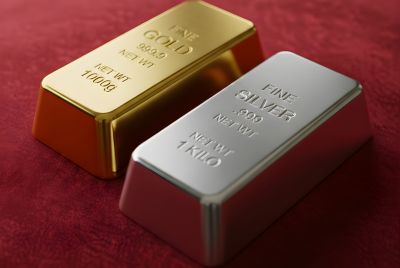
Silver prices also declined, falling more than 2 percent in sympathy with gold. The gold-silver ratio hovered near 59:1, within its longer-term average range.
Outlook for Remainder of 2026
Analysts remain divided on gold's trajectory for the balance of the year. Some forecasts see average prices around $4,500-$5,000, supported by central bank buying and structural demand. Others warn of additional downside risk if the dollar continues strengthening and inflation moderates faster than expected.
Institutional investors have maintained strategic allocations to gold amid concerns over fiscal sustainability and geopolitical fragmentation. ETF outflows in the West have been partially offset by strong bar and coin demand in Asia.
The World Gold Council has highlighted record physical demand in recent quarters, underscoring gold's enduring appeal even during price corrections. Central banks added hundreds of tonnes in the first quarter alone, continuing a multi-year trend of diversification away from traditional reserves.
Implications for Investors
For retail and institutional investors, the current environment calls for caution. Short-term traders may find opportunities in volatility, while long-term holders are advised to view dips as potential accumulation points rather than signals of structural weakness.
Gold's role as an inflation hedge and portfolio diversifier remains intact, though its performance is highly sensitive to interest rate expectations and currency movements. Diversification across asset classes continues to be recommended.
Market participants will closely monitor upcoming U.S. economic data releases, developments in U.S.-Iran negotiations, and any shifts in Federal Reserve communications. The June FOMC meeting could provide fresh direction for rate expectations.
Historical Perspective
Gold has shown remarkable resilience in 2026 despite periodic corrections. The metal's ability to reach record highs earlier in the year reflected genuine safe-haven demand amid global uncertainties. Current levels, while lower, still represent substantial gains from pre-2025 averages.
Past cycles demonstrate that sharp declines often precede renewed buying interest once macro conditions stabilize. However, sustained dollar strength or faster economic growth could prolong the current consolidation phase.
As trading concluded Thursday, focus shifted toward Friday's session and potential weekend news flow from diplomatic channels. Volatility is expected to remain elevated given the interplay of geopolitical and monetary factors.
Gold's Thursday decline underscores the metal's sensitivity to shifting risk appetites and opportunity costs. While near-term pressures persist, many analysts maintain a constructive longer-term view based on persistent global challenges and institutional demand.
Investors should monitor currency movements, yield trends, and central bank activity closely in the coming weeks. The precious metals market continues to offer both opportunities and risks in an uncertain global environment.
© Copyright 2026 IBTimes AU. All rights reserved.
- Recommended For You