Supreme Court Rejects Trump's Birthright Citizenship Order 6-3, President Vows to Fight It in Congress
Trump's executive order to end birthright citizenship struck down by Supreme Court, prompting legislative push.
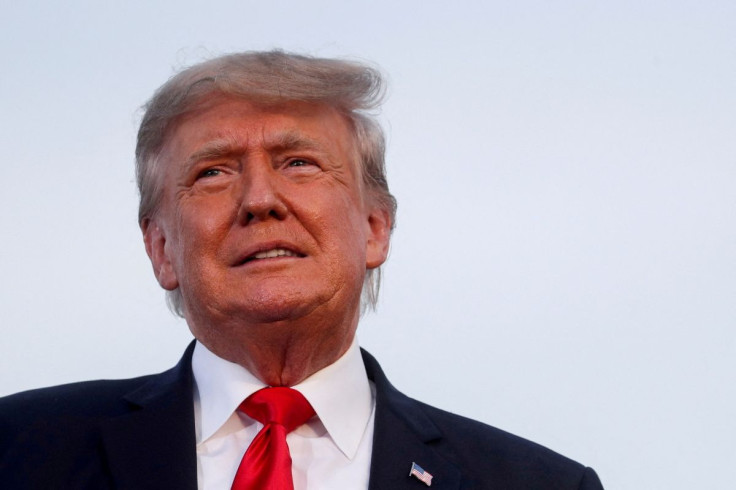
WASHINGTON — The Supreme Court handed President Donald Trump a significant constitutional defeat Tuesday, voting 6-3 to strike down his executive order attempting to end birthright citizenship, with Chief Justice John Roberts writing for the majority that the Fourteenth Amendment's guarantee of citizenship at birth reflects a promise rooted in the nation's founding that the court was obligated to uphold.
Trump responded quickly and defiantly, brushing aside the ruling as a setback rather than a final verdict, and immediately pivoting toward a legislative strategy to accomplish through Congress what the court had refused to let him achieve by executive order.
"The Supreme Court upheld Birthright Citizenship, which is too bad for our Country, but we can easily make it up in Congress through Legislation, with the support of the President, that has now been determined during this process," Trump wrote on his social media platform shortly after the ruling was issued.
He followed that post with a more specific call to action, urging Congress to begin work immediately on a legislative alternative and explicitly dismissing the constitutional amendment route as unnecessary.
"No long and unwieldy Constitutional Amendment is necessary," Trump wrote. "Congress should start TODAY to work on ending expensive and unfair to our Country, Birthright Citizenship."
Roberts, writing on behalf of the court's majority, grounded his opinion in the text and history of the Fourteenth Amendment, which was ratified in 1868 following the Civil War and extended citizenship to all persons born on American soil. The chief justice characterized citizenship not merely as a legal status but as a foundational right rooted in the nation's political identity.
"Citizenship, then and now, was the right to have rights — to freely participate in our political community," Roberts wrote. "The Framers of the Fourteenth Amendment extended that promise to every free-born person in this land. We keep that promise today."
The ruling struck down the executive order Trump signed on his first day back in the presidency, which had directed federal agencies to stop recognizing as citizens the American-born children of parents who are in the country illegally or on temporary visas. That order had been challenged almost immediately in federal court, with multiple district courts and federal appeals courts blocking its enforcement before the case reached the Supreme Court. Tuesday's ruling represented the court's definitive resolution of the constitutional question, concluding that the president lacked the authority to redefine birthright citizenship through executive action.
Birthright citizenship is embedded in both the Constitution and in the Nationality Act of 1940, which codifies into statute the principle that a person born in the United States and subject to its jurisdiction is a citizen from birth. Legal scholars watching the case had widely predicted that even if Congress were to pass legislation narrowing or eliminating birthright citizenship, such a law would almost certainly face immediate constitutional challenges that would return the issue to the Supreme Court, since any statute that conflicts with the Fourteenth Amendment would itself be subject to judicial review.
Trump acknowledged the legal reality Monday, saying he would accept the Supreme Court's decision and recognized the court's authority to issue a final ruling. Tuesday's defiant posts, however, suggested the president had no intention of treating the ruling as a permanent resolution of his policy objectives on the issue.
House Speaker Mike Johnson, speaking to reporters at a House Republican news conference before Trump's posts appeared, reflected a broadly shared sense of frustration within the Republican caucus about the court's decision, while acknowledging the significant practical barriers to any congressional action.
"I think it subjects the country to serious challenges going forward and we'll have to deal with it as a Congress," Johnson said, calling the current interpretation of birthright citizenship a policy that has been "grossly abused."
Johnson said Congress would examine all potential avenues in response to the ruling, including the constitutional amendment route, even while acknowledging the extraordinary difficulty of that path.
"I'm sure we will continue to look at that," Johnson said. "I'm sure the conclusion from this opinion is going to be you've got to amend the Constitution to fix that."
He acknowledged, however, that such an effort would be a "very complicated" and "many-years-long process," a candid admission of the steep procedural challenge facing any effort to alter the constitutional text on this issue. Amending the United States Constitution requires a two-thirds supermajority vote in both the House of Representatives and the Senate, followed by ratification by three-quarters of the states, currently 38 of the 50 states. Republicans hold majorities in both chambers of Congress, but fall well short of the two-thirds threshold in either body, meaning any amendment effort would require substantial bipartisan support, which appears highly unlikely given current political alignments.
The legislative route Trump proposed in his posts faces a different but equally challenging set of obstacles. While a simple majority in Congress could theoretically pass a law redefining who is subject to the jurisdiction of the United States, and therefore whose American-born children would qualify for citizenship, legal experts across the political spectrum have cautioned that such a law would almost certainly be challenged as unconstitutional on Fourteenth Amendment grounds from the moment it was signed. Any challenge would likely proceed quickly through the courts and return to the Supreme Court, where Tuesday's 6-3 majority would presumably be presented with an opportunity to determine whether Congress has the authority to modify the scope of birthright citizenship by statute rather than constitutional amendment, a question the court did not directly resolve in today's ruling, which focused specifically on the executive order rather than the outer limits of congressional power.
The White House did not provide additional detail about the administration's legislative strategy beyond pointing reporters back to the president's social media posts.
Democrats and civil rights organizations responded to the ruling as a vindication of constitutional principles, while warning that Trump's stated intention to pursue the issue legislatively demonstrated that the fight over birthright citizenship is far from over. The decision came the same day the court also issued a ruling in a related high-profile case involving state laws banning transgender girls from participating in girls' sports, which the court upheld in a separate opinion, producing a mixed morning of results for the administration at the nation's highest court.
© Copyright 2026 IBTimes AU. All rights reserved.
- Recommended For You