Georgia Elections 2026 Result: Republican Clay Fuller Wins Georgia Special Runoff to Replace Marjorie Taylor
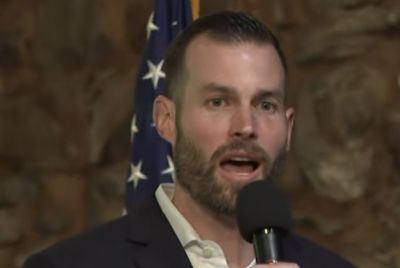
ATLANTA — Republican Clay Fuller, a Trump-endorsed former district attorney, defeated Democrat Shawn Harris on Tuesday in a special runoff election to fill the northwest Georgia congressional seat left vacant by former Rep. Marjorie Taylor Greene, maintaining Republican control of the deeply conservative district.

Fuller captured 55.9% of the vote to Harris' 44.1%, with more than 129,000 ballots counted, according to unofficial results from the Georgia Secretary of State's office and projections by major news organizations including CNN and The Associated Press. The victory sends Fuller to Washington to serve the remainder of Greene's term through January 2027, bolstering the GOP's slim House majority.
The contest, held in Georgia's 14th Congressional District, drew national attention as one of the first electoral tests of 2026 following President Donald Trump's return to the White House. The district, which stretches across rural northwest Georgia including parts of Catoosa, Walker and Floyd counties, has long been one of the most reliably Republican areas in the state, voting overwhelmingly for Trump in recent cycles.
Greene, a vocal Trump ally turned critic after public disagreements over foreign policy and other issues, resigned from Congress in January 2026, triggering the special election. A crowded 17-candidate field competed in the March 10 jungle primary, where all candidates appeared on the same ballot regardless of party. Harris, a retired Army brigadier general and cattle farmer, surprised many by finishing first with 37.3% of the vote. Fuller placed second at 34.9%, edging out other Republicans including state Sen. Colton Moore.
Under Georgia law, because no candidate received a majority in the initial round, the top two advanced to Tuesday's runoff. Republicans consolidated behind Fuller, who benefited from Trump's personal endorsement and campaign appearances. In the March primary, the dozen Republican candidates combined for nearly 60% of the total vote, signaling the district's strong conservative lean.
"Tonight's win is a clear message that the people of northwest Georgia stand with President Trump and the America First agenda," Fuller told supporters in Ringgold after the race was called. "I will fight every day in Congress to secure our borders, cut wasteful spending and protect our freedoms."
Harris, who emphasized his military service and moderate stance on issues like veterans' affairs and rural economic development, conceded the race late Tuesday evening. "While the results didn't go our way, we ran a campaign rooted in service and common sense," he said. "Democrats showed we can compete even in the reddest corners of Georgia, and that momentum will carry forward to November."
The race unfolded against a backdrop of broader national tensions, including U.S. involvement in the Iran conflict, which both candidates addressed. Fuller supported a strong military posture, while Harris expressed opposition to further escalation. Analysts said the district's conservative voters ultimately prioritized party loyalty and Trump's backing over foreign policy differences.
Voter turnout in the special runoff appeared modest compared to general elections, consistent with historical patterns for off-cycle contests. Early voting and Election Day ballots reflected the district's demographics: predominantly white, rural and evangelical, with strong support for gun rights and traditional values.
Fuller, 44, served as a prosecutor in northwest Georgia before entering the race. His campaign highlighted law-and-order themes, economic growth and alignment with Trump's agenda on trade and immigration. Trump held a rally in Rome in February that drew thousands and helped consolidate Republican support behind Fuller over more hard-line primary challengers.
The outcome keeps the 14th District in Republican hands, where it has remained since its creation. Once sworn in, Fuller will join a House Republican conference navigating a narrow majority amid internal divisions. He will face voters again in the regular May 19 primary and November 3 general election to win a full two-year term.
Tuesday's results also included other special contests. In a separate state Senate District 53 runoff, Republican Lanny Elwyn Thomas defeated Democrat John B. Zibluk with about 69% of the vote. Earlier special elections in 2026 had filled vacancies in the state legislature, but none shifted the overall balance of power in the GOP-controlled Georgia General Assembly.
Looking ahead, Georgia's political landscape remains a battleground. The May 19 primary will feature high-stakes races for governor, with incumbent Republican Brian Kemp term-limited, opening the door for a competitive GOP field and Democratic contenders. Polls show former Atlanta Mayor Keisha Lance Bottoms as a leading Democrat, while Republicans are still sorting nominees. The U.S. Senate race pits incumbent Democrat Jon Ossoff against a crowded Republican primary that includes U.S. Reps. Buddy Carter and Mike Collins.
Democrats hailed Harris' performance as evidence of growing competitiveness in traditionally red areas, pointing to his strong showing in the March primary despite the district's Trump +37 margin in 2024. "Shawn Harris exceeded expectations and proved that targeted outreach to rural voters can narrow gaps," said a Democratic strategist familiar with the race. Still, the 11.8-percentage-point loss in the runoff underscored the challenges Democrats face in deep-red terrain.
Republicans viewed the win as validation of Trump's influence and party unity. "This district sent a message: We reject the extremes and stand with proven conservatives," said a GOP state official.
The special election carried symbolic weight beyond Georgia. It marked one of the first opportunities for voters to respond to Trump's second-term agenda, including economic policies, immigration enforcement and international engagements. Political observers noted that while national issues like the Iran situation surfaced in campaign ads, local concerns — jobs, agriculture and infrastructure — dominated voter conversations at polling sites.
Georgia Secretary of State Brad Raffensperger reported smooth operations across the affected counties, with no widespread irregularities cited. Voter ID requirements and signature verification processes, long a point of contention in the state, proceeded without major legal challenges on Election Day.
As results solidified Tuesday night, both parties began pivoting to the full 2026 election cycle. Georgia's 14 congressional districts, governor's mansion, lieutenant governor, other statewide offices and one U.S. Senate seat will all be on the November ballot. The state's swing-state status at the federal level contrasts with its Republican dominance in state government, where the GOP holds the governorship, both legislative chambers and all constitutional offices.
For Fuller, the immediate task is transitioning from campaign trail to Capitol Hill. He is expected to be sworn in within days, filling the vacancy that has left the 14th District without representation since January. His arrival will temporarily bring House Republicans to 218 seats against Democrats' 214, with additional vacancies pending.
Analysts say the race offered limited predictive power for November because of the district's extreme partisan tilt and the special-election dynamics of lower turnout. Yet it highlighted ongoing Democratic efforts to make inroads in rural Georgia and Republican success in rallying behind a unified nominee.
In concession remarks, Harris urged supporters not to lose heart. "This is one battle in a longer fight for Georgia's future," he said. "We will be back stronger in the fall."
Fuller, meanwhile, thanked Trump and local leaders. "Together, we will deliver results for the hardworking families of northwest Georgia," he said.
The special runoff capped months of intense campaigning in a district where billboards, church events and town halls shaped the narrative. With polls closing at 7 p.m., results trickled in from rural precincts first, quickly showing Fuller building a lead that held through urban and suburban pockets in the district.
By 10 p.m., major networks had projected the winner, prompting celebrations at Fuller headquarters and quiet reflection at Harris gatherings. The outcome reinforces Georgia's status as a state where Democrats can occasionally run strong in specials but struggle to flip deep-red seats without broader shifts in voter sentiment.
As Georgia gears up for its May primaries, Tuesday's result serves as an early data point in what promises to be a consequential election year. With control of the House, Senate seats and the governor's office potentially in play, both parties are already mobilizing resources and refining messages for the battles ahead.
© Copyright 2026 IBTimes AU. All rights reserved.
- Recommended For You