(VIDEO: Livestream) Lindsey Graham's Funeral Draws Trump, Netanyahu, Zelenskyy and World Leaders to Washington
A Tribute to a Political Giant: Lindsey Graham's Impact Remembered
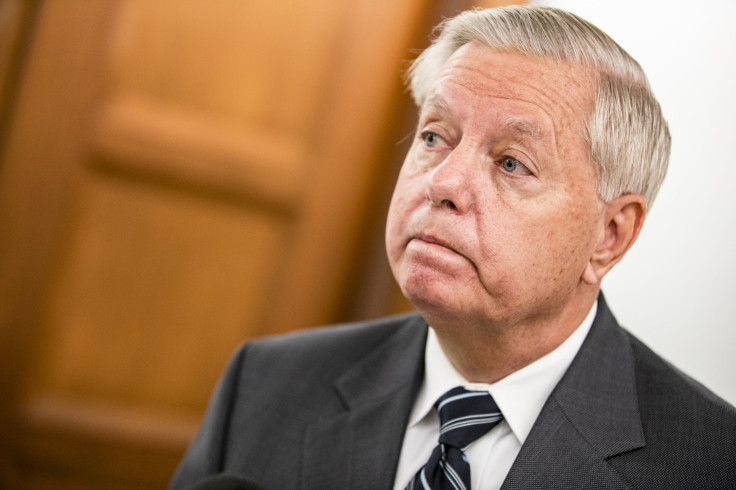
Sen. Lindsey Graham, the son of pool hall owners who became one of his generation's most influential U.S. politicians, was honored Tuesday during memorial services across Washington, D.C., drawing President Trump, foreign heads of state and lawmakers from both parties to mark his death.
Graham's remains arrived at the U.S. Capitol, where the Republican served for more than 30 years as an indefatigable dealmaker known for talking, laughing and badgering his colleagues into action. A funeral service followed later in the day at Washington National Cathedral, drawing lawmakers and foreign leaders in a testament to his stature on the global stage.
How Graham Died
Graham died suddenly and unexpectedly on July 11 at the age of 71. Preliminary findings from the Medical Examiner of the District of Columbia said the senator died due to "aortic dissection due to arteriosclerotic cardiovascular disease." At the time of his death, Graham served on the Senate Judiciary Committee, Appropriations Committee, Environment and Public Works Committee, and as chair of the Budget Committee.
Tuesday's Ceremonies in Washington
The day's tributes began with a formal ceremony inside the Capitol before shifting to the cathedral service later in the afternoon. The memorials began with an arrival ceremony at the Capitol building, where his casket was carried into the Rotunda by an Armed Forces Body Bearer Team, in recognition of his years of service in the Air Force. The military team was then replaced by a U.S. Capitol Police memorial guard for his decades of service in the Senate. The Rotunda program was closed to the public but livestreamed for those unable to attend in person.
Following the Capitol ceremony, Graham's casket departed for Washington National Cathedral, where a funeral service was scheduled to begin at 2 p.m. Eastern time, officiated by the Very Rev. Randolph Marshall Hollerith, dean of the cathedral. Hollerith addressed the significance of the setting ahead of the service. "We believe that God is present with us in all of life's moments," Hollerith said in a statement posted to the cathedral's website. "Our prayers are with Senator Graham's family at this difficult time."
A Tribute From President Trump
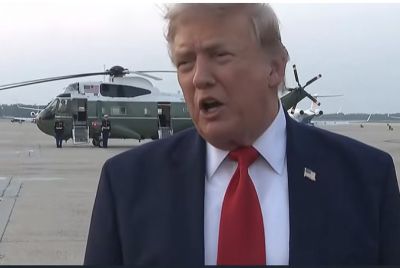
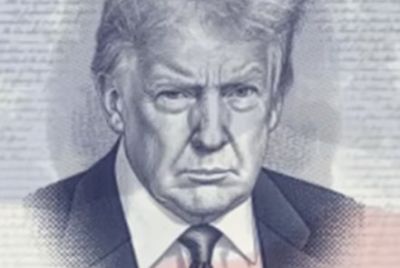
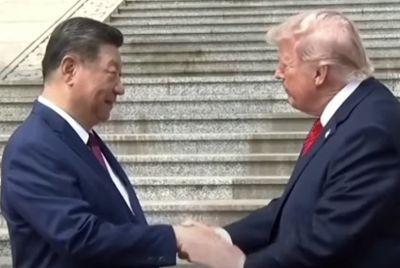
Trump, who was among the last people to speak with Graham before his death and has said he considered the senator like "family," was expected to deliver remarks during the cathedral service. Cabinet officials and congressional and military leaders were also expected to attend, alongside global leaders who worked closely with Graham on defense and foreign policy issues for years, including Israeli Prime Minister Benjamin Netanyahu and Ukrainian President Volodymyr Zelenskyy. Trump was also scheduled to meet separately with both Netanyahu and Zelenskyy at the White House the same day.
A Public Servant Since His Twenties
Graham's decades in public office began well before his arrival in the U.S. Senate. Before he was elected to the Senate, Graham served as a U.S. representative for South Carolina's 3rd District and as a South Carolina state representative. He also served in the U.S. Air Force, retiring as a colonel in 2015 after more than 33 years combined between active duty and the Air Force Reserve, where he worked as a military lawyer.
A native of Central, South Carolina, Graham was first in his family to attend college. According to a tribute published by Washington National Cathedral, Senator Graham raised his younger sister after the two lost their parents at a young age, a formative experience that shaped much of his early life before he went on to serve his home state and country in various roles for more than 40 years.
A Reputation for Foreign Policy Influence
Graham built a reputation over his career as a leading voice on national defense and foreign policy, frequently traveling to visit American troops stationed overseas for firsthand assessments. He consistently pushed for outcomes in the war on terror aimed at protecting long-term U.S. national security interests, and advised Trump directly on foreign matters, including the recent war in Iran.
Family and Succession
Graham, a Southern Baptist, never married and had no children. His younger sister, Darline Graham Nordone, was appointed by South Carolina Gov. Henry McMaster to serve the remainder of Graham's Senate term, which runs through January. Graham had been campaigning for reelection in November before his death.
Darline Graham, now serving as senator, thanked those who helped organize the tributes in a statement released by the family. "I am grateful to all those who have come together to help honor and remember Lindsey," she said, extending thanks to Trump and his team, Washington National Cathedral, Senate leadership, First Baptist Church of Columbia and the Senate Sergeant at Arms.
Services Continue in South Carolina
Following Tuesday's ceremonies in Washington, Graham's remains were scheduled to be flown to South Carolina that evening for a second day of tributes in his home state. Funeral services in South Carolina were set to begin Wednesday at the South Carolina State House at approximately 10:45 a.m., with a funeral procession carrying his casket via a South Carolina State Guard horse-drawn caisson, accompanied by a presentation of law enforcement from agencies across the state. An F-16 flyover from the 169th Fighter Wing based at McEntire Joint National Guard Base was scheduled to follow at around 11 a.m., after which the caisson would continue to First Baptist Church of Columbia for a funeral service, followed by a private family burial in Pickens County, South Carolina, where Graham and his sister were born and raised.
With tributes now complete in Washington and services continuing Wednesday in South Carolina, Graham's decades-long legacy as a foreign policy hawk, defense advocate and close Trump ally is likely to remain a point of reflection in Washington in the weeks ahead, particularly as his successor settles into the remainder of his term and as the international relationships he cultivated, underscored by the presence of leaders like Netanyahu at his funeral, continue to shape ongoing U.S. foreign policy discussions.
© Copyright 2026 IBTimes AU. All rights reserved.
- Recommended For You