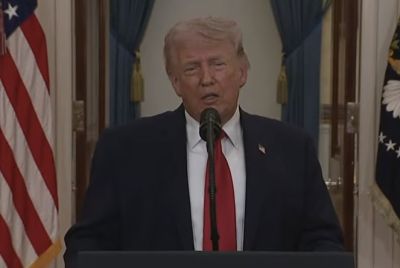
Trump and Xi Hold High-Stakes Beijing Summit as Trade, Taiwan and Iran Dominate Talks
US-China Summit Tackles Trade, Taiwan, and Iran Amid Evolving Power Dynamics

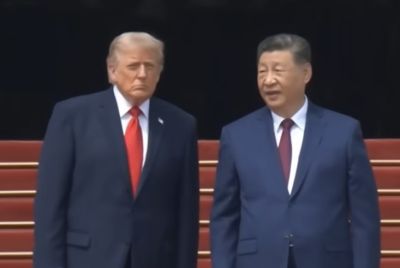
BEIJING — President Donald Trump and Chinese President Xi Jinping opened two days of high-stakes bilateral meetings Thursday at the Great Hall of the People, with the leaders exchanging warm words while grappling with thorny issues including trade tariffs, Taiwan arms sales and China's role in the Iran conflict.
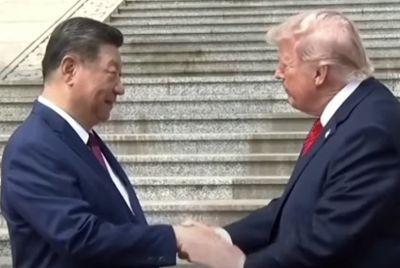
Trump, on his first visit to China since 2017, arrived Wednesday evening to a formal welcome ceremony featuring military honors and children waving American and Chinese flags. He described Xi as a "great leader" and expressed optimism that the relationship between the world's two largest economies would become "better than ever before." Xi responded by calling for the United States and China to be "partners, not rivals," setting a tone of cautious engagement amid deep strategic competition.
The summit, originally delayed by the U.S.-Israel conflict with Iran, comes at a critical juncture. Trump is seeking Chinese purchases of American agricultural goods, Boeing aircraft and energy exports to demonstrate wins for U.S. workers. Beijing is expected to announce modest commitments while pressing for reduced tariffs and greater market access for its companies. Analysts anticipate limited breakthroughs on structural disputes such as industrial subsidies and technology competition.
Iran featured prominently on the agenda. With the Strait of Hormuz partially disrupted by recent hostilities, Trump pressed China — Iran's largest oil customer — to use its influence to help stabilize energy flows and support diplomatic efforts. Xi emphasized the need for calm but stopped short of committing to direct intervention, prioritizing Beijing's energy security and non-interference principles.
Taiwan remains a flashpoint. U.S. arms sales to the self-governing island continue to irritate Beijing, which views the issue as a core interest. Trump's delegation signaled no immediate policy shift but used the topic as leverage in broader negotiations. Any movement here could have significant implications for regional stability in the Asia-Pacific.
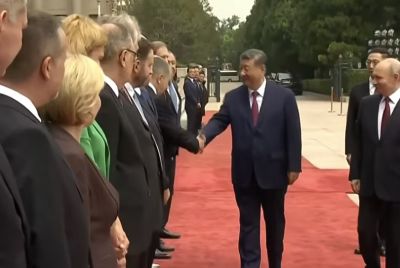
A notable element of the visit is the presence of prominent U.S. business leaders, including Elon Musk, Tim Cook and Jensen Huang, highlighting the commercial dimension alongside diplomacy. Trump aims to facilitate deals that open Chinese markets further for American technology and manufacturing. Xi hosted a welcoming banquet and cultural events, including a visit to the Temple of Heaven, blending formal talks with symbolic gestures of goodwill.
The atmosphere reflects evolved power dynamics since Trump's 2017 trip. China's economy is less reliant on the U.S. market, with diversified trade partners and advances in self-reliance. Xi projects confidence despite domestic challenges, while Trump seeks tangible outcomes to bolster his domestic standing amid inflation concerns and midterm pressures.
Early readouts from both sides differed in tone. Chinese state media emphasized mutual respect and partnership, while U.S. officials highlighted reciprocity and fairness. No major agreements were announced after the initial bilateral session, consistent with modest expectations for the summit. Possible outcomes include extensions of critical minerals deals, new dialogue forums on trade and investment, and symbolic purchase pledges.
Security around the event has been tight, with parts of Beijing locked down and tourist sites temporarily closed. The scaled-back pomp compared to 2017 underscores cooler bilateral ties shaped by years of tariffs, technology restrictions and military posturing. Yet both leaders have met multiple times since Trump's return to office, establishing a transactional rapport.
Global markets watched closely for signals on tariffs, supply chains and investment flows. U.S. stocks showed mixed reactions, while Asian indices found modest support on hopes for reduced tensions. Commodity prices, particularly oil, remained sensitive to any Iran-related developments.
For Trump, the summit offers a chance to project strength on the world stage and deliver economic wins. For Xi, hosting the first U.S. presidential visit in nearly a decade allows China to demonstrate global centrality. Domestic politics shape both approaches: Trump needs visible results, while Xi seeks stability to focus on economic recovery.
The two-day schedule includes further talks, possible business announcements and cultural exchanges. Trump's entourage includes senior officials and executives pushing for concrete deals on soybeans, aircraft and technology access. Analysts caution that deep issues like intellectual property, market access and geopolitical flashpoints will likely persist beyond this meeting.
Reactions from allies and observers have been measured. European leaders monitor impacts on global supply chains, while Asian nations watch closely for shifts on Taiwan and regional security. Emerging markets hope for de-escalation that could stabilize commodity prices and trade flows.
As talks continue into Thursday evening, the world awaits joint statements or announcements. The Trump-Xi relationship has defined much of global politics in recent years, and this Beijing summit, though more restrained than previous encounters, carries significant weight for the international order. Incremental progress on trade and Iran could set a positive tone, while disagreements risk hardening positions heading into the remainder of Trump's term.
The summit underscores the complex interdependence between the United States and China. Despite rivalry, both nations recognize the costs of unchecked confrontation. Whether this meeting yields meaningful stabilization or merely manages tensions remains the central question as leaders navigate one of the most consequential bilateral relationships in the world.
© Copyright 2026 IBTimes AU. All rights reserved.
- Recommended For You