Trump Shares Bombshell Post: U.S. Crushes China's Cheap Sanctioned Oil Scheme After Iran, Venezuela Moves
WASHINGTON — President Donald Trump on Friday highlighted a major shift in global energy geopolitics, sharing a news report on Truth Social claiming his administration's interventions in Iran and Venezuela have dismantled China's long-standing strategy of importing billions of dollars worth of discounted sanctioned oil.
In the post with Truth Social ID 116378705268992787, Trump linked to a Just the News article detailing how Beijing had exploited U.S. sanctions on Russia, Iran and Venezuela to secure roughly 20% of its oil imports at steep discounts, saving an estimated $12 billion to $15 billion annually. The president's sharing of the story underscores his view that recent U.S. actions have upended that arrangement to America's strategic advantage.
The article, published April 6, 2026, argues that Trump's military and diplomatic pressure on Tehran and the earlier intervention in Caracas have forced China to pay closer to market prices for a significant portion of its crude imports. Brent Sadler of the Heritage Foundation told Just the News that more than 20% of China's oil supply will now cost "greatly higher" prices, delivering a message ahead of a planned summit between Trump and Chinese President Xi Jinping.
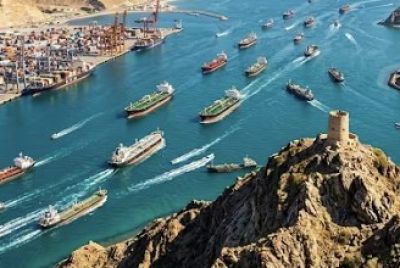
For years, China relied on a "shadow fleet" of tankers to import discounted crude from sanctioned producers. A House Select Committee on the Chinese Communist Party report found that in 2025, Beijing imported 2.6 million barrels per day of such oil — 1.4 million from Russia, 852,000 from Iran and 419,000 from Venezuela. These flows helped fill strategic reserves estimated at 1.2 billion barrels by early 2026.

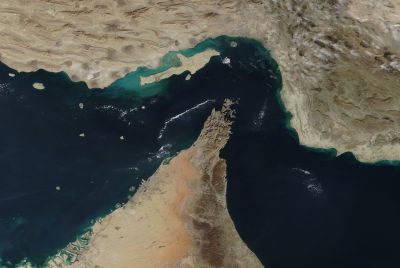
Trump's renewed "maximum pressure" campaign on Iran, including strikes that disrupted shipping in the Strait of Hormuz, combined with U.S. actions in Venezuela, has reportedly made the discounted trade unsustainable. The committee concluded that China's sanctions-evasion model "may no longer be viable" as shadow fleet operations face heightened enforcement and geopolitical risks.
The development comes amid fragile progress on a U.S.-Iran ceasefire. Earlier this week, Trump posted aggressively about reopening the Strait of Hormuz, through which roughly 25% of global seaborne oil trade once flowed. The waterway's partial reopening has eased some immediate energy market tensions but left long-term arrangements uncertain.
Administration officials have framed the disruptions as part of a broader strategy to counter adversaries. By regaining leverage over Venezuelan oil exports and pressuring Iranian shipments, the U.S. aims to deny Beijing cheap energy that previously subsidized its economic and military ambitions. Trump has publicly invited China to purchase Venezuelan oil at fair market prices under U.S. oversight.
Energy analysts say the shift could add billions to China's import bill at a time when its economy faces domestic challenges. China, which imports more than 10 million barrels of oil per day, depends heavily on foreign supplies to fuel its manufacturing sector and military modernization. Losing access to discounted barrels from pariah states represents a significant strategic setback.
The House committee's investigation highlighted how sanctions intended to starve hostile regimes of revenue instead funneled discounted oil primarily to China. Beijing's refiners benefited from the price gap while exporters like Iran and Venezuela grew more dependent on the Chinese market. Over 80% of Iran's seaborne oil exports went to China in 2025.
Trump's Truth Social post arrives as markets digest Friday's oil price movements. Brent crude traded near recent levels after the ceasefire news, while U.S. officials monitor whether renewed stability in the Gulf will allow normal tanker traffic to resume. Any sustained disruption would have ripple effects on global inflation and supply chains.
White House spokespeople declined to comment directly on the president's social media activity but reiterated the administration's commitment to enforcing sanctions and protecting U.S. energy dominance. "America is no longer going to allow our adversaries to game the system," one official said on background.
Critics, including some foreign policy experts, question whether the approach risks escalating tensions with China. Beijing has historically viewed energy security as a core interest and may seek alternative suppliers or accelerate domestic production. However, immediate substitutes for sanctioned crude at similar discounts appear limited.
The story also ties into broader U.S.-China trade negotiations. A Trump-Xi summit tentatively set for May could address everything from tariffs to technology restrictions, with energy leverage now playing a more prominent role. Trump has repeatedly used Truth Social to signal negotiating positions ahead of high-stakes diplomacy.
Supporters of the president's foreign policy hail the moves as masterful realpolitik. By intervening in Venezuela late last year and confronting Iran more recently, Trump has reportedly flipped the energy chessboard. What was once a reliable discount pipeline for Beijing now carries higher costs and greater risks.
Democrats and some international observers have expressed concern over the military dimensions of the strategy, particularly regarding Iran. Earlier Trump posts threatening strikes on Iranian infrastructure drew widespread attention and criticism for their blunt language. The administration maintains that measured pressure, backed by strength, has produced results.
Oil industry insiders note that while China may pay more, global markets could eventually rebalance. Higher prices for Beijing might benefit U.S. producers and allies if American energy exports fill gaps. Venezuela's oil sector, now under increased U.S. influence, could see renewed investment if political conditions stabilize.
Trump's decision to amplify the Just the News story fits his pattern of using social media to shape narratives and pressure competitors. The platform remains his primary channel for direct communication with supporters and the world. Friday's post quickly garnered significant engagement, reflecting ongoing public interest in his foreign policy.
As the May summit approaches, energy security is expected to feature prominently. China's need for stable, affordable oil imports gives the U.S. potential leverage in talks over trade imbalances and strategic competition. Whether this translates into concrete agreements remains to be seen.
The episode underscores how energy flows have become central to great-power rivalry. Sanctions, military actions and diplomatic maneuvers now intersect with tanker routes and strategic reserves in ways that directly affect global prices and economic stability. Trump's latest Truth Social post serves as both commentary and signaling in this complex arena.
For American consumers, the developments could mean relative stability at the pump if supply disruptions ease. For Beijing, the end of easy discounted oil marks the close of a profitable chapter enabled by sanctions arbitrage. And for Trump, it represents another example of his "America First" approach reshaping international dynamics.
As markets and diplomats digest the implications, one thing is clear: the era of China freely exploiting sanctioned oil at deep discounts appears under serious pressure — a shift the president wasted no time highlighting to his audience on Truth Social.
© Copyright 2026 IBTimes AU. All rights reserved.
- Recommended For You