Victor Wembanyama Injury Update: How Will Concussion Affect His Performance in the Playoffs?
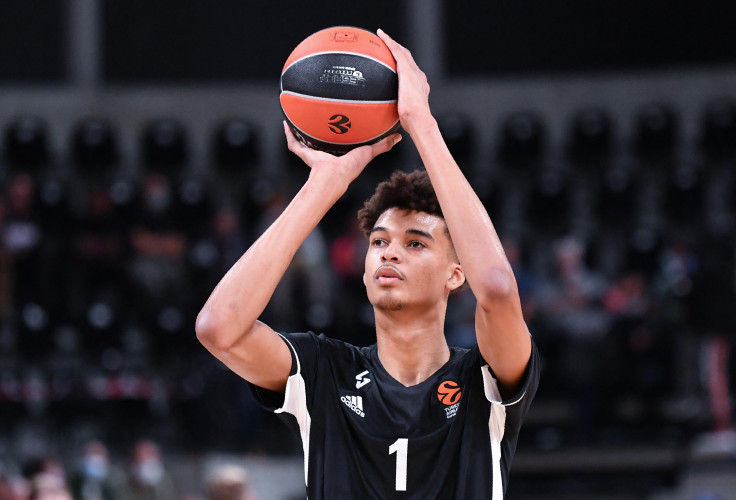
SAN ANTONIO — Victor Wembanyama's frightening face-first fall in the second quarter of Game 2 has left the San Antonio Spurs without their franchise cornerstone and raised serious questions about how a concussion will impact the towering 7-foot-4 phenom's play if and when he returns in the 2026 NBA playoffs.
Wembanyama suffered a diagnosed concussion after tumbling hard to the court following contact with Portland Trail Blazers guard Jrue Holiday during a drive to the basket Tuesday night. He exited with just 12 minutes played, recording five points, four rebounds, one block and one assist, and did not return as the Blazers stole a 106-103 road victory to knot the Western Conference first-round series at 1-1.
The injury occurred at the 8:57 mark of the second quarter when Wembanyama spun around Holiday, lost his balance and slammed face-first onto the hardwood. He remained down for several seconds, appeared dazed while struggling to stand and jogged directly to the locker room after a timeout. Spurs coach Mitch Johnson confirmed postgame that Wembanyama had a concussion and was placed in the NBA's concussion protocol.
Under league guidelines, Wembanyama cannot engage in full participation for at least 48 hours from the time of injury and must remain symptom-free while progressing through a stepwise return-to-play process. He can begin gradual activity after 24 hours if symptoms do not worsen, followed by monitored exertion levels, non-contact drills and eventual clearance from both the team physician and the NBA's concussion protocol director. Further testing was scheduled for Wednesday.
The timeline puts Game 3 on Friday in Portland in serious doubt. Many observers, including ESPN's Stephen A. Smith, believe a return for Game 3 is highly unlikely. A more realistic target appears to be Game 4 on Sunday or, more conservatively, Game 5 next Tuesday back in San Antonio. Average NBA concussion recovery spans about seven to 10 days, though individual cases vary based on symptom severity.
For a player of Wembanyama's unique physical profile, even a mild concussion carries amplified risks. The 22-year-old's extraordinary height means any fall generates significant force upon impact, potentially affecting balance, coordination and spatial awareness — all critical to his game. Concussions commonly cause headaches, dizziness, sensitivity to light or noise, slowed reaction times, impaired concentration and reduced cognitive processing, symptoms that could blunt Wembanyama's elite shot-blocking, perimeter defense and stretch-big scoring.
In the regular season, Wembanyama anchored the Spurs' defense while emerging as a versatile offensive threat capable of scoring inside, draining threes and facilitating. His playoff debut in Game 1 was electric: a franchise-record 35 points on 13-for-21 shooting, including five threes, plus five rebounds and two blocks in a 111-98 victory. Without him in the second half of Game 2, San Antonio's interior defense softened, allowing Portland to exploit mismatches and mount a late rally.
Veteran Luke Kornet stepped in at center and delivered a solid 10 points and nine rebounds in 28 minutes, but the drop-off from Wembanyama's rim protection and switchability was evident. The Spurs' young supporting cast, including rising talents like Stephon Castle, showed flashes but lacked the gravitational pull Wembanyama provides.
Medical experts note that returning too soon from a concussion can prolong recovery or lead to second-impact syndrome, a rare but dangerous condition. The NBA's protocol emphasizes caution, particularly in the heightened intensity of playoffs where physicality and fatigue rise. Wembanyama's history includes a recent rib contusion late in the regular season, though that injury was unrelated.
Spurs leadership has stressed patience. "We'll take the proper and appropriate steps," Johnson said. "It's tough, but health comes first." Team officials have not ruled out Wembanyama traveling with the squad to Portland, but his on-court status remains fluid pending daily evaluations.
The absence reshapes the series dynamics. Portland, seeded seventh, seized momentum by capitalizing on San Antonio's diminished frontcourt. Blazers players and coaches expressed concern for Wembanyama's health while acknowledging the opportunity. If Wembanyama misses multiple games, Portland's path to an upset brightens considerably, forcing the Spurs to rely more heavily on perimeter scoring and collective defense.
Historically, NBA teams missing star players to concussion in the postseason have mixed results. Some recover quickly and return stronger; others experience lingering effects that subtly erode performance — missed rotations on defense, delayed help-side help, or hesitation on drives. For Wembanyama, whose game relies on length, anticipation and fluid movement, any residual dizziness or neck stiffness could limit his trademark chase-down blocks or step-back threes.
Broader concussion awareness in the NBA has improved, with stricter protocols implemented over the years following high-profile cases. Players like former stars who dealt with repeated head trauma have spoken publicly about long-term cognitive concerns, though Wembanyama's situation appears isolated to this single incident.
Fan reaction on social media and in San Antonio has been one of worry mixed with optimism for a swift recovery. The Frost Bank Center crowd Tuesday night fell silent during the sequence, a stark contrast to the electric atmosphere of Game 1 when Wembanyama's playoff arrival felt like a coronation.
If cleared, Wembanyama's return could swing momentum back to the Spurs, who finished the regular season with the Western Conference's second-best record behind their superstar. His presence transforms San Antonio from a promising young team into a legitimate contender capable of making noise beyond the first round.
Yet the injury underscores the fragility of even the most physically gifted athletes in a grueling playoff grind. The series now shifts to Portland's Moda Center, where the Blazers will look to build on their Game 2 resilience. San Antonio must find answers without its defensive anchor, testing the depth and composure of a roster still gaining postseason experience.
Medical updates will dominate the narrative over the next 48 hours. Should symptoms resolve quickly, Wembanyama could rejoin the lineup feeling fresh after enforced rest. More persistent effects might sideline him longer, forcing the Spurs into survival mode.
Wembanyama himself has projected confidence and maturity throughout his young career. In interviews before the series, he spoke of embracing the playoff stage and learning from every moment. How he navigates this health challenge will add another layer to his rapid ascent from French prospect to NBA superstar.
For now, the Spurs face an immediate test of resilience. Portland smells blood in the water after even the series, while San Antonio must adapt without its most irreplaceable piece. The coming days will reveal not only Wembanyama's recovery timeline but also the depth of a franchise built around his extraordinary potential.
As the Western Conference playoffs intensify, one thing remains clear: the Spurs' championship aspirations hinge heavily on their towering French star staying healthy and performing at the level that has already rewritten expectations in San Antonio. A prolonged absence could turn a promising postseason into an early exit, while a timely return might ignite a deeper run.
The basketball world watches closely, hoping for a full recovery that allows Wembanyama to showcase his generational talent on the biggest stage without compromise.
© Copyright 2026 IBTimes AU. All rights reserved.
- Recommended For You