

SK Hynix Files for Nasdaq Listing Under SKHY Ticker in Bid to Raise Record-Setting $29.4 Billion
South Korean chip giant SK Hynix plans a landmark Nasdaq debut, potentially surpassing Alibaba's record ADR listing.
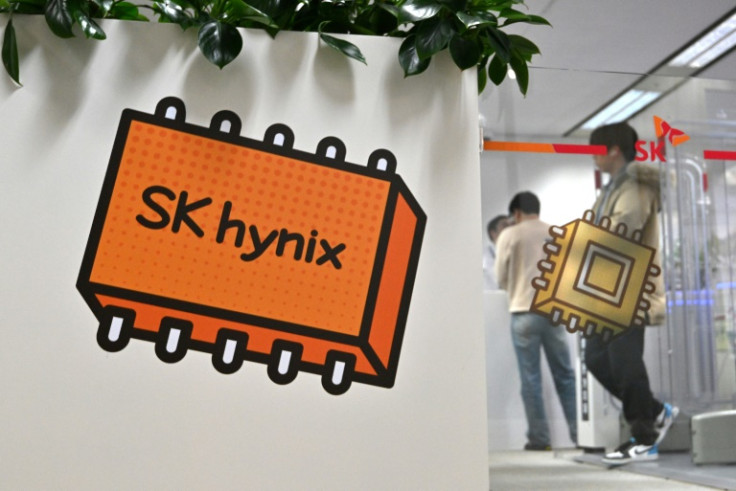
SEOUL — South Korean memory chip giant SK Hynix filed an amended registration statement with the U.S. Securities and Exchange Commission on June 30, formally launching what could become the largest American depositary share offering in history and potentially setting the stage for trading on the Nasdaq Global Select Market as early as July 10.
The company, the world's second-largest memory chipmaker and the dominant force in the high-bandwidth memory chips that power Nvidia's artificial intelligence accelerator systems, is seeking to raise approximately $29.4 billion through the listing of 17.79 million American Depositary Shares under the ticker symbol SKHY. That figure, if achieved at the expected ADS price of approximately $166 per share, would surpass Alibaba's $21.8 billion New York debut in 2014 as the largest ADR listing in recorded market history.
SK Hynix Chief Executive Kwak Noh-jung addressed the strategic rationale behind choosing a Nasdaq listing directly at the announcement.
"The U.S. market, where global big tech is listed, will allow large institutional investors to properly reassess corporate value," Kwak said.
BofA Securities, Citigroup, Goldman Sachs and J.P. Morgan are serving as global coordinators for the offering. The registration statement has not yet become effective, and prior to the offering, no public market has existed for the company's ADSs. SK Hynix will continue to maintain its existing listing on the Korea Exchange KOSPI Market under identification code 000660, achieving a dual-listing structure that gives both Korean and American investors direct access to the company's equity.
The 17.79 million shares being offered represent approximately 2.5% of SK Hynix's total outstanding shares, a stake structured specifically to ensure that SK Square, the company's largest shareholder, retains at least the 20% ownership required under South Korean regulations governing major corporate shareholders. The company said proceeds from the offering will be used for general corporate purposes, including capital expenditures for new semiconductor fabrication facilities and the acquisition of advanced extreme ultraviolet lithography equipment, with a delivery target of December 2027.
The primary destination for that capital is the Yongin Semiconductor Cluster, a massive new campus of memory chip fabrication plants being built in South Korea and set to begin coming online in 2027. SK Hynix is also constructing what will be its first manufacturing presence in the United States, a $4 billion advanced packaging facility in Indiana designed to bring some of the most complex chip production work closer to American technology customers.
The decision to list on Nasdaq rather than the New York Stock Exchange reflects a deliberate strategic calculation about where SK Hynix's equity belongs in the global investment landscape. Analysts at BofA Securities have noted that passive investment funds now account for a larger proportion of global capital flows than active funds, and that a substantial share of that passive capital is concentrated in Nasdaq-listed technology and growth stocks. Once SK Hynix is included in Nasdaq indices and the ETFs that track them, it would generate continuous and stable inflows from index-tracking vehicles that currently have no mechanism to hold Korean-listed shares without going through intermediary ETF structures.
That dynamic mirrors the journey taken by Taiwan Semiconductor Manufacturing Co., which has traded on the New York Stock Exchange for decades. HSBC noted in a June 2026 research note that the years after American capital gained easier access to TSMC marked a sustained re-rating in how the company was valued relative to comparable businesses, and applied that framework to SK Hynix's anticipated Nasdaq debut. The bank applied a 20% premium to its prior price-to-book ratio for SK Hynix, lifting the estimate from 2.8 times to 3.4 times and upgrading its price target for the company's Korean shares from 2.9 million won to 4 million won, a 38% increase, reflecting what it described as improved accessibility to global investors and more proactive shareholder-friendly initiatives.
SK Hynix's competitive position in the segments most relevant to the current AI infrastructure buildout is difficult to overstate. As of the first quarter of 2026, according to IDC data cited in the company's own SEC filing, SK Hynix ranked second globally in DRAM by revenue with a 29.1% market share, first globally in high-bandwidth memory with a 56.4% revenue share, and second in NAND flash storage with an 18.5% share. Its customers include Nvidia, Google and Microsoft, effectively the full roster of companies spending tens of billions of dollars annually to build the computing infrastructure underlying the global AI expansion.
The high-bandwidth memory segment, where SK Hynix holds its most dominant position, has been at the center of a global supply shortage that has driven both extreme price appreciation and a dramatic revaluation of memory chipmakers broadly. Goldman Sachs raised its 2026 forecast for the global DRAM supply-demand gap to 4.9%, up from an earlier estimate of 3.3%, calling it the most severe memory shortage in 15 years. That shortage has been the primary driver behind SK Hynix's Korean share price surge of more than 280% year to date, pushing its market capitalization above $1 trillion and establishing it alongside Micron Technology and Samsung Electronics as one of the three companies most directly positioned to benefit from continued AI infrastructure spending.
The Roundhill Memory ETF has climbed 160% so far this year, while the iShares Semiconductor ETF has gained 96%, performance gaps that reflect how specifically the market has rewarded memory-focused businesses relative to the broader chip sector. With a U.S. listing, SK Hynix would give American investors direct exposure to the world's leading HBM supplier through a familiar exchange, without the friction of converting Korean won or navigating foreign brokerage infrastructure.
SK Hynix's operating margin stood at 58.58% as of its most recent reporting period, reflecting the extraordinary pricing environment in which the current memory cycle is operating. The company's Altman Z-score of 22.42 indicates extremely low financial distress risk, and its price-to-earnings ratio of approximately 24.88 places it at a moderate valuation relative to semiconductor peers, a multiple that analysts say could expand meaningfully once the stock begins trading on Nasdaq and passive capital flows begin accumulating automatically.
© Copyright 2026 IBTimes AU. All rights reserved.