

Cathay Pacific Marks 80 Years Since First Flight, From Converted Cargo Plane To Global Airline
Tracing Cathay Pacific's Journey from a Single Aircraft to a Global Aviation Icon
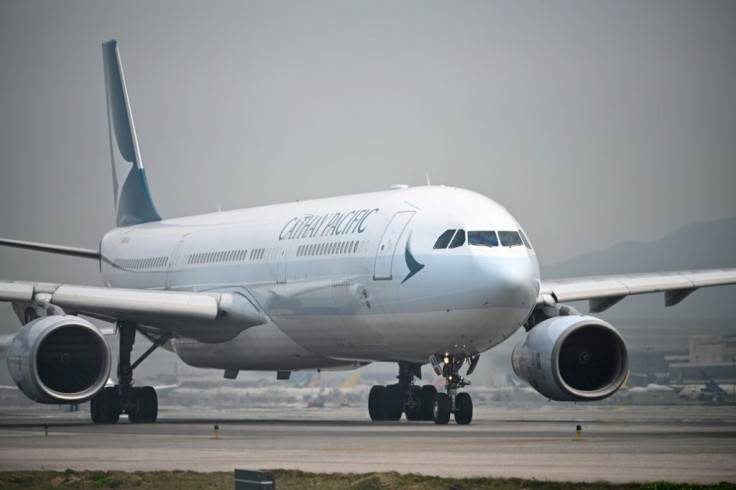
HONG KONG — Cathay Pacific is celebrating 80 years since its founding, tracing a journey that began with a single converted cargo aircraft in the aftermath of World War II and has since grown into one of Asia's most recognized commercial airlines, serving more than 100 destinations worldwide.
The airline's origins date to 1946, when former Air Force pilots Roy Farrell and Sydney de Kantzow set out to establish a cargo route flying goods from Australia to Shanghai. Cathay Pacific Airways was officially registered in Hong Kong for HK$2 on Sept. 23, 1946, and the company operated its first flight just one day later, on Sept. 24, from Sydney to Hong Kong. The airline's entire fleet at the time consisted of a single aircraft, a converted Douglas DC-3 affectionately nicknamed "Betsy."
Cathay Pacific Group CEO Ronald Lam reflected on the airline's founding mission and its enduring relevance eight decades later.
"Since our earliest days, Cathay Pacific has helped open new horizons for people, businesses and communities," Lam said. "That purpose has defined our first 80 years, and it continues to guide us today."
The airline's expansion accelerated through the following decades. In the 1960s, Cathay Pacific's Convair 880 jetliners extended the airline's network across Asia to destinations including Seoul and Kota Kinabalu, as jet-powered aircraft made air travel faster and more accessible than the propeller-driven planes that preceded them. On Oct. 19, 1964, the airline welcomed its millionth passenger aboard a flight between Singapore and Bangkok.
A significant turning point came in 1979 with the arrival of Cathay Pacific's first Boeing 747, which extended the airline's reach well beyond the Asia-Pacific region and laid the groundwork for a truly global route network. The following year, the airline launched its first service to London, marking its formal entry into long-haul intercontinental travel.
Throughout the 1980s, Cathay Pacific's Boeing 747 aircraft, painted in the airline's now-iconic green-and-white striped livery often referred to as the "lettuce leaf sandwich" design, became a familiar sight over Kowloon as they approached Hong Kong's former Kai Tak Airport, serving as an enduring symbol of the city's connection to the broader world. That decade also brought the expansion of passenger services to mainland China, beginning with Shanghai in 1980. In 1983, Cathay Pacific became the first airline in Asia to offer first class, business class and economy class cabins aboard the same aircraft, establishing a new industry benchmark for passenger service tiers. Three years later, coinciding with the airline's 40th anniversary, Cathay Pacific became the first company to list on Hong Kong's newly unified stock exchange.
The airline also built a reputation for pioneering in-flight passenger technology during this period. In 1991, Cathay Pacific became the first airline to introduce live radio broadcasts on board, delivering music and news content directly to passengers during flights. Seatback entertainment systems followed shortly after, arriving first in first class in 1992 before expanding across all cabin classes by 1996.
One of the airline's most significant operational transitions came in 1998, when Hong Kong's aviation infrastructure shifted from the historic but constrained Kai Tak Airport to the newly built Hong Kong International Airport at Chek Lap Kok. On July 5, 1998, Cathay Pacific flight CX251 to London Heathrow became the final flight to depart Kai Tak. The following morning, flight CX889, dubbed "Polar One," landed at the newly opened Hong Kong International Airport, having completed the first non-stop passenger service between New York and Hong Kong, and at the time, the longest non-stop commercial flight route in operation anywhere in the world. That same year, Cathay Pacific took delivery of its first Boeing 777-300, an aircraft that would go on to form the backbone of its long-haul fleet for years to come.
The airline's fleet modernization has continued into more recent years, with the arrival of the Airbus A350 in 2016 ushering in a new era of fuel efficiency and passenger comfort. More recently, Cathay Pacific has introduced updated cabin products across selected Boeing 777-300ER aircraft, refreshing its business, premium economy and economy class designs as part of its continued evolution of the passenger experience.
Cargo operations have also played a central role in Cathay Pacific's growth. The airline's first dedicated freighter aircraft began operations in 1976, with cargo becoming an increasingly important pillar of the business through the 2000s. The HK$5.9 billion Cathay Cargo Terminal entered full operation in 2013, establishing itself as one of the world's largest and most technologically advanced air cargo facilities and cementing Hong Kong's position as a leading international air freight hub. Today, Cathay Cargo transports approximately 1.7 million tonnes of cargo annually.
The airline has continued expanding its global route network in recent years, setting a record for its longest-ever route with the launch of service to Dallas-Fort Worth in April 2025. Cathay Pacific's network now spans more than 100 destinations worldwide, recently strengthened by new routes to Urumqi, Munich and Seattle, with service to Almaty set to join the network in 2027.
Beyond its route expansion, Cathay Pacific has continued investing in its onboard passenger experience, introducing new Airbus A321neo aircraft featuring enhanced comfort and entertainment options, alongside its acclaimed Aria Suite business class product and refreshed premium economy and economy cabins across selected Boeing 777-300ER aircraft. The airline has said its refreshed economy cabins and a new Aria Studio business class product will soon debut aboard its Airbus A330-300 fleet, marking the next phase of its regional cabin upgrades.
As Cathay Pacific has evolved into what the company describes as a broader travel lifestyle brand, it has expanded beyond air travel into a range of additional consumer offerings, including dining, shopping and wellness experiences, alongside deeper integration with transportation links across China's Greater Bay Area region. The airline has also emphasized its ongoing commitment to sustainability, citing continued investment in newer, more fuel-efficient aircraft, emissions-reduction measures across its operations, and an accelerated adoption of sustainable aviation fuel as part of its broader environmental strategy.
Reflecting on the airline's 80-year milestone, Lam emphasized Cathay Pacific's deep ties to its home city and the broader region it has served since its founding.
"As we celebrate 80 Years Together, we do so with gratitude for everyone who's been part of our journey," Lam said. "Cathay Pacific's story is inseparable from Hong Kong, from our deep connections to the Chinese Mainland and from our place in the wider world. Our responsibility now is to honour that legacy by building on it, so future generations can continue to discover the joy of travel."
© Copyright 2026 IBTimes AU. All rights reserved.