Is Dubai International Airport Open Today? Here's What Travelers Need to Know Amid Iran Tensions This Week
Despite regional tensions, Dubai International Airport continues operations, though disruptions persist.

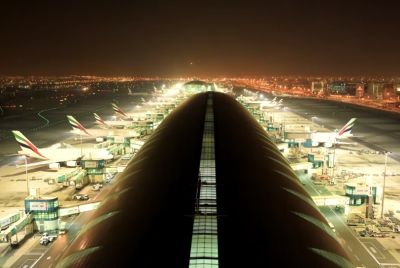
DUBAI — Dubai International Airport is open and operating today, with flights moving through all three of its terminals, even as the world's busiest hub for international passenger traffic continues navigating one of the most disruptive stretches in its history amid ongoing tensions between the United States and Iran.
According to Dubai Airports' official flight information system, no scheduled closures are currently in place, and real-time departures and arrivals boards continue to list active flights. Emirates and flydubai, the two homegrown carriers that form the backbone of DXB's operations, have continued flying throughout the disruption, together accounting for more than 220 combined daily departures even during the height of regional tensions earlier this year.
A Crisis That Began in February
DXB's current situation traces back to the outbreak of renewed conflict between the United States and Iran on Feb. 28, which triggered a near-total closure of Gulf airspace and one of the most severe operational crises in the airport's history. During the most disruptive stretch, between late March and April, regional airspace closures forced cancellations and flight suspensions across DXB's network, with some airlines instructing passengers not to travel to the airport until their flights were reconfirmed.
While Dubai's airspace was never formally shut down during the conflict's most intense phases, the European Union Aviation Safety Agency issued a Conflict Zone Information Bulletin ordering European-regulated carriers to avoid UAE airspace entirely, effectively grounding dozens of major international airlines that relied on Gulf routes for weeks.
A Fragile Recovery
A tentative U.S.-Iran ceasefire that took effect April 8 triggered a wave of airline reinstatements, with Qatar Airways resuming daily Dubai service from April 23 and other Gulf carriers, including Saudia, returning to the route around the same time. By early July, Dubai Airports had described the airport as having returned to normal operations, with British Airways announcing it would resume flights to Dubai, albeit at a reduced scale of one daily flight rather than its prior three.
That recovery proved fragile. Renewed fighting between the United States and Iran in the weeks since disrupted regional air travel once again, with flight-tracking data showing 257 delays and 21 cancellations at DXB on a single day in mid-July, affecting Emirates, flydubai and Saudia, according to tracking compiled from FlightAware data. The disruptions rippled outward to airports well beyond the Gulf, with European gateways including London Heathrow, London Gatwick, Milan Malpensa, Istanbul, Munich and Hamburg all registering schedule disruptions tied to the Dubai delays, alongside South Asian routes to Colombo, Dhaka and Delhi, and longer-haul connections to Singapore, Bangkok, Phuket, the Maldives and Cape Town.
International Carriers Pull Back
A number of major international carriers opted to suspend their Dubai routes entirely for portions of the summer rather than continue operating amid the uncertainty. British Airways paused all flights to Dubai, Tel Aviv, Bahrain and Amman for the remainder of the summer season, with service not scheduled to resume until Oct. 25. Hong Kong-based Cathay Pacific canceled all flights to and from Dubai through at least Sept. 1, contacting affected customers regarding rebooking options. Finnish carrier Finnair said it would not resume Dubai service until October as part of its broader fall and winter schedule.
Despite the wave of suspensions among long-haul international carriers, Dubai Airports has emphasized that Emirates and flydubai continue running a reduced but still wide-ranging schedule, ensuring the airport remains functionally open and connected to a substantial portion of its normal route network even as several major partners remain grounded on the Dubai route.
Easing Tensions Could Bring Further Relief
The latest developments in the broader U.S.-Iran standoff have offered a measure of cautious optimism for the airport's outlook. Oil prices have fallen to a three-week low this week amid growing hopes that a deal to reopen the Strait of Hormuz to shipping could be reached within days, following comments from U.S. officials including Treasury Secretary Scott Bessent suggesting an agreement could come as soon as this week. President Donald Trump has said the strait would open "very soon," while U.S. Central Command has maintained that the southern route through Hormuz remains free and open for commercial vessels.
Any durable de-escalation in the broader conflict would likely translate into further improvements for Gulf aviation, given how closely DXB's schedule disruptions have tracked developments in the fighting throughout the year. Aviation analysts have cautioned, however, that the situation has proven highly changeable, moving from full airspace closures in the spring to a brief return to normalcy in early July before flaring again in the weeks since.
What Travelers Should Know
Passengers affected by cancellations tied to the disruption have specific consumer protections depending on their routing. Travelers flying to or from the United Kingdom or European Union on a UK or EU carrier, or departing from a European hub, are covered under EU261 or UK261 regulations, which do not typically require cash compensation for delays caused by extraordinary security threats but do obligate airlines to provide meals, refreshments and hotel accommodations for significant overnight delays. Passengers on flights to or from the United States are entitled to a full cash refund to their original payment method under U.S. Department of Transportation rules if their flight is canceled and they decline rebooking.
Dubai Airports has maintained a standing advisory throughout the disruption period urging travelers to confirm departure times directly with their airline before heading to the airport, rather than relying solely on previously booked schedules, given how quickly conditions have continued to shift. Dubai International Airport operates 24 hours a day, seven days a week across three terminals. Emirates uses Terminal 3, flydubai and regional carriers use Terminal 2, and most other international airlines use Terminal 1.
A Hub Under Pressure
The broader scale of what DXB has weathered this year becomes clearer when placed against its pre-crisis performance. For the first time ever, DXB became the busiest airport in the world in 2025, hosting 95.2 million international passengers, a record that reinforced Dubai's status as the central node of global long-haul aviation. The ongoing conflict's disruption to that position has cost the airport and the broader UAE tourism sector significantly, even as both have worked to recapture lost ground whenever the fighting has paused.
For now, the answer to whether Dubai International Airport is open today remains yes, with flights actively departing and arriving across the airport's terminals. But travelers connecting through one of the world's busiest aviation hubs should continue checking their specific flight status closely, particularly if flying with one of the international carriers that have chosen to pause Dubai service entirely rather than navigate the continued uncertainty tied to the broader regional conflict.
© Copyright 2026 IBTimes AU. All rights reserved.
- Recommended For You