Ceuta Migrant Crisis: Death Toll Nears 90 as 60,000 Cross From Morocco Into Spanish Enclave This Week
Ceuta's migrant crisis highlights EU border challenges and humanitarian concerns
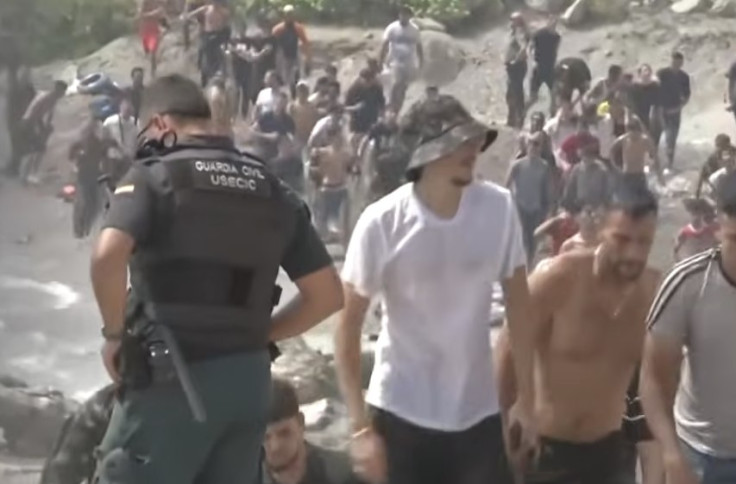
CEUTA, Spain — The death toll from a massive migrant surge into Spain's North African enclave of Ceuta has climbed to at least 88, Spanish officials said this week, as the country and the European Union grapple with the aftermath of the largest single mass crossing the territory has ever recorded.
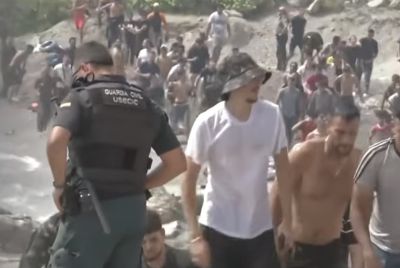
Roughly 60,000 people, most of them young Moroccans, rushed the border between Ceuta and Morocco beginning Thursday, July 30, overwhelming Spanish security forces at one of the European Union's only two land borders with Africa. Most crossed by swimming around breakwaters near Ceuta's Tarajal beach or by wading and walking along the shoreline after border controls appeared to briefly loosen.
A rapidly rising death toll
The confirmed number of fatalities has climbed steadily in the days since the crossing began. Spanish authorities initially reported at least 18 deaths on July 31, a figure that rose to 67 by August 1 and 72 by August 2, as additional bodies were recovered along Ceuta's coastline. By August 3, the government's delegate to Ceuta said the toll had reached 88, though Moroccan officials have offered a significantly lower count, with the country's interior ministry reporting just 11 deaths tied to the crossing. Sky News separately reported that local officials had put the figure as high as 86 at one point in the same window, reflecting the difficulty of establishing a precise count amid a chaotic, fast-moving situation.
Officials say many of the victims drowned attempting to swim the roughly 3-mile stretch of water separating the Moroccan town of Fnideq from Spanish territory, while others were crushed in stampedes as crowds tried to scale the breakwater fence separating the two countries.
A rapid return effort
Despite the scale of the crossing, Spanish authorities managed to return the vast majority of migrants to Morocco within 48 hours. More than 48,000 of the roughly 60,000 people who entered Ceuta had been sent back across the border by the weekend, according to Spain's Interior Ministry, with additional returns continuing in the days that followed. Spain has officially characterized the process as voluntary returns, though witnesses and journalists on the ground described a more forceful process, with soldiers and police using loudspeakers and physical intervention to push crowds back across the frontier.
Spain has since begun installing a 500-meter containment barrier along the breakwater fence leading into the sea, part of a broader effort to prevent a repeat of the crossing as authorities work to stabilize the situation in a city of roughly 83,000 residents that was overwhelmed by the sudden arrival of tens of thousands of people.
What triggered the surge
Spanish officials have pointed to a combination of factors behind the crossing, including misinformation that spread rapidly across social media, the activity of human trafficking networks, and widespread misinterpretation of a Spanish Supreme Court ruling limiting the immediate return of migrants intercepted at sea. Some observers have also pointed to broader diplomatic tension between Madrid and Rabat, including friction over Spain's evolving position on the disputed Western Sahara region and its relationship with Algeria, Morocco's regional rival.
Adding further controversy, 22 European Union heads of government wrote to European Commission President Ursula von der Leyen describing a mass regularization program announced by Spanish Prime Minister Pedro Sánchez earlier this year, under which more than a million migrants living illegally in Spain applied for legal status, as a significant "pull factor" that helped drive the Ceuta crisis.
Voices from the crisis
Spain's Defence Minister, Margarita Robles, urged people considering the crossing to reconsider, warning that migrants were being misled by criminal networks. "Do not be deceived by the trafficking networks," Robles said, adding that anyone who attempted the journey would ultimately be returned to Morocco.
For those caught up in the crisis, the human toll has weighed heavily. Karima Abenaz, a French national with family in Morocco who traveled to Ceuta, described the scale of the tragedy in stark terms. "It pains me deeply that young people are dying at sea," Abenaz said, arguing that economic conditions in Morocco should push young people toward demanding change at home rather than risking the crossing.
Among those still in Ceuta days after the crossing, families and unaccompanied minors continued to wait in makeshift shelters. Aziz Dabch, a 41-year-old Moroccan man among the adults still at a disused industrial site in the city, described the determination of the young people around him to continue on to mainland Spain despite the risks already witnessed.
A political flashpoint across Europe
The crisis has quickly become a flashpoint in broader European debates over migration policy. Italy has suspended passport-free Schengen travel with Spain in response to the crossing, while 22 EU member states have called for coordinated border action to prevent similar incidents in the future. Prime Minister Sánchez, who traveled to Ceuta as the crisis unfolded, described the mass crossing as a violation of Spain's territorial integrity and criticized what he called a "selfish" response from some fellow EU member states, arguing that Spain should not be left to manage the crisis alone.
Migration researchers and advocacy groups, meanwhile, have cautioned against framing the crisis solely as a border security failure, pointing instead to underlying economic conditions in Morocco and the broader pattern of young people risking dangerous crossings across the Mediterranean and nearby waters in search of opportunity in Europe.
With the immediate crossing largely resolved and most migrants returned to Morocco, attention has shifted to the political and humanitarian fallout, including the EU's response to member states' calls for coordinated action and ongoing questions about the exact death toll, which Spanish and Moroccan authorities continue to report differently. Spanish officials have said they expect the number of confirmed fatalities to be finalized only after search efforts along the coastline are completed, meaning the toll could rise further in the days ahead.
© Copyright 2026 IBTimes AU. All rights reserved.
- Recommended For You