Baghdad International Airport Reopens on April 8, 2026: Limited Flights Resume After Weeks-Long Closure
BAGHDAD — Baghdad International Airport (BGW) reopened Wednesday following the announcement of a two-week ceasefire between the United States, Israel and Iran, ending a prolonged shutdown of Iraqi airspace that had grounded commercial flights across the country since late February amid regional conflict.

The Iraqi Civil Aviation Authority (ICAA) announced the immediate reopening of the country's airspace and all commercial airports, including Baghdad, Erbil, Basra and Najaf. ICAA head Bengin Rekani confirmed in a statement that "airspace and all Iraqi airports will be opened starting today," marking a significant step toward normalizing air travel after more than a month of restrictions.
However, operations remained limited on the first day. Flight tracking platforms such as Flightradar24 showed only sporadic activity at Baghdad International Airport, primarily involving Iraqi Airways and a few authorized carriers. Most international airlines continued to observe caution, with many suspensions to Baghdad and other Iraqi destinations extended into late April or beyond. Passengers were advised to check directly with airlines for confirmed schedules, as initial flights focused on repatriation, cargo and essential routes.
The airport had been effectively closed since late February when large-scale U.S. and Israeli strikes on Iranian targets triggered retaliatory actions and heightened security risks across the region. Iraqi authorities repeatedly extended the no-fly status as a precautionary measure, citing threats from missiles, drones and potential attacks on aviation infrastructure. The U.S. Embassy in Baghdad had warned Americans that commercial flights were not operating and urged departure via overland routes to Jordan, Kuwait, Saudi Arabia or Türkiye.
The ceasefire framework, announced late Tuesday by President Donald Trump and accepted in principle by Iran, included commitments to safe maritime passage through the Strait of Hormuz and a temporary halt to attacks. Iraqi officials moved quickly to lift airspace restrictions, viewing the pause as an opportunity to restore connectivity. Pro-Iran armed factions in Iraq also announced a two-week suspension of operations against "enemy bases," further easing immediate threats.
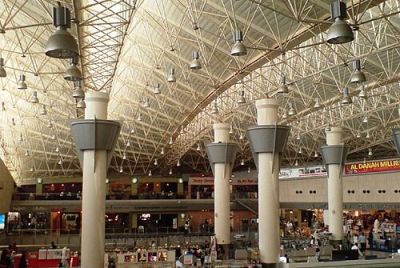
Inside Baghdad International Airport, activity remained far below pre-conflict levels. Terminals that once bustled with passengers traveling to Europe, the Gulf and Asia appeared subdued, with enhanced security checks and reduced staffing. Ground handlers prepared for a gradual ramp-up, while maintenance crews inspected facilities that had seen minimal use during the closure. Travelers with existing bookings faced uncertainty, as many flights remained canceled or subject to last-minute changes.
The prolonged shutdown had stranded thousands of Iraqis and foreign nationals. Families reported canceled medical trips, business meetings and visits abroad. Overland routes became the primary exit option, leading to long delays at border crossings with Jordan and Türkiye. Airlines such as Turkish Airlines, Pegasus and others had suspended services to Baghdad until late April or July in some cases, forcing rerouting through neighboring hubs.
Economic impacts were significant. Iraq's aviation sector, already recovering from previous conflicts and instability, suffered further losses in revenue, tourism and cargo movement. Exporters of dates, oilfield equipment and other goods faced delays, while the hospitality industry in Baghdad and Erbil saw reduced international visitors. The reopening offers hope for gradual recovery, though full restoration of schedules could take weeks as airlines reassess risk and coordinate with authorities.
International carriers reacted cautiously to the news. Many continued to avoid Iraqi airspace or limit operations pending clearer confirmation of safety. European and Asian airlines that had rerouted flights around the Baghdad Flight Information Region (ORBB) are expected to monitor developments closely before resuming regular service. Flight operations will likely begin with a limited number of domestic and regional routes before expanding to long-haul destinations.
For passengers planning travel, authorities recommended confirming flight status directly with airlines and arriving early for enhanced security procedures. The ICAA emphasized that the reopening is subject to ongoing security assessments and could be adjusted if new risks emerge. Travelers were urged not to head to the airport without confirmed tickets on the initial limited schedule.
The decision to reopen aligns with broader regional moves. While some neighboring countries maintained partial restrictions, the ceasefire provided Iraq with political cover to normalize civilian aviation. Baghdad International Airport, located about 16 kilometers west of the capital, serves as the country's main international hub and has undergone expansions in recent years to handle growing traffic.
As of mid-day Wednesday, live flight data showed a handful of arrivals and departures, mostly Iraqi Airways aircraft operating regional routes. No major international carriers had immediately restored full service, reflecting the cautious approach following weeks of disruption. Flightradar24 and similar platforms began registering renewed but sparse activity in the Baghdad FIR.
The episode highlights the vulnerability of aviation in conflict zones. Iraq's airspace had been closed multiple times in recent years due to security incidents, including earlier attacks near the airport. The latest closure, however, stood out for its duration and the scale of regional involvement, affecting not only Iraq but also rerouting patterns across the Middle East.
For ordinary Iraqis, the reopening brought cautious optimism. Social media filled with messages of relief from families hoping to reunite or resume travel plans. Yet many expressed frustration over the slow return to normalcy, with some questioning how quickly airlines would rebuild confidence.
Looking ahead, full recovery depends on the durability of the two-week ceasefire. Any violation could prompt renewed closures. Iraqi authorities pledged continuous monitoring and promised updates as the situation evolves. In the meantime, the focus remains on safely restarting operations while maintaining heightened security.
Baghdad International Airport's reopening represents a small but meaningful step toward stability in a region long plagued by volatility. As the first flights lift off under the new framework, passengers and crews alike will watch the skies with a mixture of hope and vigilance.
The coming days will reveal whether this marks the beginning of sustained normalization or another temporary pause in a turbulent chapter. For now, the runways at Baghdad are open once more — a quiet symbol of resilience amid broader uncertainty.
© Copyright 2026 IBTimes AU. All rights reserved.
- Recommended For You