(VIDEO) Why Did Australia Sky Turn Red? Skies Turn Blood-Red as Tropical Cyclone Narelle Unleashes Dust Storm
SYDNEY, Australia — An eerie blood-red sky blanketed parts of Western Australia on March 27, turning the horizon over Shark Bay into an apocalyptic scene as powerful winds from Tropical Cyclone Narelle whipped up iron-rich desert dust ahead of the storm's landfall.
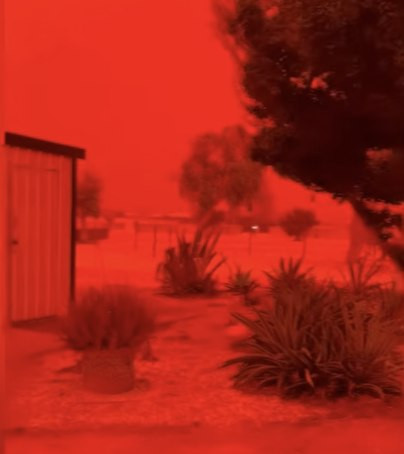
Residents in Denham and surrounding areas described the sight as "incredibly eerie," with everything coated in fine red dust and the sun filtering through thick haze to cast a crimson glow. Videos shared widely on social media showed the sky glowing a vivid Mars-like red, prompting global headlines and comparisons to science fiction films.
The phenomenon was no filter or digital trick. Meteorologists and experts explained that Tropical Cyclone Narelle's strong winds lifted vast amounts of rust-colored, iron-rich soil from the arid interior and coastal regions. This dust mixed with scattered sunlight, filtering out shorter wavelengths and allowing longer red ones to dominate the view, creating the dramatic blood-red effect particularly noticeable in Shark Bay and parts of the Pilbara.
Shark Bay Caravan Park posted on social media: "Incredibly eerie outside and everything is covered in dust ... Let's hope we get enough rain to wash it all off." Curious locals stepped outside to capture the surreal scene as the cyclone approached from the Indian Ocean.
Tropical Cyclone Narelle made landfall on Western Australia's northwest coast on Friday, March 27, becoming the first storm system in more than 20 years to impact three Australian states or territories. It brought destructive winds gusting up to 250 km/h (about 155 mph) in some areas, torrential rain and widespread flooding.
The coastal town of Exmouth bore the brunt, with severe damage to homes, vehicles and infrastructure. Emergency services reported the town was temporarily isolated as roads were cut by floodwaters and debris. In Carnarvon, the Gascoyne River flowed for the first time in 18 months, inundating crops, submerging cars and turning dry bushland into temporary waterways.
Western Australia's Emergency Services Minister Paul Papalia and Department of Fire and Emergency Services Commissioner Darren Klemm updated the public Saturday, noting extensive damage across the northwest. Evacuation centres opened, roadblocks were established and residents were urged to stay off flooded roads and avoid danger.
As ex-Cyclone Narelle tracked inland and southward, it weakened but continued to deliver heavy rainfall, easing long-term drought conditions in some regions while creating new hazards from flash flooding. By late March, the system was expected to move off into the Southern Ocean, losing strength.
The red sky event quickly went viral, with footage appearing on international outlets including The New York Times, The Guardian, ABC News and Fox Weather. Many viewers abroad expressed disbelief, with comments like "No, that's not a filter!" circulating widely. Australian meteorologists used the moment to educate the public on atmospheric optics and the role of dust in weather events common to the Outback.
Iron-rich soils, characteristic of much of Western Australia's landscape, frequently contribute to orange or red dust storms, though the intensity ahead of Narelle created an unusually vivid display. Similar events have occurred in the past, such as major dust storms in eastern Australia, but the combination with an approaching cyclone amplified both the visual drama and media attention.
For local communities, the storm's impacts extended beyond aesthetics. Power outages affected thousands, with crews working to restore electricity. Tourism operators in Shark Bay — a UNESCO World Heritage site known for its stromatolites, dolphins and marine life — assessed damage to facilities while hoping the rain would benefit the environment without causing lasting harm.
Farmers in the Gascoyne region welcomed the moisture after prolonged dry spells but worried about crop losses from flooding and wind damage. Livestock owners moved animals to higher ground as flood watches remained in place.
Climate experts noted that tropical cyclones like Narelle are influenced by warmer sea surface temperatures in the Indian Ocean, part of broader patterns linked to climate variability and long-term change. While individual storms cannot be directly attributed to climate change, scientists say such events may become more intense or behave unusually as oceans warm.
Western Australia's Bureau of Meteorology had tracked Narelle for days, issuing warnings well in advance. The system's unusual path — crossing multiple coastlines — caught some by surprise despite forecasts.
In the aftermath, cleanup efforts continued across affected towns. Volunteers and emergency crews cleared debris, while authorities assessed insurance claims and infrastructure repairs. Exmouth, a gateway to Ningaloo Reef and a popular tourist destination, faced weeks of recovery work.
Residents shared stories of the red sky as both beautiful and ominous — a natural warning of the storm's power. One local in Denham told media it felt like "the end of the world for a moment," before the rain arrived and began washing away the dust.
The event highlighted Australia's vulnerability to extreme weather, from cyclones in the north and west to bushfires and floods elsewhere. It also showcased the country's resilient communities, with neighbours helping neighbours amid the chaos.
As skies cleared in Western Australia by early this week, the red dust settled or was rinsed away by follow-up showers. Yet images of the blood-red horizon lingered online, serving as a striking reminder of nature's dramatic displays.
Meteorologists continue monitoring the region for any lingering effects or secondary systems. For now, focus has shifted to recovery, with federal and state governments offering support to impacted areas.
The red sky over Shark Bay may fade from daily conversation, but it has left a vivid impression — both literally and figuratively — on those who witnessed Tropical Cyclone Narelle's approach.
© Copyright 2026 IBTimes AU. All rights reserved.
- MOST POPULAR IN Science