(VIDEO) SpaceX Falcon 9 Upper Stage Set to Smash Into Moon August 5 at 5,400 MPH
CAPE CANAVERAL, Fla. — A discarded upper stage from a SpaceX Falcon 9 rocket is hurtling toward a high-speed collision with the Moon on August 5, 2026, marking another chapter in the growing problem of human-made space debris beyond Earth orbit.
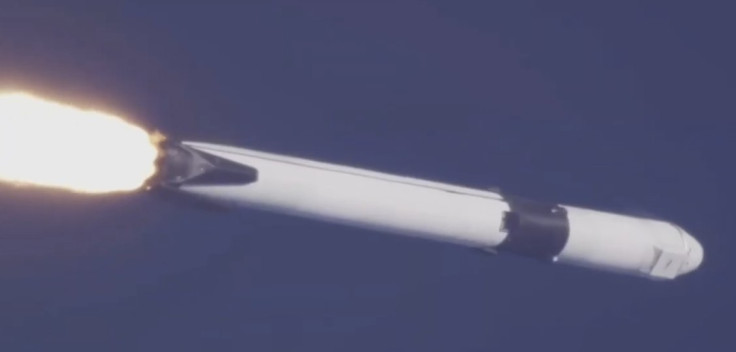
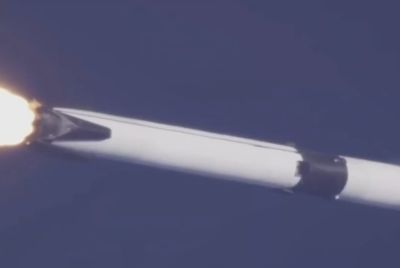
Independent astronomer Bill Gray, creator of Project Pluto software widely used for tracking near-Earth objects, has pinpointed the impact for approximately 2:44 a.m. EDT (06:44 UTC). The roughly 45-foot-long (13.8-meter) cylindrical stage, designated 2025-010D, will strike the lunar surface near the rim of Einstein crater at about 5,400 miles per hour — roughly seven times the speed of sound on Earth.
The object originated from a Falcon 9 launch on January 15, 2025, from NASA's Kennedy Space Center. That mission carried two commercial lunar landers under NASA's Commercial Lunar Payload Services program: Firefly Aerospace's Blue Ghost, which successfully landed in Mare Crisium in March 2025, and ispace's Resilience, which unfortunately crashed during its descent. After deploying its payloads, the upper stage was left in a high, unstable orbit around the Earth-Moon system rather than being deorbited or directed into a safe disposal trajectory.
Gray's detailed orbital analysis, updated through April 2026 observations, shows the stage has been drifting for more than 18 months. Without an atmosphere to slow it down, the Moon presents an unyielding target. The impact is expected on the near side, close to the western limb as viewed from Earth, during a waning gibbous phase when the Moon is about 58% illuminated.
At the moment of collision, the stage — roughly the size of a semi-trailer truck and empty of most propellants — will slam into the lunar regolith, likely excavating a fresh crater tens of meters wide. The kinetic energy release will be equivalent to several tons of TNT, producing a plume of dust and debris visible potentially to orbiting spacecraft but unlikely to be observable from Earth due to the geometry and lighting conditions.
SpaceX has not issued a detailed public comment on the specific trajectory, but the company has emphasized in past statements that Falcon 9 upper stages are designed for safe disposal when possible. In low-Earth orbit missions, stages typically re-enter the atmosphere shortly after payload separation. For deep-space or lunar trajectories, however, disposal options are more limited, and some stages have ended up in heliocentric orbits or, as in this case, on collision courses with the Moon.
This event is not the first of its kind. In 2022, a suspected Chinese rocket booster impacted the far side of the Moon, creating a double crater. Earlier incidents involving man-made objects striking the lunar surface have helped scientists study impact dynamics and subsurface composition. NASA and other agencies monitor such events for scientific value, including potential seismic data if instruments are nearby.
The impending crash highlights broader concerns about lunar space debris. With increasing commercial and governmental activity — including NASA's Artemis program, China's lunar ambitions, and private missions — the Moon's vicinity is becoming more crowded. Astronomers and space debris experts warn that without better international guidelines for end-of-mission disposal, accidental impacts could become more common.
"Things are getting crowded up there, even beyond low-Earth orbit," Gray noted in his analysis. The Moon lacks an atmosphere or magnetic field to protect it, making every impact permanent on human timescales. Dust kicked up by such collisions can linger and potentially interfere with future landings or astronomical observations from the lunar surface.
For now, the event poses no risk to active spacecraft. NASA's Lunar Reconnaissance Orbiter and other orbiters may attempt to image the new crater in the weeks and months following the impact, providing valuable data on crater formation in lunar gravity. The site near Einstein crater, a large, ancient feature on the edge of the visible disk, offers a relatively flat area for study.
Public reaction has mixed scientific curiosity with viral fascination. Social media has buzzed with memes and speculation since Gray's prediction gained traction in late April. Some space enthusiasts plan Moon-gazing sessions on the night of August 4-5, though the actual flash or plume is unlikely to be visible to the naked eye or even small telescopes.
Space policy experts say the incident underscores the need for stronger norms. The United Nations and organizations like the Committee on the Peaceful Uses of Outer Space have discussed guidelines, but enforcement remains voluntary. SpaceX, while revolutionizing access to space with reusable first stages, faces scrutiny over upper-stage practices for beyond-Earth missions.
Future missions may incorporate active deorbiting or lunar graveyard orbits. Some concepts include "disposal orbits" that avoid natural bodies for thousands of years. As Starship development progresses toward crewed lunar landings, reliable end-of-life strategies for large vehicles will become even more critical.
The Falcon 9's reliability — with hundreds of successful launches — remains unmatched, but this stray upper stage serves as a reminder that every mission leaves a legacy in orbit. Gray continues refining predictions as new observations come in; small trajectory tweaks could shift the exact impact point by dozens of kilometers, though the August 5 date appears solid.
Astronomers will watch closely. The impact offers a rare, predictable natural experiment. Seismic sensors from past Apollo missions are long silent, but modern orbiters could detect thermal signatures or dust clouds. Data gathered will inform models used for everything from planetary defense to future base construction.
As humanity prepares for a sustained return to the Moon, incidents like this one spotlight the responsibilities that come with increased traffic. The silent upper stage, launched with hope for lunar exploration, will end its journey dramatically — carving a mark on our celestial neighbor and prompting reflection on how we explore responsibly.
On August 5, when the clock strikes 2:44 a.m. Eastern time, a piece of 21st-century engineering will become part of the Moon's ancient landscape. It won't be the last such event, but it offers a vivid illustration of the challenges and opportunities in humanity's expanding footprint across the solar system.
© Copyright 2026 IBTimes AU. All rights reserved.
- Recommended For You