South Korea's World Cup Flop Sparks Coach's Resignation and President's Fierce Call for Investigation
Coach Resigns, President Demands Investigation Amidst Public Outcry
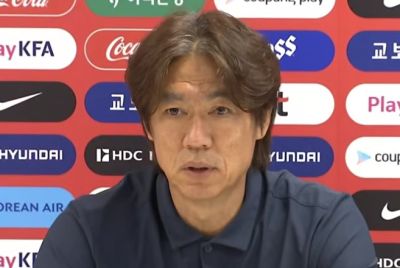
SEOUL — South Korea's stunning early exit from the 2026 World Cup has triggered a political and footballing reckoning back home, with head coach Hong Myung-bo resigning within a day of the team's elimination and President Lee Jae Myung publicly demanding a government investigation into how the program collapsed so badly.
South Korea, semifinalists when they co-hosted the tournament in 2002, were eliminated from this year's World Cup after finishing third in Group A behind co-hosts Mexico and South Africa, failing to advance even as one of the eight best third-place finishers under the newly expanded 48-team format. The team opened with a 2-1 win over the Czech Republic but then lost 1-0 to Mexico before falling 1-0 to lower-ranked South Africa in their final group match. Their fate was sealed Saturday when the Democratic Republic of the Congo defeated Uzbekistan 3-1, eliminating any mathematical path for South Korea to sneak through as a third-placed qualifier.
Hong announced his resignation Sunday in Guadalajara, Mexico, where the squad had remained while awaiting word on whether other results around the tournament might still rescue their campaign.
"I deeply apologize to the Korean public who supported our team," Hong said in a statement announcing his departure.
The coach's exit followed a blistering public rebuke from President Lee, who has described himself as a longtime supporter of the national team and a member of its fan group, the Red Devils. Lee said he felt not just shock but deep bewilderment at the outcome and called for the country's Ministry of Culture, Sports and Tourism to launch a formal review of both the team's performance and the process that led to Hong's hiring in the first place. The president was particularly pointed in tying the failure to questions of competence and favoritism within the Korea Football Association.
"Once again, it has been proven that personnel decisions determine everything," Lee said.
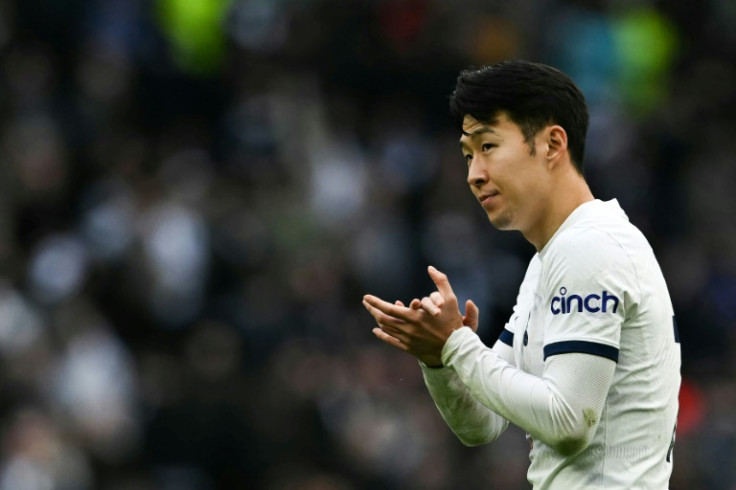
Much of the domestic anger has centered on Hong's decision to bench captain Son Heung-min for the decisive match against South Africa, a game South Korea needed only a draw to win in order to advance. Hong said afterward that his plan had been to introduce Son later in the match once South Africa's players had tired, but he ultimately brought the captain on at the start of the second half, by which point both teams were already well-rested, undercutting the rationale for leaving him out of the starting lineup. Hong later acknowledged he would not make the same decision again if given the chance. South Korean broadcaster KBS reportedly blurred Hong's face during his post-match news conference, a measure of the hostility directed at the coach in the tournament's immediate aftermath.
Hong's second stint in charge of the national team, which began in July 2024, had been contentious from the start. He took over five months after his predecessor, German World Cup winner Jürgen Klinsmann, was dismissed, and the Korea Football Association faced criticism over the transparency and fairness of the process that led to Hong's reappointment. He was regularly booed by South Korean fans even before this tournament began, and by his own admission struggled in the moment to explain what had gone wrong as the team awaited the results that would determine its World Cup fate.
The fallout has extended well beyond the technical staff. Former national team captain Park Ji-sung, who built much of his playing career at Manchester United, said the disappointing result should not have come as a surprise to anyone who had been paying attention.
"We may have expected this outcome years ago," Park said, calling on the football community to reflect honestly on how the program had again fallen short despite years of supposed lesson-learning.
Lee Chun-soo, a member of South Korea's celebrated 2002 World Cup squad, voiced similar frustration, saying on his YouTube channel that he had felt pathetic rooting for Uzbekistan against the Democratic Republic of the Congo in a last-ditch hope that the result might somehow send South Korea through to the knockout rounds. He framed the tournament's outcome as a long-overdue signal that sweeping change was needed across the federation, suggesting that anyone in a position of responsibility should be prepared to step aside.
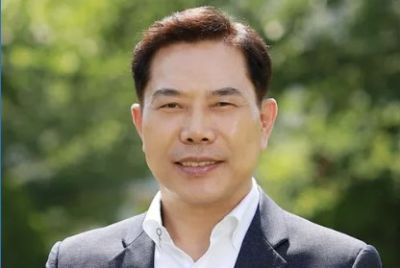
That sentiment has been directed squarely at Korea Football Association President Chung Mong-gyu, who is in his fourth term and has led the organization for 13 years. Chung had already pledged before the tournament began that he would step down once it concluded, citing what he described as his own shortcomings after years of mounting criticism of his leadership. Much of that criticism has centered on his handling of the federation generally, including a controversial attempt to pardon former players who had been banned for life over match-fixing.
It remains unclear whether Hong and Chung will be the only high-profile departures to emerge from the tournament's fallout. Son Heung-min, who turns 34 next month and now plays for LAFC in Major League Soccer, has not publicly addressed his own future with the national team, though he had hinted at the possibility of international retirement even before this World Cup got underway.
The mood surrounding the team's return home has reflected the broader public anger. Local media reported that the Korea Football Association was not planning to organize any welcoming event for the squad, which was expected to arrive back in South Korea on Tuesday morning. The muted homecoming echoes a far more visceral display of fan displeasure following South Korea's group-stage exit at the 2014 World Cup in Brazil, during Hong's first spell as national team coach, when furious supporters pelted the returning players with Korean candies, widely regarded in the country as a deeply offensive gesture.
Looking back on the broader pattern of disappointment, Park Ji-sung argued that South Korean football needed to break a recurring cycle rather than simply move past this latest setback.
"It's unfortunate that this kind of cycle keeps repeating," he said, adding that the federation and the team needed to move forward deliberately to avoid repeating the same mistakes in future tournaments.
With the coaching position now vacant, the federation's presidency set to turn over, and the captain's international future in doubt, South Korean football enters a period of significant uncertainty just as the country begins to process what many supporters and former players alike are calling an entirely avoidable collapse on the world's biggest stage.
© Copyright 2026 IBTimes AU. All rights reserved.
- Recommended For You