World Cup 2026 Knockout Stage Set: Argentina Gets Easy Draw While Portugal and Spain Face Brutal Tests
Argentina faces Cape Verde in a favourable draw, while European giants like Portugal and Spain face challenging routes.
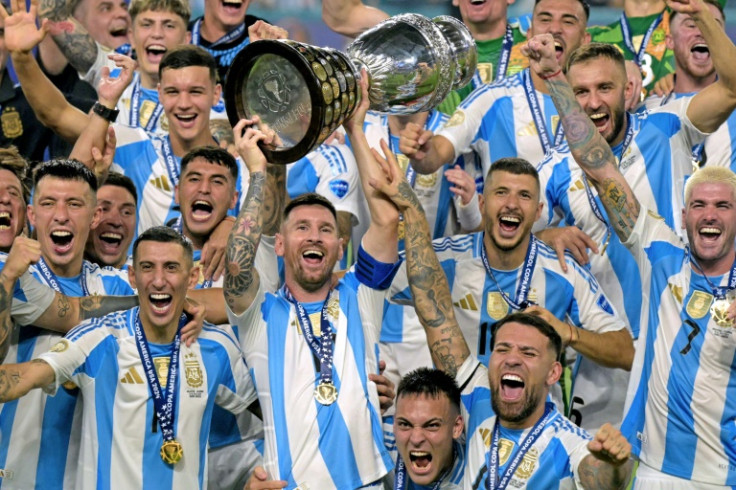
The 2026 FIFA World Cup group stage concluded Sunday, setting the field for the tournament's first-ever 32-team knockout round, with reigning champion Argentina handed one of the more favorable paths through the bracket while traditional European powers Portugal and Spain face an unforgiving road that could pit them against each other before the semifinals.
For the first time in World Cup history, the knockout phase opens with 32 teams rather than 16, following an expansion that has produced the largest group stage in the tournament's history. From here, the format reverts to straightforward single elimination across the field of 12 group winners, 12 runners-up and the eight best third-place finishers.
Argentina draws Cape Verde in opening knockout match
Lionel Messi's Argentina finished atop Group J with a perfect nine points, securing the group win before its final match was even played. That result sets up a round of 32 meeting with Cape Verde, the tournament debutant that became the smallest nation ever to reach a World Cup knockout stage after playing out a third consecutive draw, this time a scoreless stalemate with Saudi Arabia. The match is scheduled for Friday, July 3, at Hard Rock Stadium in Miami Gardens, Florida.
Argentina's path beyond the opening round also looks comparatively manageable. The winner of Argentina's matchup with Cape Verde would face the winner of Spain's group, set up against either Australia or Egypt, before a potential quarterfinal path running through teams like Colombia, Ghana, Switzerland or Algeria. Under that scenario, Argentina's first true test against a fellow heavyweight may not arrive until the semifinal stage, with Brazil or England potentially waiting.
Portugal and Spain on a collision course
Few teams face a steeper road than Portugal, which finished second in Group K after playing to a scoreless draw against Colombia in Miami on Saturday. Despite the draw, Colombia claimed the group on goal difference, while Cristiano Ronaldo and Portugal settled for the runner-up spot and a round of 32 matchup against Croatia, scheduled for Thursday, July 2, at BMO Field in Toronto. The fixture marks a rematch of the 2016 European Championship final, with both Ronaldo and Croatian veteran Luka Modric still leading their respective sides a decade later.
Spain, meanwhile, secured top spot in its group with a 1-0 win over Uruguay that eliminated the two-time world champion from the tournament entirely. That result sets up a round of 32 meeting with Austria, the Group J runner-up, on Thursday, July 2, at SoFi Stadium in Inglewood, California. Should both Portugal and Spain advance through their respective opening knockout matches, the two European giants would be on course to meet in the round of 16 — a high-stakes continental showdown arriving far earlier in the tournament than either side would prefer.
Germany and France risk an early collision of their own
A similar early-elimination scenario looms on the other side of the bracket for two more European powers. Germany topped its group and will face Paraguay, which advanced as one of the tournament's best third-place finishers, in a round of 32 matchup at Gillette Stadium in Foxborough, Massachusetts. France, which won its own group convincingly with all nine points and a plus-eight goal differential, will face Sweden in the round of 32. Should both Germany and France advance, the two nations are projected to meet in the round of 16 — meaning one of Europe's traditional powerhouses would be eliminated well before the tournament's later stages.
Brazil and England face rising difficulty with each round
Brazil topped Group C following a win over Scotland and will open the knockout stage against Japan, which advanced as the Group F runner-up after a 1-1 draw with Sweden, in a round of 32 match at NRG Stadium in Houston. Should Brazil advance, the bracket points toward a potential meeting with either Ivory Coast or Norway, the latter featuring Manchester City forward Erling Haaland, who has been among the tournament's most dangerous attacking threats.
England, which topped Group L, opens its knockout campaign against DR Congo, which advanced as one of the competition's best third-place teams after an impressive comeback win over Uzbekistan. That match is scheduled for Wednesday, July 1, in Atlanta. Beyond that opening test, England's bracket includes potential matchups against Mexico or Ecuador, with a possible path eventually crossing with Brazil deeper into the tournament.
Colombia and Belgium chart competitive routes of their own
Colombia, which finished atop Group K after Saturday's draw with Portugal, will face Ghana in the round of 32 on Friday, July 3, at Arrowhead Stadium in Kansas City. Should Colombia continue advancing, a potential quarterfinal matchup against Argentina looms further down the bracket, depending on how both sides progress through earlier rounds.
Belgium, which claimed Group G with a 5-1 win over New Zealand on Friday, opens the knockout stage against Senegal on Wednesday, July 1, in Seattle. A win there would likely set up a subsequent matchup against either the United States or Bosnia and Herzegovina, both of whom advanced from their own group.
A knockout stage defined by fine margins
Taken together, the bracket lays out a tournament defined by contrasts. Argentina's relatively smooth route stands in sharp relief against the gauntlet facing Portugal, Spain, Germany and France, several of which could face a fellow continental heavyweight before even reaching the quarterfinal stage. Brazil and England, too, face a difficulty curve that steepens with every round, leaving little room for off nights against increasingly dangerous opposition.
With the expanded 32-team knockout bracket now locked in and no further redraws possible, every team entering the tournament's single-elimination phase knows precisely what stands between it and a place in the latter stages of the competition. For some of the tournament's biggest names, that path offers a clear runway to build momentum. For others, the toughest test of their World Cup campaign may already be waiting just around the corner.
© Copyright 2026 IBTimes AU. All rights reserved.
- Recommended For You