

Spain, France and Argentina Emerge as Top Contenders for 2026 World Cup Glory
A comprehensive analysis of the top contenders for the 2026 FIFA World Cup.
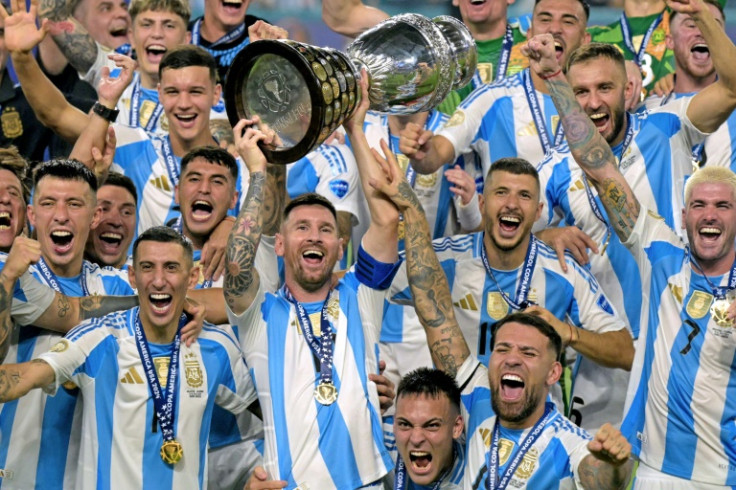
NEW YORK — With the 2026 FIFA World Cup set to kick off in just days across North America, Spain, France and Argentina stand out as the strongest favorites to lift the trophy in a wide-open tournament featuring 48 teams for the first time.
Betting markets and expert analyses place Spain and France as narrow co-favorites, with Argentina close behind as defending champions. The expanded field and co-hosting by the United States, Canada and Mexico add layers of complexity, but European and South American powerhouses dominate projections.
Spain enters with the strongest recent form after winning Euro 2024. Luis de la Fuente's side blends youthful talent like Lamine Yamal with midfield control anchored by Rodri. Opta simulations give Spain around a 16% chance of victory, the highest among all teams.
"Spain are the favorites to win the 2026 World Cup," a Goldman Sachs model noted, assigning them a 26% probability based on historical performance and current rankings.
Their tactical discipline, depth and ability to control possession make them formidable. Injuries to key players like Yamal caused brief fluctuations in odds, but recovery reports have solidified their position at +450 to +475 across major sportsbooks.
France, ranked No. 1 by FIFA in recent updates, boasts unmatched attacking firepower. Kylian Mbappé leads a squad featuring Ousmane Dembélé, Michael Olise and a resilient defense. Les Bleus reached the final in the last two World Cups and remain a constant threat under Didier Deschamps.
Recent friendlies, including a victory over Brazil, underscored their depth. Betting odds list them alongside Spain at +450 to +475, with projections around 13-19% depending on the model. Their experience in high-stakes knockout matches gives them an edge in the later stages.
Argentina, the reigning champions, seek to become the first team since Brazil in 1962 to win consecutive World Cups. Lionel Messi, now 38, remains a talisman despite reduced minutes, supported by a core of experienced players who understand winning mentality.
Power rankings from ESPN place them third, behind Spain and France. Odds sit around +800 to +900, with simulation chances near 10-14%. Their Copa América triumphs and gritty style compensate for occasional defensive vulnerabilities.
The tournament's structure favors these sides. The group stage features 12 groups of four, with the top two from each advancing plus eight best third-placed teams. This format reduces early exits for strong nations while increasing overall competitiveness.
Spain's path appears manageable in their group, allowing them to build momentum. France faces Senegal, Iraq and Norway, a winnable set that could see them top their group comfortably. Argentina draws on championship pedigree to navigate pressure.
Key factors include squad depth in an expanded 104-match schedule running from June 11 to July 19. The final at MetLife Stadium in New Jersey will test endurance, with heat, travel and pitch conditions across multiple venues playing roles.
Spain excels in technical proficiency and youth integration. Their Euro 2024 success without relying on superstars highlights collective strength. Midfield dominance allows them to dictate tempo, wearing down opponents before clinical finishes.
Potential weaknesses include occasional over-reliance on possession and vulnerability to rapid counterattacks. However, their recovery mechanisms and set-piece organization mitigate risks.
France's attacking options create nightmares for defenses. Mbappé's pace combined with creative midfielders provides multiple scoring avenues. Defensive solidity, built on experience from recent finals, forms their backbone.
Challenges for France involve integrating younger talents seamlessly and managing Deschamps' conservative tendencies in big matches. Their history of penalty shootout heartache adds psychological layers.
Argentina relies on intensity and leadership. Messi's presence inspires, while supporting cast members deliver in crucial moments. They thrive in chaotic games but can struggle against organized high-pressing sides.
Injuries, form dips and refereeing decisions remain wild cards. The co-host advantage for United States, Mexico and Canada could boost home crowds but also brings expectations and fatigue.
England sits just outside the top three in many assessments, with strong odds around +650 to +700. Their deep Premier League talent pool and recent tournament consistency make them dangerous, though they often fall short in semifinals.
Brazil, with five titles, carries historical weight but enters with questions after inconsistent recent performances. Young stars like Vinicius Junior offer hope, yet defensive issues persist. Odds hover around +800.
Portugal, Germany and the Netherlands round out the next tier. Cristiano Ronaldo's Portugal brings experience, while Germany rebuilds under new momentum. Dark horses like Morocco could disrupt with organized play.
The 48-team format increases upset potential. More teams mean tighter groups and fatigue in knockouts, favoring squads with superior depth and recovery science.
Co-hosting logistics add variables. Matches span three countries, requiring teams to adapt to travel, climates and stadium atmospheres. North American venues offer modern facilities but introduce unfamiliar conditions for many.
Public interest surges as the tournament nears. Ticket demand and global viewership projections break records. For favorites, pressure intensifies to deliver amid heightened scrutiny.
Spain's blend of flair and control positions them ideally for a deep run. France's star power and tactical flexibility make them perennial threats. Argentina's champion grit ensures they cannot be discounted.
Analysts emphasize adaptability. Teams mastering transitions between defense and attack, combined with set-piece prowess, hold advantages in the knockout phase.
Injuries to players like Yamal highlighted squad depth importance. Nations investing in youth academies and rotation strategies gain edges over the grueling calendar.
Ultimately, the top three encapsulate modern football's balance of talent, tactics and mentality. Spain represents technical evolution, France athletic excellence and Argentina resilient winning culture.
As the opening match between Mexico and South Africa approaches, anticipation builds. The favorites carry expectations, but the expanded tournament promises surprises.
Success will hinge on managing group stages efficiently, peaking in knockouts and navigating officiating and external pressures. For Spain, France and Argentina, the path to MetLife Stadium on July 19 starts with consistent execution from day one.
© Copyright 2026 IBTimes AU. All rights reserved.
- Recommended For You


