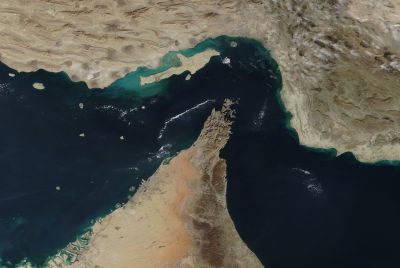
Oil Prices Plunge Over 8% as US and Iran Pause Strikes, Reviving Hopes for Strait of Hormuz Shipping
Temporary pause in US-Iran hostilities leads to significant drop in oil prices, but shipping traffic remains cautious.

Oil prices tumbled sharply Monday, with the non-expiry crude contract dropping 8.21% to $82.24, as a weekend pause in hostilities between the United States and Iran raised hopes for a diplomatic breakthrough that could restore normal shipping traffic through one of the world's most critical energy chokepoints.
Oil prices tumbled more than 5% Monday after the U.S. and Iran paused strikes over the weekend following two weeks of attacks, raising hopes of a diplomatic solution that would de-escalate the conflict and allow shipping to resume in the Strait of Hormuz. Brent crude futures fell $5.70, or around 5.9%, to $91.08 a barrel by early morning trading, briefly slipping under the key support level of $90 during the session. U.S. West Texas Intermediate crude traded at $84.51 a barrel, down $4.80, or roughly 5.4%.
Iran Signals Willingness to Hold the Pause
Oil prices fell further after Iran reportedly indicated it would suspend its own attacks as long as the U.S. pause in hostilities remains in place, easing concerns after nearly two weeks of escalating conflict in the region. International benchmark Brent crude futures for September delivery fell 7.4% to around $89.58 a barrel, while U.S. West Texas Intermediate crude futures for September delivery dropped 6.8% to $83.25 a barrel.
Iran indicated it would stop carrying out attacks as long as the United States also refrains from striking, according to a senior Iranian official cited by Reuters on Sunday. The pause follows Washington's decision to suspend its bombing campaign after President Trump's advisers reportedly warned that the military was running low on viable targets and raised concerns about depleting U.S. munitions stockpiles.
Shipping Traffic Remains Thin Despite the Pause
Even with the de-escalation, actual maritime traffic through the region's most critical waterway has yet to meaningfully recover. Fewer than 10 commodity vessels passed through the Strait of Hormuz daily during the weekend, according to shipping data from Kpler. MST Marquee analyst Saul Kavonic said any rebound in flows through the Strait is likely to prove slow and only partial, since many shippers remain cautious and will want greater confidence in vessel safety before sending more empty ships back into the waterway.
In addition, ship traffic through the Bab el-Mandeb strait fell Sunday after Yemeni Houthi forces attacked Saudi oil installations along the Red Sea coast, though a third Chinese supertanker did manage to exit through the strait during the same period.
Analysts Remain Cautious on the Durability of the Pause
Despite Monday's sharp price move, market analysts cautioned that a pause in fighting does not guarantee a swift return to normal oil flows from the region. One analyst noted that a stay of military strikes might look like an improvement on paper, but it comes with no guarantees that oil will soon resume flowing from the area, adding that prices are more likely to keep falling if elevated energy costs once again weigh on global demand rather than because of fragile, short-term ceasefires.
Continued Attacks Complicate the Picture
The optimism driving Monday's selloff comes even as fighting has not fully stopped. Despite renewed prospects for peace, strikes continued in recent days, with Iranian forces firing ballistic missiles at Kuwait and sending attack drones toward the Strait of Hormuz. That continued military activity has left analysts wary of declaring the conflict fully resolved, even as headline oil prices react favorably to diplomatic signals.
A Volatile Stretch for Global Oil Markets
Monday's decline is only the latest swing in what has been an extraordinarily volatile period for crude prices this year, as the Middle East conflict has repeatedly pushed prices sharply higher during periods of active fighting, only to see them retreat just as quickly whenever ceasefire talks gain momentum. Both Brent and WTI contracts were trading at their lowest levels in nearly a week on Monday, following three consecutive weeks of price increases driven by the escalating conflict. Brent crude had climbed as high as $100 per barrel at the peak of the conflict, as fighting disrupted oil shipments through the Strait of Hormuz and spilled over into the Red Sea, hindering exports from Saudi Arabia, the world's top oil exporter, through the Bab el-Mandeb strait.
The pullback in oil prices has had ripple effects across broader financial markets, easing inflation concerns and boosting risk appetite among investors. Major U.S. stock indices advanced Monday as falling energy costs reduced pressure on interest rate expectations, with the retreat in crude prices seen as a modestly positive development for consumers and businesses that had been bracing for a prolonged period of elevated energy costs tied to the conflict.
What Comes Next
With Iran's willingness to maintain the pause contingent on the U.S. continuing to refrain from strikes, the durability of Monday's price relief remains uncertain. Traders and analysts will be watching closely in the coming days for signs of whether shipping volumes through the Strait of Hormuz begin to meaningfully recover, or whether the current lull in fighting proves to be only a temporary reprieve in a conflict that has repeatedly flared back up after periods of apparent calm. For now, markets appear to be pricing in cautious optimism, even as the underlying security situation in the Gulf remains far from fully resolved.
© Copyright 2026 IBTimes AU. All rights reserved.
- Recommended For You