Oil Prices Surge as Attacks on Ships Near Strait of Hormuz Heighten Fears of Supply Disruptions
Global oil prices jumped sharply Monday as attacks on multiple commercial vessels near the Strait of Hormuz, amid escalating conflict between Iran, the United States and Israel, raised alarms over potential interruptions to roughly one-fifth of the world's seaborne crude supplies.
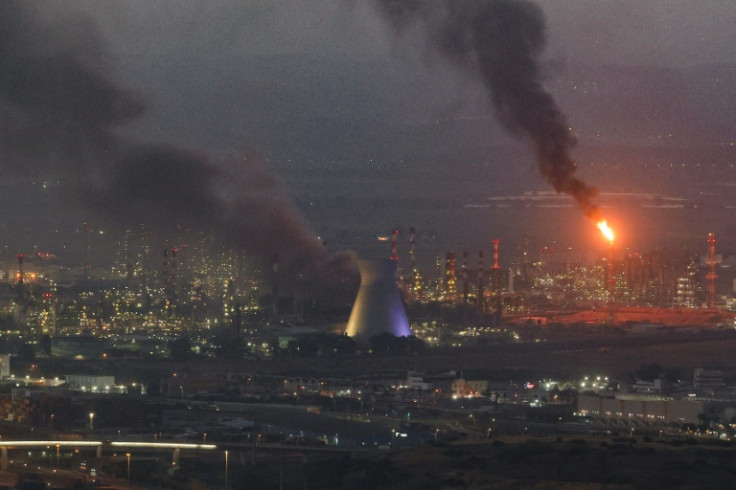
Brent crude, the international benchmark, surged as much as 10-13% in early trading, peaking above $82 per barrel before easing somewhat to trade around $78-79 per barrel in Asian and European sessions. West Texas Intermediate, the U.S. benchmark, climbed more than 8% to approximately $72 per barrel, marking one of the largest single-day gains in recent years.
The sharp rise followed reports over the weekend of at least three ships coming under attack in or near the narrow waterway that connects the Persian Gulf to the Arabian Sea. The UK Maritime Trade Operations Centre reported that two vessels were struck by unknown projectiles, causing fires on board, while an "unknown projectile" exploded in close proximity to a third ship. Crews were reported safe in at least one incident, but injuries occurred in others.
Iran's Islamic Revolutionary Guard Corps claimed responsibility for striking three U.S.- and U.K.-flagged oil tankers in the Gulf and Strait area, describing the actions as retaliation for ongoing U.S. and Israeli military operations against Iranian targets. Those operations, which included strikes that reportedly killed Iran's Supreme Leader Ayatollah Ali Khamenei and other senior figures, have intensified regional hostilities.
Specific incidents included damage to the Palau-flagged oil tanker Skylight off Oman's Musandam peninsula, where four crew members were injured and all 20 aboard evacuated. Another vessel, the Marshall Islands-flagged MKD Vyom, was hit, resulting in one seafarer fatality. A third tanker faced proximity damage from an explosion. Maritime authorities noted fires were brought under control in some cases, but the attacks prompted widespread caution.
Major shipping companies, including German giant Hapag-Lloyd, halted transits through the strait, while dozens of very large crude carriers idled inside the Persian Gulf or anchored outside, with over 150-200 tankers reported holding position. Ship-tracking data showed a dramatic drop in traffic, with some analysts describing an "effective closure" as insurers withdrew coverage and owners rerouted vessels.
The Strait of Hormuz handles about 15-20 million barrels of oil daily — roughly 20% of global consumption — along with significant liquefied natural gas volumes from Qatar and others. Key exporters including Saudi Arabia, the UAE, Iraq, Kuwait and Iran rely on the chokepoint. Disruptions here historically trigger risk premiums in oil markets.
"This is the market's worst nightmare unfolding in real time," one energy analyst said, noting that while Iran has stated the strait remains open, commercial realities have halted flows. Tehran has warned ships against passage, citing unsafe conditions amid the conflict.
Analysts warned of further escalation. Wood Mackenzie indicated prices could exceed $100 per barrel if tanker traffic isn't restored quickly. Goldman Sachs estimated an $18 per barrel risk premium already embedded, with Citi forecasting Brent between $80 and $90 in the near term. In extreme prolonged scenarios, some see spikes to $120-$150.
Broader market reactions included declines in Gulf stock indices, though Saudi Aramco shares rose over 3% in early trading as higher crude values bolstered the producer's outlook. The Tadawul All Share Index fell amid banking and materials sector weakness, but energy-linked assets showed resilience.
The attacks follow a pattern of tit-for-tat strikes after U.S.-Israeli operations targeted Iranian infrastructure and leadership. Retaliatory Iranian missile and drone barrages have hit military sites across the region, including in neighboring Gulf states, and proxies like Hezbollah have engaged Israel.
The International Maritime Organization's secretary-general expressed deep concern over injuries to seafarers, emphasizing that attacks on civilian shipping are unjustified and crews must be protected amid geopolitical tensions.
OPEC+ responded Sunday by agreeing to raise output by 206,000 barrels per day in April, ending a production pause, though analysts called the increase modest and insufficient to offset potential Hormuz losses given limited spare capacity outside Saudi Arabia.
Energy experts cautioned that prolonged restrictions could lead to higher gasoline and heating oil prices worldwide, with U.S. consumers potentially seeing pump increases soon. While de-escalation might pull prices back toward $70, current sentiment favors sustained highs as markets monitor Hormuz flows and any official reopenings.
Iran insists no full closure is planned, but the combination of direct threats, collateral damage and commercial self-restraint has created de facto disruptions. Shipping giants advise vessels to shelter, and rerouting around Africa adds weeks and costs to voyages.
The situation remains fluid, with ongoing strikes and diplomatic efforts potentially influencing outcomes. For now, the attacks near the Strait of Hormuz have injected significant volatility into energy markets, underscoring the chokepoint's enduring strategic importance.
© Copyright 2026 IBTimes AU. All rights reserved.
- MOST POPULAR IN News