Micron Drops Nearly 6% With Memory Peers as Traders Reassess AI Infrastructure Demand
The sell-off spread across chipmakers despite Micron maintaining a record-quarter forecast and reporting strong demand for high-bandwidth memory.
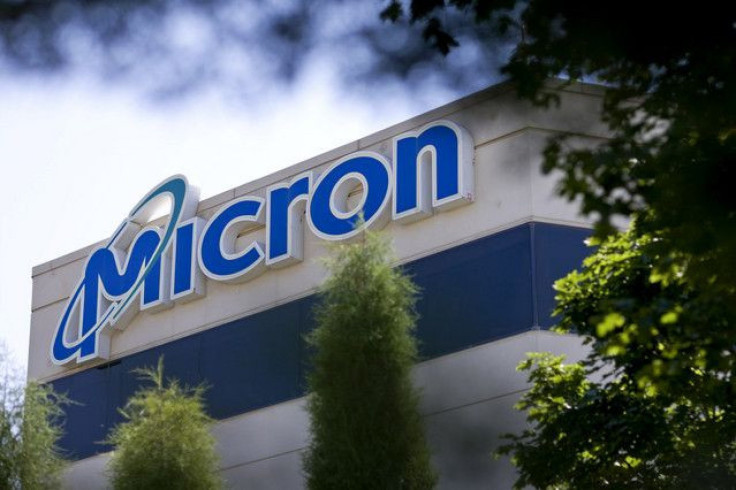
BOISE, Idaho — Micron Technology shares fell about 5.8% to $918.91 in midmorning trading Monday, down $56.35, as memory and storage stocks sold off on worries that artificial-intelligence infrastructure spending could slow.
The move tracked a broader tape. Sandisk dropped nearly 6% in premarket dealing. Western Digital and Seagate each fell more than 4%. SK hynix's U.S. listing slid more than 7%. Nasdaq futures were down about 1.5%. Micron had closed Friday at $975.26. The stock's 52-week range runs from $154.65 to $1,255, a peak set June 25. From that high the shares are off roughly a quarter.
There was no Micron-specific profit warning. Fiscal fourth-quarter results are due Sept. 30. The last print, on June 24 for the quarter ended May 28, was a blowout: revenue of $41.5 billion, adjusted earnings of $25.11 a share versus a $21.39 consensus, and gross margin near 85%. Chief Executive Sanjay Mehrotra called it "an exceptional fiscal Q3, with significant records in revenue, gross margin and EPS — all exceeding the high end of our guidance."
Guidance for the current quarter was louder still: revenue of $50 billion, plus or minus $1 billion; gross margin about 86%; earnings about $31 a share, plus or minus $1. Mehrotra said high-bandwidth memory remains the constraint. "HBM4 12-high volume ramp is tracking twice as fast as HBM3E 12-high, and we have already shipped over $1 billion in HBM4 revenue," the company said in prepared remarks. Management also said it "currently [does] not have line of sight as to when memory supply will be able to catch up with increasing demand" and told investors to "expect tight conditions to persist beyond calendar year 2027 due to AI-driven demand across all segments." On the call Mehrotra said tightness is "locked in to persist beyond calendar 2027." Another line from the same deck has been widely cited: "The proliferation of AI has structurally transformed the memory industry."
Monday's selling treated those sentences as last quarter's story. The Financial Times reported investor concern that public calls to slow AI development — including comments from Anthropic Chief Executive Dario Amodei about coordinating safety — could eventually cut capital spending on servers and the DRAM and NAND that fill them. Separate reports cited possible U.S. semiconductor tariffs on chips and downstream gear such as servers and laptops. A Netlist patent suit over DDR5 products added a legal headline. None of those items changed Micron's published forecast.
The arithmetic of the rally explains the air pocket. Micron's market value has been priced as a leveraged claim on HBM sold into Nvidia-class accelerators. When that narrative wobbles, MU, SK hynix and the NAND names move together. A stock that earned $25 a share last quarter and guided $31 this quarter can still drop 6% in a morning if the multiple assumed years of 80%-plus margins.
What Sept. 30 has to answer is whether the $50 billion quarter is intact and whether HBM4 shipments are still running ahead of the prior generation. Until then, Monday is a sector tape, not a company event: memory stocks marked down on a safety-and-tariff scare, two weeks before the company that just guided a record quarter is allowed to speak again.
© Copyright 2026 IBTimes AU. All rights reserved.
- Recommended For You