Brazil vs Japan World Cup 2026 Preview: Vinicius Junior and the Selecao Aim to End Samurai Blue's Run
Brazil's attacking prowess meets Japan's disciplined defence in a high-stakes World Cup knockout match.
HOUSTON — Five-time champions Brazil meet a disciplined, well-organized Japan side Monday in the Round of 32 of the 2026 World Cup, with a place in the last 16 on the line at NRG Stadium in a matchup that pits the tournament's most expansive attack against one of its most cohesive defensive units.
Kickoff is set for 1 p.m. ET in Houston, with Brazil entering as heavy favorites after a dominant run through Group C. Carlo Ancelotti's side opened the tournament with a tense 1-1 draw against Morocco in East Rutherford, New Jersey, before finding their stride with consecutive 3-0 victories over Haiti and Scotland to finish atop the group with seven points. The Brazilians have scored seven goals across their three group matches, with winger Vinícius Júnior the standout performer of the tournament so far, netting four goals to lead the Selecao's attack, while forward Matheus Cunha has chipped in three more.
Japan, by contrast, navigated a tougher Group F to reach the knockout rounds, finishing as runners-up behind the Netherlands with five points. Hajime Moriyasu's side opened with a back-and-forth 2-2 draw against the Dutch, rallying from deficits before settling for the share of points, then produced the most emphatic result of their group stage with a 4-0 rout of Tunisia. A 1-1 draw with Sweden in their final group match was enough to secure second place. Daichi Kamada and Ayase Ueda have each scored twice for Japan this tournament, with Ueda, who scored 25 goals in 31 Eredivisie appearances for Feyenoord this past season, leading the line as the focal point of Japan's attack.
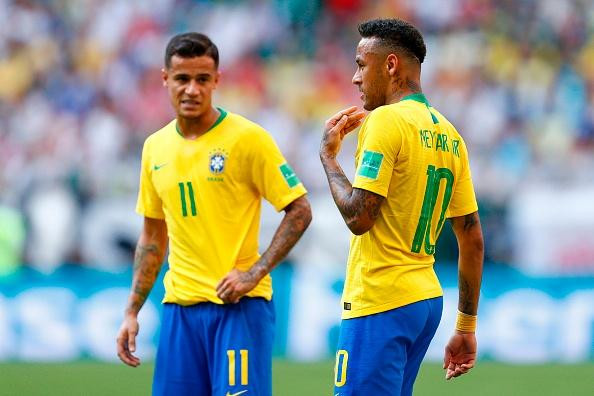
Brazil's depth gives Ancelotti significant flexibility heading into the knockout rounds. Vinícius Júnior, Raphinha and Cunha have all featured prominently in attack, while Marquinhos and Gabriel Magalhães have formed a stable center-back partnership in front of goalkeeper Alisson. The inclusion of 34-year-old Neymar in Brazil's squad has been one of the notable storylines of the team's campaign; the Santos forward returned from injury to feature as a substitute in Brazil's win over Scotland, and his specific role under Ancelotti remains a point of interest heading into the knockout stage. Raphinha, however, remains sidelined after suffering a hamstring injury during Brazil's second group match against Haiti, opening the door for young winger Rayan to retain his place on the right side of the attack alongside Vinícius Júnior and Cunha through the middle.
Japan will be without one of their most creative attacking options for Monday's match, with Takefusa Kubo ruled out because of injury. Captain Ko Itakura, who came off injured during Japan's final group match against Sweden, is considered questionable, with Shogo Taniguchi expected to step into the back line if Itakura cannot go. Wataru Endo, Japan's tireless midfield anchor, will be tasked with disrupting Brazil's passing rhythm through the center of the pitch, while Keito Nakamura's energy down the left flank has been one of the more eye-catching individual threads of Japan's tournament, with the wing-back contributing a goal and an assist during the group stage.
Tactically, the matchup sets up as a clash of contrasting approaches. Brazil will look to maintain a secure defensive spine that allows its star-studded front line freedom to create, with the central defensive partnership facing a stiff test against Japan's unselfish off-the-ball movement and constant rotation in the final third. Japan, meanwhile, leans on a highly unified defensive block that favors positional containment over individual challenges, prioritizing low-cross prevention and synchronized covering lines designed to neutralize inverted wingers cutting inside to shoot. Analysts have noted that any over-commitment from Brazil's attacking full-backs could leave the center-back pairing isolated against Japan's swift, vertical counter-attacking style, a dynamic that has proven effective for Japan against deeper, more possession-oriented opponents in the past.
History leans heavily in Brazil's favor, though Japan has shown signs of closing the gap in recent meetings. The two sides have met just once before at a World Cup, in the group stage of the 2006 tournament in Dortmund, when Japan stunned the reigning champions by taking an early lead through Keiji Tamada before Brazil rallied for a 4-1 victory built on two goals from Ronaldo, who used the result to draw level with Gerd Müller's then-record for career World Cup goals. Brazil also won a 2013 Confederations Cup meeting between the two sides 3-0. More recently, however, Japan ended a two-decade winless run against Brazil in head-to-head play by claiming a 3-2 victory in last year's Kirin Cup, the first time Japan had beaten Brazil since a 2005 Confederations Cup draw turned into a win on penalties in some accounts of the rivalry. That result has offered Japan and its supporters a sliver of belief heading into Monday's knockout clash, even as the broader competitive history and current form continue to point toward a Brazilian victory.
Betting markets reflect that gap in class, with Brazil installed as roughly 4/6 favorites to advance, while wagers on the match going beyond 2.5 total goals have also drawn significant attention given Brazil's attacking output and Japan's own capacity to find the net, as shown in their 4-0 demolition of Tunisia. Still, with both sides built to thrive in transition, some analysts have cautioned that the match could turn into a cagier, tighter contest than the form table suggests if neither team is eager to dictate the tempo with the ball.
For Brazil, anything less than a place in the quarterfinals would be viewed as a disappointment for a squad assembled with the explicit goal of capturing a record-extending sixth World Cup title. For Japan, advancing past the Round of 32 would mark new territory for a program that has become a fixture in the knockout stages of recent global tournaments but has yet to push through to the World Cup's later rounds. Win or lose, Monday's meeting in Houston promises to be one of the most closely watched fixtures of the round, pitting individual brilliance against collective discipline in a tournament that has so far rewarded both in equal measure.
© Copyright 2026 IBTimes AU. All rights reserved.
- Recommended For You