Albanese Halves Australia Fuel Excise Amid Soaring Oil Prices
CANBERRA, Australia — Prime Minister Anthony Albanese announced Monday that Australia will temporarily halve its fuel excise tax for three months, cutting the cost of petrol and diesel by about 26.3 cents per liter as global crude oil prices surged above $116 a barrel amid escalating conflict in the Middle East.

The measure, effective from April 1 to June 30, comes as the nation grapples with record-high fuel prices and concerns over potential supply disruptions triggered by the ongoing US-Israel war on Iran. Speaking after a national cabinet meeting in Canberra, Albanese said the government was acting to ease "financial stress" on households and businesses facing sharply higher costs at the pump.
The current fuel excise stands at 52.6 cents per liter. Halving it will reduce that to 26.3 cents, providing immediate relief to motorists. The government estimates the temporary cut will cost the federal budget around $2.55 billion (A$2.55 billion). Treasurer Jim Chalmers has written to the Australian Competition and Consumer Commission urging retailers to fully pass on the savings to consumers.
Albanese outlined a broader four-point plan to address the fuel crisis. In addition to the excise reduction, the government will set the heavy vehicle road user charge to zero for the same three-month period to support the trucking industry. It will also delay the next planned increase in that charge by six months. New fuel security powers, announced earlier in the week, will allow the government to underwrite purchases of additional fuel cargoes by the private sector to bolster domestic supplies.
The announcement follows days of mounting pressure from the opposition Coalition, which had repeatedly called for an immediate halving of the excise. Opposition Leader Angus Taylor and Nationals Leader Matt Canavan criticized the government for acting too slowly, accusing Albanese of being "the last to lead" on the cost-of-living issue. Albanese pushed back in Parliament, defending the government's focus on both supply security and targeted relief.
Global energy markets have been rattled by developments in the Middle East. Brent crude, the international benchmark, climbed above $116 a barrel on Monday — its highest level in nearly two weeks — as tensions escalated across multiple fronts in the conflict involving Iran. The surge has rippled through fuel markets worldwide, pushing Australian petrol prices to record levels in some cities and raising fears of shortages if supply chains are further disrupted.
Australia, which imports the majority of its crude oil and refined fuel products, remains vulnerable to international price shocks despite domestic production in areas like the Bass Strait and Western Australia. The government has emphasized that current fuel stocks are holding steady or even slightly higher than normal in recent weeks, but warned that a prolonged conflict could worsen the situation. Albanese urged Australians to avoid panic-buying, noting that such behavior could exacerbate local shortages at service stations.
The fuel excise cut marks a significant policy shift for the Labor government. Just days earlier, Albanese had left the door open to the measure but stressed a responsible approach tied to budget considerations. Economists noted that while the relief will help households, particularly lower- and middle-income drivers who spend a larger share of their income on fuel, it could also stimulate demand at a time when the government is trying to conserve supplies. Some analysts suggested the move might complicate the Reserve Bank of Australia's inflation-fighting efforts ahead of its May meeting.
Motorists are expected to see the lower prices reflected at bowsers starting Wednesday, assuming retailers pass on the full excise reduction. In major cities, average unleaded petrol prices had climbed well above A$2 per liter in recent days, with some regional areas reporting even higher figures and occasional stock outages.
The government has encouraged greater use of public transport where available. Victoria and Tasmania have indicated support for free public transport initiatives during the crisis period, though details are still being finalized. Albanese said every trip to work or school adds up, and reducing reliance on private vehicles could help ease pressure on fuel demand.
Opposition figures welcomed the excise cut but maintained it should have come sooner. They argued the government's earlier focus on new import underwriting powers, while useful for supply, did little to immediately address the pain at the pump for ordinary Australians. Some Coalition members called for even stronger measures, including a longer-term review of fuel taxation.
Energy Minister Chris Bowen has been coordinating with fuel suppliers and international partners to secure additional cargoes. The new powers allow the export finance agency to provide guarantees that help private companies bring in extra shipments without bearing full financial risk in a volatile market.
The crisis has highlighted Australia's heavy dependence on imported refined fuels. Despite being a net energy exporter of coal and liquefied natural gas, the country refines only a small portion of its fuel needs domestically. Refineries in Kwinana, Geelong and Lytton have closed or converted in recent years, increasing reliance on imports from Asia and the Middle East.
Economists estimate that every 10-cent increase in petrol prices adds significant pressure to household budgets and can contribute to broader inflation. The temporary excise cut is designed as a targeted, time-limited response rather than a permanent change to the tax regime. The government has committed to reviewing the situation as the June 30 deadline approaches, with options for extension depending on global oil market conditions.
Albanese acknowledged the broader global context, stating that "the longer this war goes on, the worse the impacts will be." He called for de-escalation in the Middle East while focusing on practical domestic measures to protect Australian families and the economy.
Business groups, including the Australian Chamber of Commerce and Industry, broadly supported the relief but urged the government to pair it with efforts to diversify energy sources and improve supply chain resilience. Trucking associations welcomed the zeroing of the road user charge, saying it would help keep freight costs from spiraling and prevent further price increases for consumer goods.
Consumer advocates emphasized the importance of monitoring retailers to ensure the tax cut flows through to pump prices rather than being absorbed as higher margins. The ACCC's involvement is intended to promote transparency and competition at the retail level.
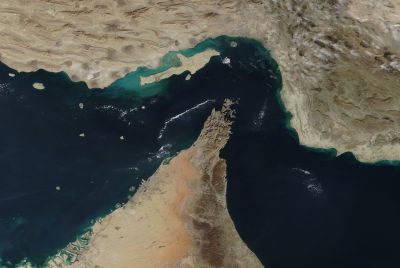
As of Monday afternoon, oil prices remained elevated, with traders closely watching developments in the Iran conflict for any signs of further supply disruptions, such as threats to key shipping routes like the Strait of Hormuz. Australia's fuel stocks provide a buffer of several weeks under normal conditions, but sustained high prices and potential import delays could test that margin.
The announcement comes as Albanese's government balances cost-of-living pressures with fiscal responsibility ahead of the May budget. Treasurer Chalmers has indicated that the $2.55 billion cost will be managed within existing budget parameters, though it reduces revenue that could otherwise support other spending priorities.
For many Australians, particularly in outer suburban and regional areas with limited public transport, the 26-cent-per-liter saving will provide noticeable relief on weekly fuel bills. A typical motorist driving 15,000 kilometers a year could save several hundred dollars over the three-month period, depending on vehicle efficiency and local prices.
The move also reflects political realities. With cost-of-living concerns ranking high among voter priorities, the government moved to neutralize opposition criticism while demonstrating decisive action following national cabinet consultations with state and territory leaders.
Looking ahead, analysts will monitor whether the excise cut leads to any measurable increase in fuel consumption or if conservation messages and higher global prices keep demand in check. The Reserve Bank will assess any inflationary implications, though the temporary nature of the relief limits its longer-term impact on underlying price pressures.
Albanese concluded his remarks by reiterating that the government's approach combines immediate relief with longer-term supply security measures. "We are making fuel cheaper today because we understand that Australians are under serious pressure," he said.
The fuel excise, introduced decades ago to fund road infrastructure, has been adjusted periodically. Previous temporary reductions occurred during the COVID-19 pandemic to support economic recovery. This latest intervention marks another instance where short-term cost-of-living support has taken precedence amid external shocks.
As the three-month period unfolds, the government and opposition will likely continue debating the best mix of tax relief, supply initiatives and energy transition policies. For now, the focus remains on easing the burden at the bowser while navigating an unpredictable global energy landscape shaped by geopolitical conflict.
© Copyright 2026 IBTimes AU. All rights reserved.
- MOST POPULAR IN Politics & Policy