North Korea Mandates Automatic Nuclear Strike on Kim Jong Un Assassination in Shocking Constitution Update
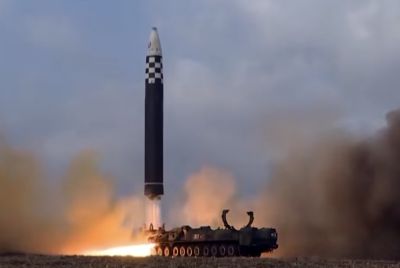
PYONGYANG, North Korea — North Korea has revised its constitution to require an immediate automatic nuclear strike if leader Kim Jong Un is assassinated or the country's nuclear command system is threatened by a hostile attack, according to reports citing South Korean intelligence.
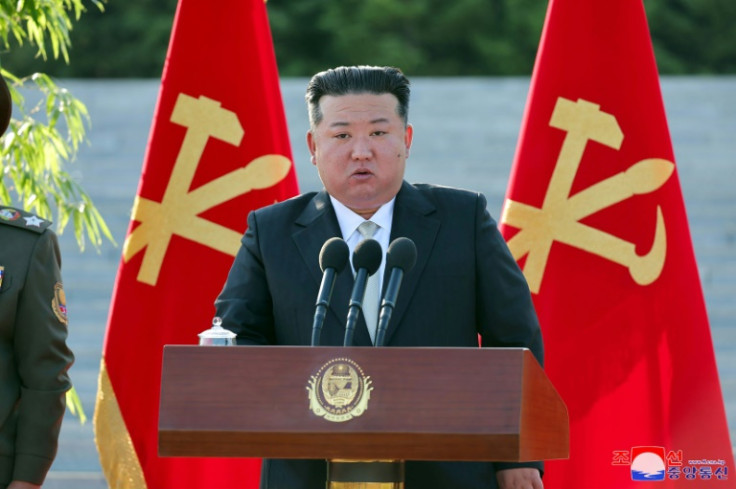
The amendment, adopted during the first session of the 15th Supreme People's Assembly on March 22, 2026, formalizes a "dead man's switch" for the reclusive nation's nuclear arsenal. It escalates Pyongyang's deterrence strategy amid global tensions, drawing parallels to the recent U.S.-Israeli strikes that killed Iran's Supreme Leader Ayatollah Ali Khamenei.
Revised Article 3 of North Korea's nuclear policy law now states: "If the command-and-control system over the state's nuclear forces is placed in danger by hostile forces' attacks ... a nuclear strike shall be launched automatically and immediately," according to multiple outlets including The Telegraph and South Korean lawmakers briefed by the National Intelligence Service.
The move solidifies Kim's sole authority over nuclear weapons while ensuring retaliation even if the leadership is decapitated. It builds on a 2022 nuclear policy law and a 2023 constitutional change that enshrined the nuclear program as irreversible. Kim described the latest revisions as "historic" during the assembly, state media reported.
Background and Context
North Korea's nuclear doctrine has evolved rapidly under Kim, who took power in 2011. The country conducted its first nuclear test in 2006 and now possesses an estimated 60 warheads, with ongoing advancements in missiles capable of reaching the U.S. mainland. This latest change removes any ambiguity about retaliation in a leadership crisis.
South Korean intelligence disclosed the update in recent parliamentary briefings. Lawmakers noted it explicitly addresses "decapitation strikes" — targeted attacks on the leadership — a scenario long feared in Pyongyang. Experts view the timing as a direct response to events in Iran earlier in 2026, where precision strikes eliminated top figures.
"The amendment creates a Russian-style 'Perimeter' or 'Dead Hand' system," said Andrei Lankov, a prominent North Korea analyst. "Even if Kim is gone, the missiles fly. It's designed to deter any foreign power from attempting regime change through assassination."
Broader Constitutional Shifts
The March revisions go beyond nuclear policy. North Korea removed all references to peaceful reunification with South Korea, redefining the border as a permanent military demarcation line between two hostile states. This marks a sharp departure from decades of rhetorical commitment to one Korea.
The constitution now elevates the chairman of the State Affairs Commission — Kim's position — as head of state above other institutions. It also drops the word "socialist" from the official constitutional title in some contexts, signaling further ideological hardening.
These changes were not immediately publicized by state media but emerged through South Korean analysis of documents and briefings. The Supreme People's Assembly, a rubber-stamp body, passed them unanimously with 687 deputies elected in mid-March elections.
Regional and International Reactions
The announcement has heightened alarms in Seoul and Washington. South Korea's government said it is reviewing the revisions, while U.S. officials expressed concern over escalating risks on the peninsula. Japan, a frequent target of North Korean missile tests, called for strengthened alliances.
"This is a dangerous escalation," a senior U.S. State Department official said on condition of anonymity. "It lowers the threshold for nuclear use and makes miscalculation more likely in a crisis."
China, North Korea's main ally and trading partner, has remained silent officially but is believed to be uneasy about instability that could send refugees across the border or disrupt regional security.
Analysts warn the policy could trigger an arms race. South Korea has advanced its own missile capabilities and deepened trilateral cooperation with the U.S. and Japan. North Korea has tested numerous ballistic missiles in recent years, including solid-fuel ICBMs, and expanded cooperation with Russia on weapons and technology.
Inside North Korea
Life under Kim remains tightly controlled. Defectors and satellite imagery show continued investment in nuclear sites despite international sanctions. The economy struggles with food shortages and isolation, yet the regime prioritizes military programs.
Kim has repeatedly vowed to bolster nuclear forces against what he calls the "most hostile" United States. In speeches, he portrays the arsenal as essential for regime survival. The new constitutional language reinforces this narrative, framing any threat to Kim as an existential attack on the state.
Public displays of loyalty, including massive parades featuring nuclear-capable missiles, remain central to propaganda. Citizens are taught that the leader's survival guarantees the nation's.
Expert Analysis and Risks
The automatic strike provision raises questions about command-and-control reliability. In a chaotic scenario following an assassination attempt, technical glitches or unauthorized actions could spark unintended nuclear war. Communication blackouts or cyberattacks might trigger the system prematurely.
"Dead Hand systems sound deterrent on paper, but they increase the risk of accidental escalation," said a former U.S. intelligence official familiar with North Korean programs. "Once launched, there's no recall."
Others argue it stabilizes deterrence by making preemptive strikes against Kim suicidal. No rational actor would risk nationwide nuclear retaliation.
The policy applies specifically to attacks by "hostile forces," typically meaning the U.S. or South Korea. Internal threats or accidents are not explicitly covered, though the broad language leaves room for interpretation.
Historical Parallels
North Korea has long studied other nuclear states. The 2022 law already allowed automatic retaliation in certain cases. This constitutional embedding makes reversal politically harder and signals permanence.
It echoes Cold War doctrines but in a more volatile regional context. Unlike the Soviet Union's mature systems, North Korea's arsenal is newer, with untested full-scale integration.
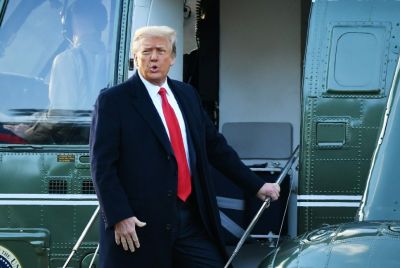
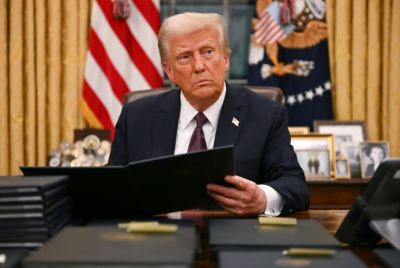
Tensions have simmered since the failed 2019 Hanoi summit between Kim and then-President Donald Trump. Joint military drills by U.S. and South Korean forces, plus sanctions, fuel Pyongyang's grievances.
Looking Ahead
As North Korea continues missile tests and possible seventh nuclear detonation preparations, the new doctrine adds urgency to diplomacy. Calls for dialogue persist, but trust remains elusive. The U.S. maintains that denuclearization is the goal, while Kim demands recognition as a nuclear power.
For now, the constitution update serves as both shield and sword — protecting Kim while threatening apocalypse if he falls. In a region already on edge, it underscores how personal survival and national strategy intertwine in Pyongyang.
The full text of revisions has not been publicly released by North Korea, but South Korean officials continue monitoring for implementation details. Intelligence agencies worldwide will watch closely for signs of operational changes to launch protocols.
This development arrives as global attention focuses on multiple flashpoints, from Ukraine to the Middle East. North Korea's move ensures it remains a central player in great-power competition, leveraging its nuclear card to maximum effect.
© Copyright 2026 IBTimes AU. All rights reserved.
- Recommended For You