NBA Free Agency Grades: Trae Young's Wizards Deal Gets a D, McCollum's Hawks Return Earns an A
Evaluating NBA offseason moves: Trae Young's costly contract with the Wizards and CJ McCollum's impactful return to the Hawks.
The NBA offseason has officially begun. Now that the New York Knicks have defeated the San Antonio Spurs in the Finals, teams are making moves ahead of the draft, scheduled for Tuesday and Wednesday on ABC, ESPN, and the ESPN App.
The Calendar Ahead
There should be more contract extensions soon, as June 30 is the last day for a player in the final year of his contract to extend that deal. June 30 is also the first day teams can negotiate with free agents outside of their franchise — in other words, that's when the free agency frenzy is expected to begin in earnest.
How the Grades Are Determined
Each grade reflects multiple factors, including the player's on-court impact and age, the contract's financial implications, and the context of the team's short- and long-term outlooks — weighing how risky or certain the move is, and how much it helps or hurts the team's chance to win a championship, whether next season or beyond.
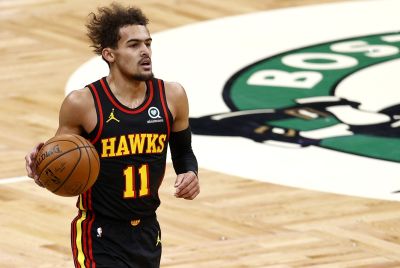
Trae Young, Washington Wizards: Grade D
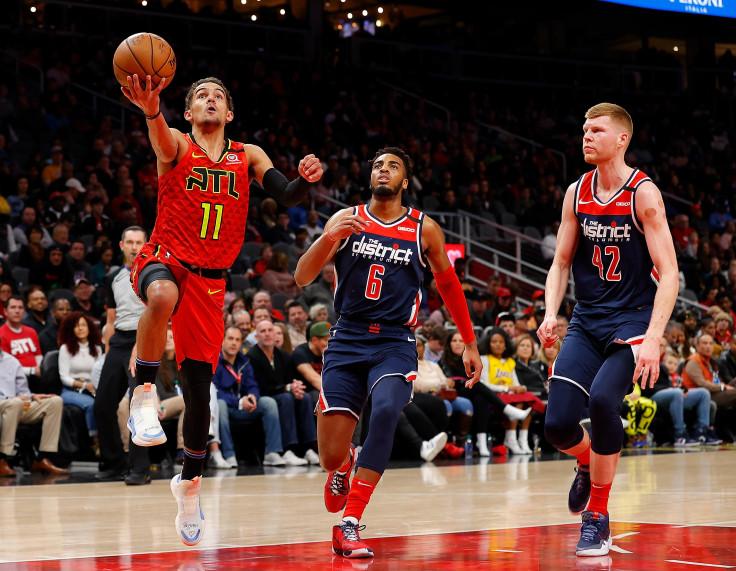
When the Wizards traded for Trae Young in January, it seemed like an opportunistic buy-low move for a franchise devoid of star power, as they didn't have to surrender any picks to add the four-time All-Star. But the new four-year, $212 million deal, which includes a player option in Year 4, revealed the true price of Washington's acquisition.
Young's new contract isn't the maximum the Wizards could have given him — that four-year deal would have been worth $222 million — but it will still pay him an average of $53 million over four seasons and make him one of the 20 highest-paid players in the NBA.
If Young was ever at that level in terms of performance — he's made one All-NBA third team in his career — he's not anymore, as he prepares to enter his age-28 season following a marked decline on the court. While Young remains an offensive engine who has averaged double-digit assists in each of his past three full seasons, he has also lost some of what made him so special on that end in his early 20s.
His shooting numbers underscore the concern. Young's penchant for highlight-worthy deep three-pointers hides the fact that he has shot 34% or worse from distance in three of the past four seasons. Over that span, he ranks 49th out of 56 players with at least 1,500 attempts in three-point percentage.
Even more worrying, some of Young's burst has disappeared, raising broader concerns about a decline in athleticism. In the 2020-21 season, Young averaged 29 drives per 100 possessions, which ranked third behind Shai Gilgeous-Alexander and Luka Dončić. But over the past three seasons, Young is down to 21 drives per 100 possessions, a drop of more than a quarter, ranking 14th in drive frequency over that span.
The defensive picture compounds the concern. The advanced stat xRAPM ranks Young in the 97th percentile for offensive impact, but below the first percentile in defensive impact. In almost every season of his career, his teams have been much worse with him on defense.
A player with that profile still has value to the right team in the right context, and Washington fits in some respects as a franchise lacking a clear lead creator, with cap flexibility and young players on rookie contracts. But soon enough, some of those young players will start demanding contract extensions, and now they'll receive their raises at the same time the Wizards are paying upward of $50 million per season to a small guard with significant flaws on the wrong side of the aging curve. The Wizards would have been fine had they re-signed Young to fewer dollars or fewer years, ideally both — but they didn't pick either option.
CJ McCollum Returning to Hawks: Grade A
McCollum played an unexpectedly important role in Atlanta last season, as the Hawks surged after the All-Star break. He might have been the most valuable player in the playoffs, accomplishing something nobody else in the entire NBA could: with game-winning buckets in the final minute of consecutive games, he managed to beat the Knicks multiple times this postseason.
That wasn't the expectation when McCollum came to Atlanta in the Trae Young trade, where he was seemingly included primarily to help match Young's salary. Instead, McCollum meshed well with Atlanta's untraditional positional alignment. The Hawks' five-man lineup of McCollum, Dyson Daniels, Nickeil Alexander-Walker, Jalen Johnson, and Onyeka Okongwu had a plus-21.4 net rating, which ranked second among all lineups with at least 500 possessions.
McCollum's one-year, $21 million deal carries almost no downside. After making $30.7 million last season, his salary drops to $21 million in 2026-27, maintaining the Hawks' offseason flexibility. As one analysis put it, there's almost no such thing as a bad one-year deal — and the Hawks aren't committing to pay McCollum into his late 30s, when his gradual decline should grow more pronounced.
Phoenix Suns Re-Sign Two Guards
The Suns also moved to retain two of their backcourt pieces. Collin Gillespie signed a four-year, $48 million deal, earning a Grade A-. Gillespie enjoyed a breakout 2025-26 season, averaging 12.7 points per game and sinking 40% of his three-pointers, with his 46% mark on catch-and-shoot threes ranking third among 121 players with at least 200 attempts. For Phoenix, he fills a much-needed role as a ball handler next to Devin Booker, who led the Suns in assists but isn't the type of playmaker who should dominate the ball on every possession.
Jordan Goodwin re-signed on a three-year, $19 million deal, earning a Grade B+. Goodwin is a more unorthodox player than Gillespie — not a remarkable scorer or creator, though his improved three-point percentage, up to 37% last season, is notable, but a strong defender and an incredible offensive rebounder. The 6-foot-3 Goodwin ranked 15th among qualified players with a 9.4% offensive rebounding rate last season, with all 14 players ahead of him being centers.
A Looming Complication for Phoenix
In a vacuum, the Suns did well to re-sign both Gillespie and Goodwin for reasonable rates. The potential complication is how these deals affect the rest of Phoenix's offseason plans, with starting center Mark Williams also due for a new contract as he enters restricted free agency. The Suns entered the offseason just $18 million shy of the luxury tax line and $26 million shy of the first apron.
Although Phoenix greatly exceeded expectations last regular season, winning 45 games and landing the West's No. 8 seed, the team was uncompetitive in a first-round sweep against Oklahoma City and doesn't have a clear pathway to greater contention, raising the question of whether the franchise is content to run it back while accepting the penalties that come with exceeding the luxury tax and first apron.
With the draft set for Tuesday and Wednesday and the official start of free agency negotiations arriving June 30, the pace of contract signings, extensions, and trades is expected to accelerate significantly in the coming days. Given the early grading patterns already emerging — rewarding short-term, flexible deals like McCollum's while penalizing long-term commitments to players whose performance has plateaued, such as Young's — front offices around the league will likely continue facing scrutiny over how they balance immediate roster needs against the increasingly punishing financial realities of the NBA's current luxury tax and apron system.
© Copyright 2026 IBTimes AU. All rights reserved.
- Recommended For You