McDonald's Stock Slips Again Today, Trading Near 52-Week Lows Despite Four Quarters of Rising Comparable Sales
McDonald's faces stock challenges despite strong sales and strategic initiatives.
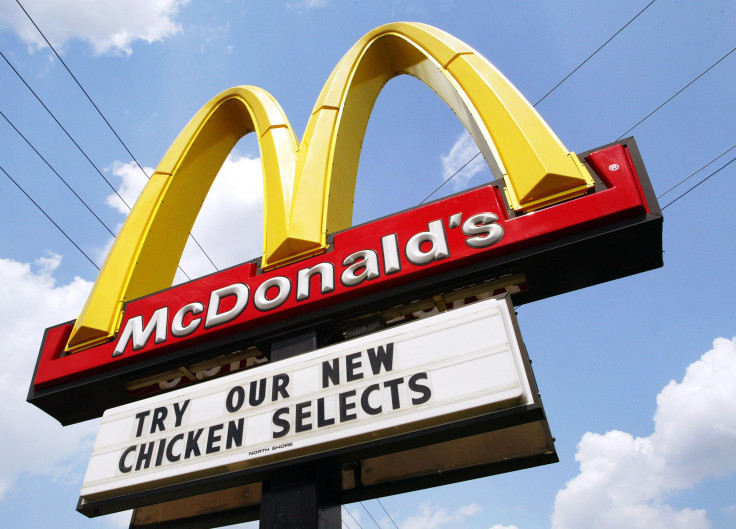
McDonald's shares fell again Monday, extending a steep slide that has pushed the world's largest restaurant franchisor down more than 20% from its early-year highs, even as the company's underlying sales trends have continued to strengthen.
Shares of the Chicago-based company were trading at $266.33 as of noon EDT, down $3.43, or 1.27%, on the day. The decline keeps the stock hovering close to its 52-week low of roughly $270, a level it first touched on June 22, and well off its 52-week high of $337.56, reached in late February. The roughly 20% drawdown over the past four months stands in contrast to a business that has, by most measures, continued to perform well operationally.
McDonald's first-quarter 2026 results, reported earlier this year, showed earnings per share of $2.83, ahead of analyst estimates of $2.74, while revenue climbed 9.4% year-over-year to $6.52 billion. Global comparable sales rose 3.8%, a sharp reversal from a 1% decline in the same period a year earlier, with U.S. comparable sales up 3.9% and international operated markets posting 14% revenue growth. According to recent analyst commentary, the quarter marked the fourth consecutive period of accelerating global comparable sales for the chain, a streak that has continued even as the stock has fallen.
Several factors appear to be weighing on the shares despite that operational momentum. Broader sector rotation has played a meaningful role, with institutional investors shifting money away from defensive consumer names like McDonald's and into higher-growth technology and semiconductor stocks amid the ongoing artificial intelligence investment boom. Persistently sticky inflation data has also raised concerns that interest rates could stay elevated longer than previously expected, a dynamic that tends to weigh on consumer discretionary spending and, by extension, restaurant stocks broadly. McDonald's has faced its own version of that pressure directly, with customers increasingly pushing back against menu pricing even as the company has leaned on value-focused promotions to keep traffic steady, particularly among lower-income consumers who have grown more price-sensitive.
Company-specific decisions have added to the uncertainty. McDonald's recently discontinued its long-running "Wrap of the Day" promotion, a roughly 15-year-old offering, a move some analysts have flagged as a potential risk to customer traffic at a moment when overall quick-service foot traffic across the industry is already softening. At the same time, the company rolled out a new systemwide initiative called "McDonald's NEXT" earlier this month, aimed at improving food quality, expanding automation, enhancing digital ordering and strengthening franchise economics across its nearly 46,000 restaurants. While the program has been broadly welcomed as a long-term positive, some analysts have characterized the automated rollout as unproven at this stage, introducing near-term execution risk and requiring heavy upfront investment in labor and capital just as franchisee margins are already under pressure. Separately, the company has leaned into nostalgia marketing, reintroducing its Fried Apple Pie to U.S. menus for the first time in 34 years in an effort to drive renewed customer engagement.
Wall Street's reaction to the stock's pullback has been mixed. KeyBanc lowered its price target on McDonald's to $315 from $330 earlier Monday while maintaining a Buy rating on the shares, according to research tracked by financial data providers. Other firms have taken a more cautious stance, with Erste Group and RBC Capital both reaffirming Hold ratings on the stock in recent days. Across a broader pool of analysts, the consensus price target sits at roughly $331, with estimates ranging from a high of $375 to a low of $300, and ratings split between 19 Buy recommendations, 14 Hold ratings and a single Sell, reflecting a genuinely divided view on where the stock goes from here. Some recent insider selling, including a multimillion-dollar stock sale by a top McDonald's executive earlier this month, has added to investor unease even as at least one institutional investor, SG Americas, increased its stake in the company by nearly 69% during the recent pullback, a move some market watchers have read as a sign of growing conviction that the stock's decline has been overdone.
McDonald's underlying financial profile continues to support its reputation as one of the more durable cash-generating businesses in the restaurant industry. The company posted roughly $7.19 billion in free cash flow over the trailing year and reported annual net profit of $8.56 billion, ranking it first among its peers in the broader consumer services sector despite trailing some rivals in total revenue. McDonald's also remains a Dividend Aristocrat, having raised its payout for decades, including a 5% increase in October 2025 that brought its quarterly dividend to $1.86 per share, translating to a yield of roughly 2.6%, above the broader industry average. The company's most recent dividend was paid June 16 to shareholders of record as of June 2.
Looking ahead, the company has outlined plans to open roughly 2,600 new restaurants globally in 2026 and has set a target of reaching a mid-to-high 40% operating margin over time, underscoring management's continued confidence in the underlying business model even amid the stock's recent weakness. Analysts tracking the company have pointed to a planned investor event tied to the NEXT initiative, expected in September, as the most likely near-term catalyst that could help re-rate the stock if management can convincingly demonstrate progress on automation, digital engagement and franchise profitability.
Risks to that more optimistic view remain real. Restructuring charges tied to the NEXT rollout are expected to run through 2027, while the company faces 4% to 6% higher interest expense and a higher effective tax rate of 22%, compared with roughly 19.8% previously. Broader margin pressure across the restaurant industry, illustrated by a recent decline in Chipotle's restaurant-level operating margin, suggests McDonald's is not alone in navigating a tougher cost environment, even as its scale and largely franchised model continue to set it apart from many competitors.
For now, McDonald's finds itself in an unusual position: a business posting improving sales trends and steady cash generation, trading near multiyear lows on its stock price, caught between near-term investor caution over execution risk and rising costs, and a longer-term bull case built around the durability of its global franchise model and its ability to keep adapting its value proposition to changing consumer habits.
© Copyright 2026 IBTimes AU. All rights reserved.
- Recommended For You