

Messi Leads World Cup Scoring Race Despite Running the Least of Any Field Player in the Tournament
Messi's strategic play and record-setting efficiency redefine his World Cup legacy
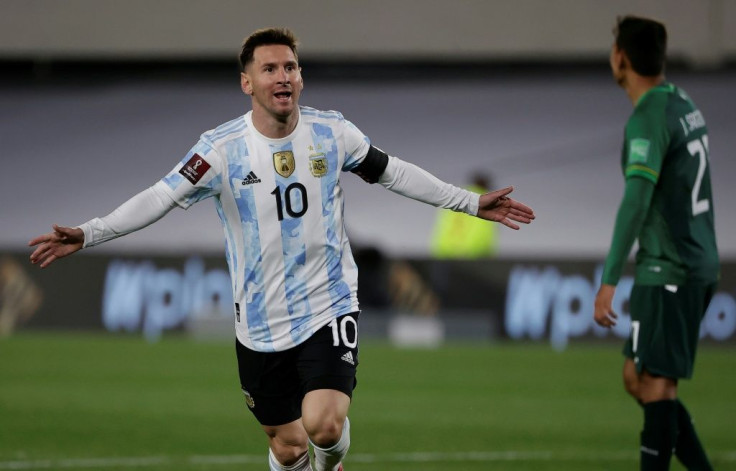
Lionel Messi has climbed to a share of the lead in goals scored at the 2026 FIFA World Cup, delivering a dominant tournament for Inter Miami's 39-year-old forward even as data shows he has covered less ground than any other outfield player still competing in the competition.
While Messi no longer displays the explosive speed and dribbling bursts that defined his prime years, he has continued to demonstrate what many observers consider a mastery of the sport, calmly walking through much of each match while positioning himself in sync with his team's attacking structure.
Walking Through Matches, Then Striking
Throughout this tournament, Messi has frequently been observed walking or moving at a slow pace for extended stretches during matches. Yet in decisive moments, he has repeatedly accelerated at precisely the right time to exploit gaps in opposing defenses, converting those brief bursts into goals. Rather than relying on constant movement, Messi has scaled back his overall physical output while sharpening his focus on chance creation, allowing him to control matches efficiently without expending unnecessary energy.
Record-Setting Efficiency, According to Tracking Data
According to data reported by the BBC, Messi has generated 54 total attacking actions in this tournament, combining 33 shots and 21 created chances. That figure represents the most attacking actions produced by a single player in a World Cup tournament since Diego Maradona's performance at the 1986 tournament in Mexico.
What makes the statistic even more notable, according to the tracking data, is that Messi has covered 47% of his total on-field distance simply walking — the highest walking ratio among all outfield players in this year's competition. Among Argentina's field players, he has logged an average of just 8.2 kilometers of running per match in appearances lasting more than 20 minutes, and his sprint count has dropped to just 2.7 per match, roughly half the rate he posted at the 2022 World Cup in Qatar.
A Statistical Trend Across His Recent Tournaments
The reduction in physical output has not come at the expense of scoring production. Across his last 15 World Cup matches, Messi has recorded 16 goals and seven assists, maintaining an extraordinary level of output over an extended stretch of tournament play. During that span, he registered an attacking contribution — either a goal or an assist — in every match except Argentina's 2-0 win over Poland in the group stage of the 2022 Qatar tournament.
Messi's continued involvement in this year's tournament has also placed him among an elite group of players making World Cup history. Along with Cristiano Ronaldo of Portugal and Guillermo Ochoa of Mexico, Messi is competing in his sixth career World Cup, a milestone few players in the sport's history have reached. Compared with his statistical output across those earlier tournaments, his current pace stands out as particularly efficient relative to the physical effort involved.
Semifinal Showdown With England Looms
Argentina is set to face England in the tournament's semifinal round on July 16 in Atlanta, a matchup that has drawn significant attention given both nations' championship ambitions and Messi's continued pursuit of the tournament's individual scoring title.
The semifinal picture solidified after France's Kylian Mbappé and his team were eliminated following a loss to Spain, sending France into the third-place playoff rather than the tournament final. That result leaves the Argentina-England semifinal as one half of the bracket determining who will advance to compete for the championship, with Spain awaiting the winner in the final.
Attention has increasingly turned to whether Messi can use the England match to move into sole possession of the tournament's scoring lead, a distinction that would add to an already historic individual campaign at this stage of his career.
A Career Defined by Adaptation
Messi's performance at this tournament reflects a broader pattern of adaptation that has characterized the later stages of his career. As his physical attributes have naturally declined with age, he has increasingly relied on positioning, anticipation and decision-making to remain effective at the highest level of international competition, a shift that has allowed him to continue producing elite scoring numbers well into his late 30s.
For a player long regarded as one of the greatest in the history of the sport, this tournament has offered a compelling demonstration of how experience and tactical intelligence can offset the physical decline that typically accompanies age in professional soccer. Rather than attempting to replicate the frenetic pace of his younger years, Messi has instead recalibrated his game around efficiency, conserving his energy for the moments that matter most within each match.
With Argentina's semifinal against England set for July 16 in Atlanta, Messi's continued push for the tournament's scoring title adds another layer of intrigue to an already highly anticipated match. A strong showing could see him not only help guide Argentina toward a potential final appearance, but also cement his status as the tournament's outright top scorer, further extending an individual World Cup legacy already considered among the most accomplished in the sport's history.
© Copyright 2026 IBTimes AU. All rights reserved.