

Mbappe Tops 2026 World Cup Speed Rankings, Outpacing Messi, Haaland and Yamal in Stunning Sprint Data
Mbappe Outpaces Soccer's Elite with Record Sprint at World Cup
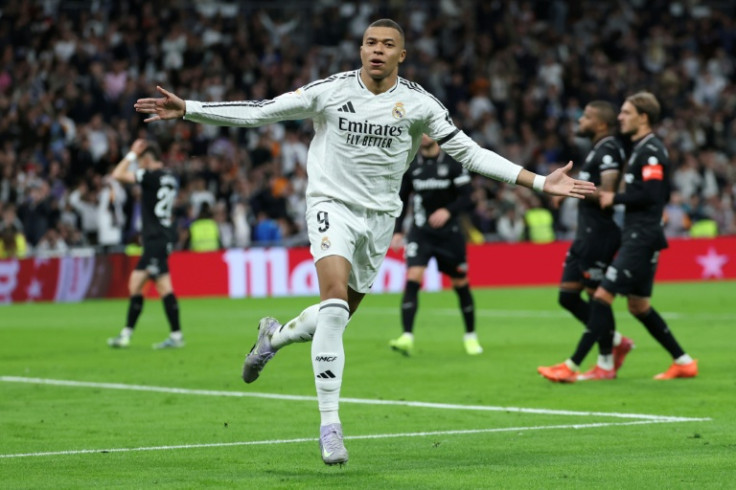
Kylian Mbappe has once again distinguished himself as one of soccer's most explosive athletes, posting the fastest recorded sprint speed among the sport's biggest stars at the 2026 World Cup and edging out rivals including Lionel Messi, Erling Haaland and Lamine Yamal.
Tracking data compiled by FIFA and Sofascore showed the French forward reaching a top speed of 37.6 kilometers per hour, or roughly 23.4 miles per hour, during the tournament — the highest mark recorded among the leading names monitored throughout the competition. The figure places Mbappe comfortably ahead of several of the game's most dynamic attackers and underscores the physical gifts that have made him one of the most difficult players in the world to defend against in open space.
Morocco's Achraf Hakimi and Norway's Erling Haaland followed in a tie for second, each clocking a top speed of 35.6 km/h, or about 22.1 mph. Spain's 18-year-old winger Lamine Yamal came in just behind at 35.5 km/h, also translating to roughly 22.1 mph, rounding out a group of four players separated by only about two kilometers per hour at the very top of the tournament's speed charts.
Belgium's Romelu Lukaku and England's Harry Kane tied for fifth at 31.4 km/h, or 19.5 mph, while Argentina's Lionel Messi registered a top speed of 30.9 km/h, about 19.2 mph. Switzerland's Granit Xhaka rounded out the tracked group at 28.9 km/h, or 18.0 mph.
While the gap between Mbappe and his closest pursuers may look modest on paper, sports scientists and coaches have long noted that fractions of a kilometer per hour can prove decisive at the elite level, often determining the outcome of a footrace between an attacker breaking in behind a defense and a defender attempting to track back and recover positioning. Mbappe's nearly two-kilometer-per-hour advantage over Hakimi and Haaland reflects a margin that, in practical terms, can be the difference between a player reaching a through ball first or being crowded out before a shot ever develops.
Mbappe's blistering pace has been a hallmark of his game since his emergence as a teenage prodigy at Monaco nearly a decade ago, and it has remained one of his most potent weapons as he has matured into the captain of the French national team. His combination of straight-line speed and close control has repeatedly allowed France to turn defensive transitions into scoring chances, with Mbappe's acceleration forcing opposing back lines to retreat and creating space for teammates in behind.
The presence of Hakimi and Haaland near the top of the rankings highlighted a broader shift in how speed factors into modern soccer, extending well beyond traditional wide attackers who have historically been associated with pace. Hakimi, who plays primarily as a right back for both Morocco and his club side, has built his reputation on a rare blend of defensive discipline and attacking burst, regularly covering enormous distances at full speed while still contributing to his team's defensive structure. His inclusion among the tournament's fastest players reflects how modern full backs are increasingly relied upon as auxiliary attacking weapons rather than purely defensive figures.
Haaland's appearance in the same tier arguably carries even more weight given his physical profile. The Manchester City striker, listed at nearly 6-foot-4, has built his reputation primarily on power, physicality and clinical finishing rather than raw speed. His tying for second on the tournament's sprint charts illustrates that opposing defenses must also account for his ability to run in behind a back line at pace, adding another dimension to a skill set already considered among the most dangerous in the world game.
Yamal's presence near the top of the list further cemented his standing as one of the breakout stars of the tournament. The Barcelona winger, still just 18, reached a top speed nearly matching that of players with far more experience at the international level, adding a physical dimension to an attacking game already built around close control, creativity and the ability to beat defenders in tight spaces. Reaching such marks alongside established stars including Mbappe and Haaland speaks to the scale of Yamal's potential as he continues to develop.
Messi's inclusion further down the list drew its own share of attention, given the Argentine forward's age and stature in the sport. At 39, Messi remains one of the most influential players at the tournament despite a top speed well below several of his younger counterparts, a reflection of how his game has long relied on anticipation, technique and decision-making rather than pure athleticism. His continued ability to affect matches at the highest level, even as raw physical metrics favor younger players, has remained a defining feature of his extended career at the top of the sport.
The speed data adds another layer to the ongoing storylines of the 2026 World Cup, where individual performances have increasingly been scrutinized through advanced tracking technology in addition to traditional statistics such as goals and assists. FIFA has expanded its use of player-tracking data in recent tournaments, providing broadcasters, analysts and fans with detailed physical performance metrics that were not widely available in earlier World Cup cycles.
For Mbappe, the sprint record adds to a tournament in which the French captain has again been at the center of his team's attacking efforts, reinforcing his standing as one of the most complete forwards of his generation. Combined with his track record of decisive performances in previous World Cup tournaments, the latest data point further cements his reputation as a player capable of changing the outcome of a match in the span of a single burst of speed.
© Copyright 2026 IBTimes AU. All rights reserved.