

Science Explains Why 39-Year-Old Messi Still Dominates at the World Cup Despite Being Old, Short and Slow
Discover the unseen skill that keeps Messi at the top of his game.
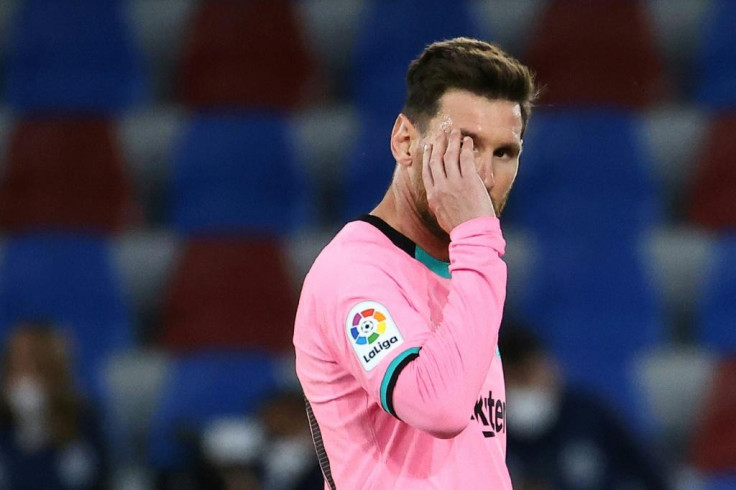
MIAMI — He is 39 years old. He stands 1.70 metres tall, shorter than virtually every defender he faces. He was never a sprinter, and he is slower now than he has ever been. None of that has stopped Lionel Messi from being the most dangerous player at the 2026 World Cup, co-leading the tournament in goals with six alongside France's Kylian Mbappé, and continuing to confound everyone who watches him with the simple question: how?
The answer, according to researchers who have spent more than a decade studying elite soccer cognition, has almost nothing to do with what happens when Messi touches the ball. It has everything to do with what happens in the seconds before the ball arrives.
The explanation lies in a behavior that cameras rarely linger on and commentators rarely mention: scanning. The constant, deliberate movement of Messi's head in the moments before he receives a pass, gathering information about the positions of defenders, teammates and open space that other players have not yet obtained or have not yet processed. By the time the ball reaches his feet, the decision has already been made. The touch, the turn, the pass that splits a defense open, those are, as researchers describe them, the easy part. The hard part happened earlier and mostly invisibly.
Johan Cruyff, the Dutch soccer philosopher and one of the most perceptive analytical voices the sport has ever produced, identified the principle behind this decades ago, even without the data to quantify it.
"What is speed? The sports press often confuses speed with insight," Cruyff said. "If I start running slightly earlier than someone else, I seem faster."
That observation, dismissed at the time by some as poetic misdirection, has since been validated in peer-reviewed research. Scientists who study visual cognition in elite sports have consistently found that what appears to be physical quickness in the game's best players is frequently something different and more subtle: a head start bought by earlier and better perception.
Researchers studying how soccer players gather visual information before receiving the ball fitted small motion sensors to the backs of athletes' heads, from youth academy players to senior professionals, recording how frequently and how widely players turned to look around during live match conditions. They were measuring what the field calls visual exploration, or, more plainly, scanning, and asking a straightforward question: does the frequency and quality of a player's environmental awareness before the ball arrives actually change what they are able to do once it does?
The findings were consistent across subjects and settings. Players who scanned more frequently in the seconds before receiving a pass were measurably faster to release their next pass, more likely to turn forward with the ball rather than playing it safely back the way it came, and more likely to deliver a forward pass that created a genuine threat to the opposition. The information gathered before ball contact directly shaped the quality of decision-making once contact occurred.
The research separates scanning into two distinct functions. The first, which the researchers call orientation, is the broader, earlier phase of looking around to understand what the entire field is offering in a given moment: what options exist, where threats are developing, which spaces might open. The second, called specification, is the finer, later visual work that guides the actual execution of a pass or movement once a course of action has been chosen.
Orientation is the phase that tends to be overlooked, because it happens away from the ball at moments when nothing dramatic is visually occurring. Yet it is also the foundation. Without it, even technically gifted players are forced to make decisions with incomplete information, reacting to what they find when the ball arrives rather than acting on what they already knew.
Cruyff described the same concept in different language.
"There is only one moment in which you can arrive in time," Cruyff said. "If you are not there, you are either too early or too late."
Messi's scanning behavior is, by any observable measure, among the most continuous and comprehensive in professional soccer. Watching him for 30 seconds when the ball is not near him reveals a pattern of constant, small head movements: a check left, a check right, a glance at the player on the ball, a scan behind. None of it looks especially significant in isolation. In aggregate, it means that by the time a pass arrives, Messi has assembled a mental map of everything happening around him that his marker, almost certainly taller and faster in a physical sense, has not finished constructing.
This is why the puzzle of Messi at 39, the question of how someone physically limited by every conventional athletic metric can still be the best player on the field at the most important soccer tournament in the world, resolves cleanly once you look at the right variable. He is not racing defenders. He has arranged, through earlier and better information-gathering, to never need to race anyone. He has already arrived.
The broader implication of this research extends well beyond understanding a single extraordinary player. Scanning frequency and quality are trainable skills. Data consistently shows that the habit of visually exploring the environment before the ball arrives can be developed deliberately and systematically in young players, from an early age, regardless of their physical dimensions or raw athletic capacity. The phrase coaches shout on training pitches everywhere, "check your shoulder," is an intuitive, low-tech version of exactly this principle. The research suggests it should be formalized and made central rather than incidental to player development.
That matters at the population level because most players will never have Messi's technique or his touch, but some of what makes him dominant is not genetic genius or exceptional physical gifting. It is habit. Perception is not a fixed attribute. It responds to practice, the same way passing does or first touch does, and coaches who train it systematically in young players may find they produce players who make better decisions even if they never make the physical charts.
For now, the immediate practical conclusion is simpler. The next time someone watches Messi at this World Cup and struggles to explain how a 39-year-old, standing shorter than virtually everyone else on the pitch, in his sixth and almost certainly final World Cup, is still doing what he is doing, the explanation is not in his feet. It has never been in his feet. Watch his head. That is where it all begins.
© Copyright 2026 IBTimes AU. All rights reserved.