

England vs. Argentina: Inside the 64-Year Rivalry Facing Its Biggest World Cup Semifinal Test Yet
Decades of Controversy and Footballing Folklore Culminate in World Cup Semifinal
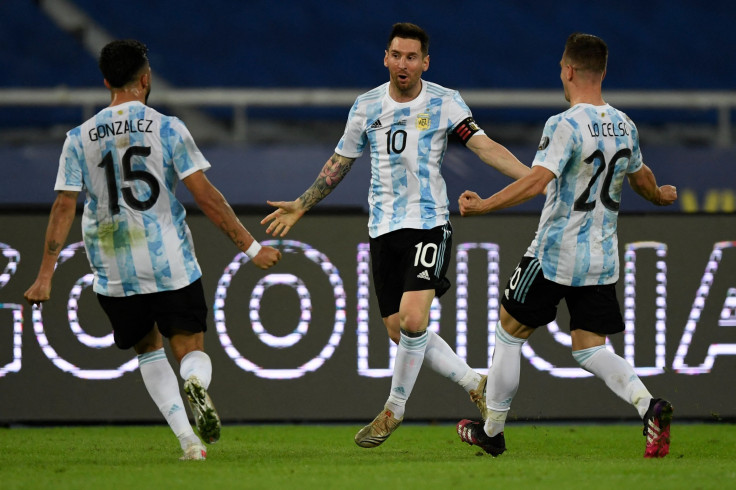
England and Argentina meet Wednesday in Atlanta for a place in the World Cup final, a match many in the sport consider the fiercest rivalry in international football, one forged not merely on the pitch but through decades of war, controversy and some of the most infamous moments in soccer history.
The two nations have met just four times previously at football's biggest tournament, and Wednesday's semifinal will mark only the fifth encounter of any kind between them in more than two decades, following a 2005 friendly in Geneva that England won 3-2 after trailing 2-1 late. Notably, an 18-year-old Lionel Messi was suspended for that match, meaning Wednesday will represent the first time Messi has ever faced England on the pitch across his storied international career.
The rivalry's roots trace back to the 1966 World Cup quarterfinal at Wembley Stadium, England's first meeting with Argentina at the tournament. Argentina captain Antonio Rattín was sent off in the first half for dissent but initially refused to leave the field, later seen twisting a corner flag and sitting on a red carpet reserved for Queen Elizabeth II, prompting fans to hurl objects at him. England won the match 1-0 en route to lifting its only World Cup title that year, but the aftermath left a lasting scar. England manager Alf Ramsey described Argentina's players as "animals" following the match, a remark that provoked outrage in Argentina and became a foundational grievance in the rivalry that followed.
Sixteen years later, football gave way to actual warfare. Britain and Argentina fought a 74-day war in 1982 over the Falkland Islands, a British overseas territory in the South Atlantic that Argentina also claims as its own, known there as Las Malvinas. More than 900 people died on both sides before Argentine forces surrendered and British control of the islands was restored. For Argentina, the war's aftermath also coincided with the collapse of the country's military government and the return of democracy in 1983.
Four years after the war, England and Argentina met again in the quarterfinals of the 1986 World Cup at Estadio Azteca in Mexico City, a match that produced two of the most iconic goals in football history, both scored by Diego Maradona. In the 51st minute, with the game still scoreless, Maradona rose above England goalkeeper Peter Shilton and punched the ball into the net with his hand, a goal referees allowed to stand despite English protests. At the postgame press conference, Maradona described the goal, with tongue firmly in cheek, as having been scored "a little with the head of Maradona and a little with the hand of God," giving the moment its enduring name: the Hand of God. Just four minutes later, Maradona scored again, this time dribbling roughly 60 yards through five England defenders before beating Shilton for what is widely regarded as the greatest solo goal in World Cup history.
For many in Argentina, the victory carried meaning far beyond football. Former Argentina international Roberto Perfumo captured that sentiment starkly. "In 1986, winning that game against England was enough. Winning the World Cup was secondary for us. Beating England was our real aim," Perfumo said. Former Argentina coach César Luis Menotti similarly described the emotional charge behind the Hand of God goal specifically. "People said, 'Great! Better, much better, that the goal was so unjust, so cruel, because it hurt the English more,'" Menotti said. Maradona himself later drew an explicit connection between the goal and the Falklands War in the 2019 documentary "Diego Maradona," directed by Asif Kapadia. "I knew it was my hand. It wasn't my plan but the action happened so fast that the linesman didn't see me putting my hand in. The referee looked at me and he said: 'Goal.' It was a nice feeling like some sort of symbolic revenge against the English," Maradona said.
In England, the 1986 match is remembered with equal intensity, though for starkly different reasons. Both of Maradona's goals were ranked among the top moments in Channel 4's 2002 list of the 100 Greatest Sporting Moments, a testament to how deeply the match embedded itself in English football memory, even as the manner of the first goal remains a source of lingering resentment.
The rivalry has continued to flare in subsequent meetings, including a bad-tempered 1998 World Cup encounter in which a young David Beckham was sent off for kicking out at Diego Simeone, and a 2002 group-stage match won by England on a controversial penalty. Overall, England holds the edge in the official head-to-head series, with six wins to Argentina's two, alongside five draws. What makes the rivalry unusual by international football standards, analysts note, is its intercontinental nature; most fierce national rivalries, such as France-Italy or Argentina-Brazil, exist between geographically close neighbors, whereas England and Argentina are separated by an ocean, their animosity fueled instead by shared footballing history and the singular trauma of the Falklands War.
The footballing connection between the two countries actually predates all of that history by nearly a century. The first recorded football match in Argentina was played by British railway workers in 1867, and storied Argentine clubs including Newell's Old Boys and Rosario Central trace their origins to that same era of British influence in the country, adding a layer of shared heritage beneath decades of on-field animosity.
Wednesday's semifinal in Atlanta carries stakes that eclipse every previous meeting between the two sides. England is chasing its first World Cup final appearance since that lone 1966 triumph, while Argentina, led by a 39-year-old Messi playing in what is widely regarded as his final World Cup, is pursuing back-to-back titles for the first time since Brazil accomplished the feat in 1958 and 1962. Notably, both nations have previously knocked each other out of the World Cup en route to eventually lifting the trophy themselves, England in 1966 and Argentina in 1986, a symmetry that adds further historical weight to Wednesday's meeting.
With Messi set to face England for the first time in his career and both nations carrying the accumulated weight of nearly six decades of controversy, war and footballing folklore into Mercedes-Benz Stadium, Wednesday's match stands as far more than a simple World Cup semifinal. It is, by the estimation of many who have followed the sport for decades, the culmination of the most storied and complicated rivalry in international football, arriving at precisely the moment when the stakes have never been higher for either side.
© Copyright 2026 IBTimes AU. All rights reserved.