Elon Musk Tells Young People to Study Broadly as He Says Money May Not Matter in an AI Future
The Tesla and SpaceX chief also advised young people to study broadly so they can better communicate their wishes to increasingly capable AI and robots.
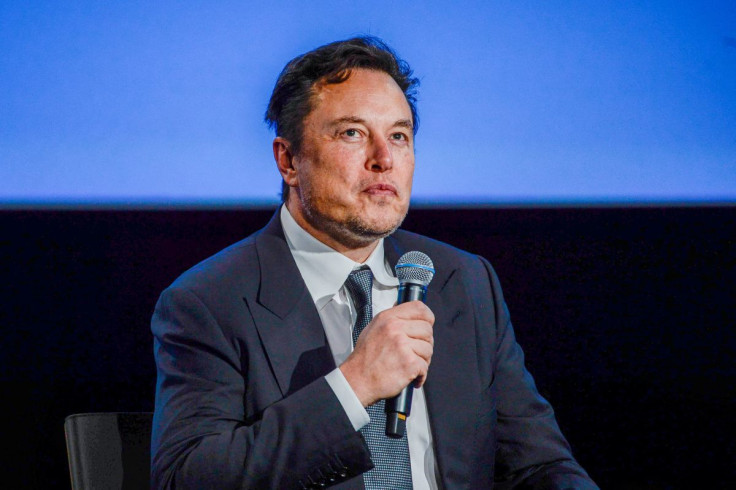
Elon Musk said money may lose its meaning in an economy flooded with robots, and that young people should study widely so they know what to ask those machines to do.
The Tesla and SpaceX chief made the comments in an exclusive interview with China Media Group, recorded at Tesla's engineering headquarters in California and released in late September 2026. The conversation covered China, AI models, humanoid robots and education. The education remarks have circulated as advice for Generation Z even though Musk framed them as a general recommendation.
"My prediction is that there will be effectively universal high income," Musk said. "In fact, it's not clear to me that money will even matter in the future." He argued that if robots and AI push the output of goods and services far beyond what people can consume, the result would be an "age of abundance" that is hard to picture because human history has been a story of scarcity.
He used a blunt illustration: "I think it's going to get pretty wild, like where if you want a castle, robots will build you a castle." In the same stretch he said robots would "saturate on human demand," doing more than people could invent for them to do.
The labor math, as he stated it, is simple. People take about 20 years to grow up, retire for roughly the last 20 years, sleep and work 40 to 50 hours a week. "Whereas the robot will be happy to work 168 hours a week continuous. And the robot is instantly at working age and does not have retirement."
On scale, Musk said he believes there will be "at least a billion humanoid robots within 10 years, probably less than 10 years." If numbers roughly double each year, he said, "in 15 years there are 10 billion robots, in 20 years: 100 billion." He compared the friendly case to Star Wars droids: "Wouldn't it be great if everyone could have their own personal C-3PO and R2-D2?" Those robots, he said, could look after aging parents, watch children and serve as individualized tutors.
Those figures are forecasts, not Tesla delivery guidance. Tesla's 2025 compensation package for Musk includes a target of 1 million Optimus robots delivered to consumers within 10 years. That is a company incentive, not a global census. Reporting on Optimus has described problems with hands, factory equipment and suppliers, and Tesla has shifted timelines before. Musk's billion-robot number describes a possible world fleet, not a confirmed Tesla run rate.
The education advice sat next to the abundance talk. "My recommendation for education would be to get as broad-based education as possible, that includes arts and sciences, engineering, wide-general knowledge," he said, pointing to his own physics and business studies at the University of Pennsylvania. "In order to know what to ask the robots for, you need to be able to formulate the question. And with the broadest possible general knowledge, you'll be better able to formulate the questions or what they call prompt engineering."
He added that people will have to "convey your wishes to the robot," and that if robots and AI become numerous enough, "the AI will actually be eager to hear any request that you could possibly have, because that request will be fulfilled immediately."
Prompt engineering became a popular phrase after chatbots such as ChatGPT showed that wording changes answers. Musk applied the same idea to physical machines: the scarce skill is knowing what to request.
Other public figures have made related points without endorsing Musk's money-vanishes scenario. Anthropic co-founder Jack Clark, who studied literature, has argued that mixed-field education and analytical thinking may matter more as AI takes routine technical work. Jaime Teevan, Microsoft's chief scientist, has highlighted flexibility, adaptability, experimentation and critical thinking.
Musk also used the interview to praise Chinese AI models as "generally outstanding" and said China is "doing by far the best in terms of performance per unit of compute." He guessed China could ease compute limits in lithography and chip-making "in about two or three years." He said any words he could offer "do not do justice to the incredible majesty that is China."
The interview does not settle whether money fades, whether a billion humanoids arrive, or whether a literature-and-physics education beats early specialization. It does put two Musk claims on the record in the same sitting: abundance so large that cash may not matter, and schooling broad enough that a person can still tell a robot what to build. Students choosing majors this year will have to treat the first as a long-range forecast and the second as advice they can use now.
© Copyright 2026 IBTimes AU. All rights reserved.
- Recommended For You