Apple's First Foldable iPhone Duo Lifts Galaxy Z Fold 8 Sales About 10 Percent in South Korea Market
The Galaxy Z Fold 8 is cheaper and already available, while Apple's iPhone Duo is not expected to reach South Korea until October.

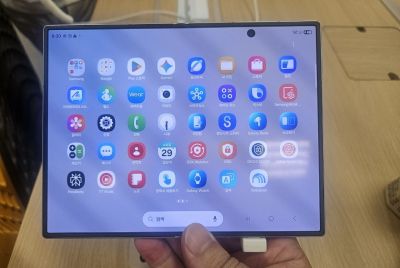
SEOUL — Apple's first foldable phone has not immediately undercut Samsung in the company's home market. Industry sources cited by Maeil Business Newspaper said Galaxy Z Fold 8 sales in South Korea rose about 10 percent in the week after Apple unveiled the iPhone Duo on Sept. 9, compared with the week before.
The newspaper did not publish unit totals, so the size of the bump in absolute terms is unknown. The timing is the point: demand for Samsung's book-style foldable moved up after a rival announcement, not down.
Buyers who had waited to see Apple's design now face a gap in price and availability. The Galaxy Z Fold 8 starts at about 2.28 million won in South Korea. The comparable iPhone Duo configuration has been reported at about 3.29 million won. That is a difference of roughly 1 million won. The Fold 8 is already on sale. The Duo is not due in South Korea until mid-to-late October, with preorders cited around Oct. 16 and stores around Oct. 23 in local coverage.
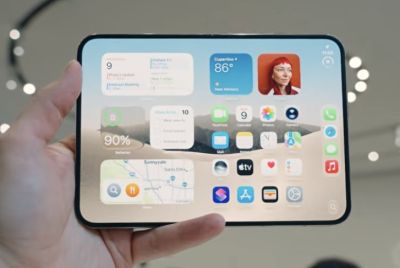
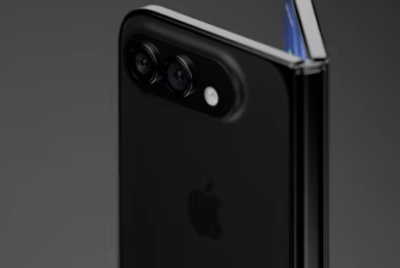
Samsung launched the Fold 8 on July 22, with global sales starting in early August. Apple's passport-style Duo, shown Sept. 9, uses a similar compact book fold: a 7.6-inch inner display and a 5.4-inch cover screen, according to TrendForce. U.S. starting price has been listed at $1,999. Korean pricing sits higher.
The foldable category is still small. IDC estimated worldwide foldable shipments at 20.6 million units in 2025, against about 1.25 billion smartphones overall — the comparison Engadget used to show how thin the slice remains. TrendForce later put 2026 foldable shipments at about 20.2 million, with Apple taking nearly a quarter of that volume if the Duo ships about 5 million units.
Francisco Jeronimo, vice president of client devices at IDC, said when the firm first projected Apple's entry: "The launch of Apple's first foldable iPhone will mark a turning point for the foldable segment. This move is likely to boost category awareness and drive consumer interest. Apple tends to be a catalyst for mainstream adoption of new categories. Although foldables will continue to be a niche segment from a volume perspective, it will become a relevant value driver for most vendors offering foldables, as average selling prices will be 3 times higher than a standard smartphone."
Nabila Popal, senior research director on IDC's mobile phone tracker, said in the same December 2025 outlook: "Next year will prove exciting for the foldable category with multiple launches pushing the market to 30% year-on-year growth from just 6% in the prior forecast." She called Apple "the real game-changer for the category."
Those forecasts were written before the Duo was on a stage. The Korean sales print is the first retail test of the catalyst argument. It is one week, one country, and a percentage without a base. It does not prove Samsung will keep share once Apple can ship. It does show that unveiling a $2,000-class foldable can send shoppers into stores that already have one.
Price and wait time explain most of the reported shift. A customer who wanted a book fold and did not want to wait a month can buy the Fold 8 now for less. Hardware comparisons in the trade press also favor Samsung on thickness and weight. Apple's crease treatment — a matte nano-textured layer that makes the fold less obvious — is the feature other makers are expected to copy. That is a category upgrade, not a Samsung loss.
Software is the other pressure. The Duo's interface is built for folded, unfolded and half-open layouts. Many Android foldables still stretch a phone UI across a tablet panel. Developers have already started porting Duo open-and-close animations to Android, Engadget noted. If those patterns spread, Samsung's software team has a template and a deadline.
Samsung's line is also wider. The company sells devices from the lower-priced Galaxy Z Flip7 FE through the Fold 8 and a more expensive Ultra variant. Apple has one Duo. Competition of that kind usually pulls prices down. Samsung has already cut foldable prices in some markets after the announcement, according to Engadget's account of retailer moves.
TrendForce's 2026 math is less kind to Android if Apple hits 5 million units. The firm said Samsung would still lead with about 7.1 million foldables and 35 percent share, with Huawei near 5 million. Combined Android shipments excluding Apple would fall more than 20 percent year over year in that model, mostly on component costs. A 10 percent week in Korea does not cancel that forecast. It only delays the collision until October inventory arrives.
The commercial logic is simple. Foldables make money per unit even when they do not move like ordinary phones. Average selling prices several times a standard smartphone are why vendors stay in a 20-million-unit pond. Apple's arrival advertises the pond. Samsung, already stocked, collects some of the traffic.
Whether that lasts depends on reviews, supply and whether the Duo's software is worth the extra million won. For now the verified facts are narrower: Apple showed a foldable on Sept. 9; Korean industry sources told Maeil that Fold 8 sales rose about 10 percent the following week; the Fold 8 is cheaper and in stock; the Duo is not. That is a benefit for Samsung. It is not a verdict on who owns the category.
© Copyright 2026 IBTimes AU. All rights reserved.
- Recommended For You