Mark Zuckerberg Unveils Meta's Muse Charm Keychain at Connect, Shipping in December With No Price Set
The pocket-sized gadget brings Meta's Muse agent to a 5G-connected touchscreen, but its price and several technical details remain undisclosed.

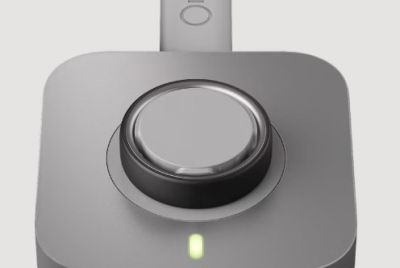
MENLO PARK, Calif. — Meta chief executive Mark Zuckerberg closed the company's annual Connect conference on Wednesday by pulling a pocket-sized gadget from the keynote script: Muse Charm, a keychain device built to carry Meta's Muse artificial-intelligence agent off the phone and into a user's hand.
The device is about the size of an Apple AirPods case. It has a roughly 2-inch touchscreen and a built-in 5G modem, so it can reach Muse without Wi-Fi. Meta said it cannot make calls. Zuckerberg said it would ship in December, in time for the holidays. The company did not announce a price.
"We pack the whole Muse experience, including the whole real-time voice and avatar stack, into something that fits on a keychain and is always available to talk to," Zuckerberg said at the Menlo Park event. He added that if a user is not wearing Meta's glasses, "this is going to be by far the fastest way to talk to your Muse and to show what's going on around you."
On X the next day he wrote: "And we've been building a joyful little device for talking to your Muse that fits on your keychain. Muse Charm — shipping in December."
The screen is meant to show a customizable Muse character at the center. Users can tap a fingerprint sensor to start a conversation, according to accounts of the stage demo. Meta has said more specifications will come later this year. Reports differed on whether the first units include cameras. The company has not published a full spec sheet.
The Charm is the hardware coda to a software launch that has already moved Meta's stock. Muse went live on Sept. 8 as a personal agent that can take tasks, not only answer questions. Meta shares rose nearly 24 percent from that launch through Wednesday's close, a gain Reuters put at roughly $324 billion in market value. They climbed more than 3 percent on Thursday, on track to add about $56 billion more.
Zuckerberg has framed Muse as the center of a shift away from a pure race to build the largest model. "It is actually quite clear personal superintelligence will not only come first; it will be much bigger and more important," he said at Connect. "So we have shifted our focus to building the best devices for personal superintelligence." He said Muse would also come to Meta's smart-glasses lineup.
He told the audience Muse has "state-of-the-art privacy and security," and that he expects the agent to "make users money." Meta will keep a free tier, he said, "with the expectation that over time we will profit by taking a small fee from transactions." Everyday use is capped; paid plans sit above that, with Power at $20 a month and Maximum at $100, according to company descriptions of the service.
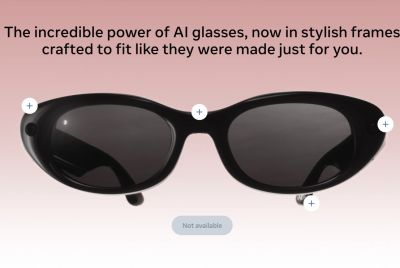
The Charm was not the only product on stage. Meta priced new virtual-reality glasses at $1,299, with the battery and processor moved into a separate puck so the frames stay light. Those glasses are aimed at a spring 2027 launch. Camera-free Ray-Ban Meta Audio frames start at $349 on Oct. 13, $100 below the camera model. Muse is being extended across the glasses line, with computer-use tools and links to retailers including Walmart, Best Buy and Gap.
The keychain is the sharper bet. Smart glasses already have a buyer. A dedicated AI handheld does not. Humane's AI Pin and the Rabbit R1 both drew early attention and then stalled, a record Reuters and other outlets cited as the obvious comparison. Jitesh Ubrani, a director at IDC, said the Charm is "appealing to people who might not want to wear glasses or might not trust glasses." That is a niche, not a market forecast.
Meta developed the gadget in a new design lab led by Alan Dye, the former Apple interface chief, working with the company's superintelligence group, Bloomberg reported. People familiar with the timetable told Bloomberg the original plan pointed to 2027, and that Zuckerberg pushed teams to show the device this year and sell it before Dec. 31. Meta has built only a limited number of prototypes, Engadget reported, even as it holds to a December ship date.
The form is deliberate nostalgia. Reviewers compared the rounded body and on-screen character to a Tamagotchi, the Bandai digital pet of the 1990s. The pitch is different: the character is a front end for an agent that can read and send email, book travel, fill forms and start purchases. A Mac app can already use the computer. Meta has said an email address for the agent is coming, so a user can forward a thread and leave a task running.
That is also the risk. A keychain that talks, shows context and starts transactions is a new surface for mistakes — wrong bookings, exposed messages, a device lost with a logged-in agent. Zuckerberg's privacy line is a claim, not an audit. Meta has not said how long audio is kept, whether the 5G link can be disabled, or what happens if the fingerprint sensor fails in a pocket.
For the business, the Charm is a test of whether Muse's download spike converts into hardware. The app reached the top of the free charts on the U.S. App Store and Google Play after launch. A free agent with a transaction fee can live on a phone. A second device has to justify its own price, battery and reason to leave the house. Meta has not said what that price will be, only that the object will be for sale before the holidays.
Connect's other numbers are already set: $349 audio glasses in October, $1,299 VR glasses next spring. The Charm is the one product still missing a tag. Until that number lands, the reveal is a design statement and a distribution plan — Muse, off the phone, on a keychain, shipping in December.
© Copyright 2026 IBTimes AU. All rights reserved.
- Recommended For You