(VIDEO) Googlebook Review: Five New Laptops Impress Reviewers, But Full Independent Benchmarks Still Missing
Hands-on testers praise the lineup's touchscreen performance, build quality and on-device Gemini AI, while independent testing remains unavailable before retail release.
Google's new Googlebook laptop lineup, a premium successor to the Chromebook built around Android integration and Gemini AI, went up for pre-order on September 21, and early hands-on impressions from reviewers who tested the devices in person have been largely positive, even as no publication has yet published full independent performance benchmarks ahead of the laptops' October 4 store arrival in the United States.

Googlebook is not a single device but a hardware category, similar to how "Chromebook" describes machines from multiple manufacturers built around a shared operating system philosophy. The initial lineup spans five models from Acer, ASUS, Dell, HP and Lenovo, starting at $899, according to Google. Reviewers who attended a media preview event in New York City spent several hours testing each device, examining build quality, keyboards, trackpads and the new Googlebook OS software.
Chrome Unboxed, which went hands-on with all five laptops, described the launch as far more than a minor Chromebook refresh, noting the significant architectural shift underlying Googlebook OS itself. The outlet highlighted the dedicated on-device AI processing built into every model, noting that whether a given laptop runs Intel or Qualcomm silicon, each includes a neural processing unit capable of more than 45 trillion operations per second, allowing Gemini AI features to run locally without triggering loud cooling fans. The outlet also noted the return of the Glowbar, a multicolor light strip on each laptop's exterior lid, a design touch dating back to the original Chromebook Pixel, which animates at startup, sweeps to show battery level, and pulses when a user interacts with Gemini.
9to5Google's hands-on impressions focused heavily on the touchscreen experience, praising the consistency of 120Hz displays across the lineup after having worried the company might ship slower 60Hz panels instead. The reviewer specifically praised the Acer model's convertible 2-in-1 design, despite acknowledging a general dislike of 2-in-1 laptops as a category, calling it arguably the best touchscreen laptop-tablet hybrid currently on the market. The review credited Android's touch-first design heritage for making the Googlebook lineup's touchscreen implementation feel considerably more natural than touch input has historically felt on Windows or ChromeOS devices. Overall, the reviewer said initial concerns about the lineup had "almost completely been washed away, save a few minor complaints about two specific devices."
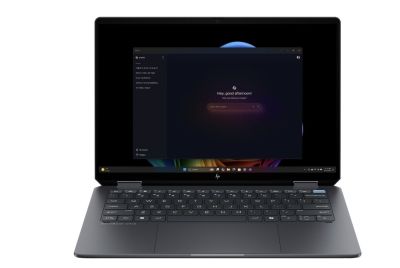
Tom's Hardware offered a more design-focused comparison across the five models, noting strong visual similarities to existing Windows laptops already on the market. The outlet compared the HP Googlebook 14 to the HP OmniBook Ultra, the Dell XPS Googlebook to the current-generation Dell XPS 13, and the ASUS Googlebook 14 to ASUS's enterprise-focused ExpertBook Ultra line. The reviewer said the ASUS and Dell models made the strongest first impression given how thin and light both designs are, with ASUS offering a notably wider selection of ports. Pricing varies across the lineup, with the Acer model starting at $899 as a limited-time offer, the Dell XPS Googlebook starting at $1,199, and the remaining three models starting at $1,299, matching the price of a base MacBook Air.
Tom's Guide singled out the ASUS Googlebook 14 as a particular standout after testing all five models, praising its six-speaker audio system featuring dual force-canceling woofers and two tweeters, along with a large haptic touchpad using six-point force sensing designed to deliver consistent click response regardless of where a user taps. The reviewer also praised the model's relatively roomy keyboard and springy key feel, while cautioning that fuller display testing and formal lab measurements would still be needed to properly assess screen quality.
PCWorld's hands-on coverage offered a more cautious overall framing, with the reviewer declining to name a single standout pick after only a few hours testing the lineup, while noting the Acer model's convertible screen and lower price, along with the Dell XPS's sleek chassis, made the strongest initial impressions. The outlet explicitly recommended that potential buyers wait for full reviews before committing to pre-orders, and flagged that ongoing memory and storage component shortages across the broader industry could push Googlebook prices higher in the near future.
A separate analysis from Tech Insider identified inconsistencies in how different outlets reported pricing for two of the five models, the Dell XPS Googlebook and the Lenovo Googlebook 15, with reported starting prices differing by as much as $200 depending on the publication. The same analysis noted that, as of its publication, no outlet had yet released independent Cinebench, Geekbench, PCMark or battery-rundown test results for any of the five laptops, since full review units were not yet available ahead of the devices' physical retail launch.
According to Google, every Googlebook purchase includes 12 months of Google AI Pro, providing 5 terabytes of cloud storage and expanded Gemini usage limits, alongside three months of complimentary access to YouTube Premium, Adobe Photoshop and CapCut, and a full year of Nvidia's GeForce Now cloud gaming service. Google has also committed to providing regular software feature updates for Googlebook OS for up to 10 years following purchase.
With devices set to reach physical store shelves starting October 4 in the United States and October 5 in Canada, the United Kingdom, Ireland, France, Germany and Australia, more comprehensive, benchmark-driven reviews are expected to follow in the coming weeks. Until then, the consistent theme across early hands-on impressions has been cautious optimism, with reviewers describing genuinely impressive build quality, touchscreen performance and AI integration, tempered by an acknowledgment that meaningful conclusions about real-world performance, battery life and long-term software reliability will require considerably more testing time than the brief, guided demo sessions reviewers have had access to so far.
© Copyright 2026 IBTimes AU. All rights reserved.
- Recommended For You