

Anker's New SleepLab Pro Uses Bedside Radar To Track Your Sleep Without Any Wearable Device First Look
Discover Anker's innovative SleepLab Pro, a bedside speaker that tracks sleep without wearables, offering personalised audio and breathing exercises.
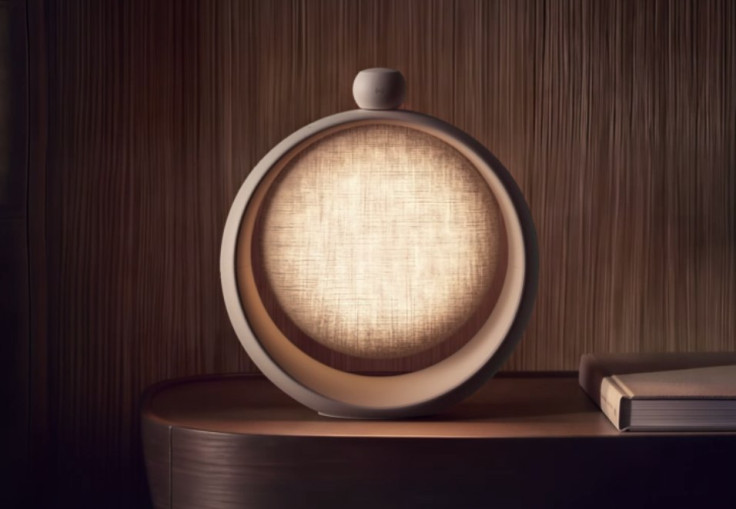
Anker has unveiled a new bedside speaker designed to monitor sleep without requiring users to wear anything to bed, introducing the SleepLab Pro as part of a broader lineup of sleep-focused products revealed at the IFA 2026 technology trade show in Berlin.
The SleepLab Pro is a tabletop speaker that uses 60GHz radar technology to sense sleep patterns from a distance, tracking heart rate, breathing and the four recognized stages of sleep, all without requiring users to strap on a smartwatch, ring, band or pair of dedicated sleep earbuds. Anker has said the device is capable of distinguishing an individual user's data even when two people share the same bed, a feature aimed at households where multiple sleepers might otherwise interfere with a single tracking device's readings.
Beyond sensing sleep, the SleepLab Pro also functions as a sleep aid, playing personalized audio intended to help users fall asleep and stay asleep through the night, adjusting its output based on the data it collects. According to Anker, the device includes more than 180 built-in sounds, reducing the likelihood that users will grow tired of repetitive audio loops like ocean waves that have become common across other white-noise machines and sleep apps.
Anker has said the SleepLab Pro incorporates five research-backed modes along with a 28-day program designed to gradually help users identify a breathing rhythm that works best for their individual physiology. Sound design plays a central role in that approach, with the device using acoustic beats spanning alpha, theta and delta frequency ranges, each intended to correspond with different stages of relaxation and sleep as the user winds down for the night.
The device also offers guided breathing exercises, multi-color ambient lighting designed to help set a calming mood before sleep, and a gentle sunrise-style lighting effect intended to ease users awake in the morning without the abrupt jolt of a traditional alarm. Dual internal drivers provide spatial audio playback, allowing the SleepLab Pro to double as a general-purpose speaker outside of its sleep-tracking functions, supported by Bluetooth 6.1 connectivity for standard music playback when users want to use it that way.
One detail Anker has emphasized in its marketing of the device is the absence of any required subscription to access its core sleep-tracking and audio features. Unlike a growing number of wellness and fitness devices that gate detailed health data or personalized recommendations behind recurring monthly fees, Anker has said users will not need to pay ongoing subscription costs to access the SleepLab Pro's sleep reports or its full library of built-in sounds. The company has also designed the device to be usable without reaching for a smartphone each night, allowing users to begin a wind-down routine with a simple tap on the speaker itself.
The SleepLab Pro arrives as part of a four-product sleep technology lineup Anker introduced at IFA 2026, alongside a lower-tier SleepLab speaker and two new sleep-focused earbud models, the Sleep 4 and Sleep 4 Pro. The higher-end Sleep 4 Pro earbuds introduce a proprietary system Anker calls "Track-Assess-Adjustment," which monitors photoplethysmography, heart rate and heart rate variability overnight, then uses the company's BioSync system to dynamically adjust audio output in response. The Sleep 4 Pro also includes a charging case with an integrated touchscreen display, letting users adjust alarms, play sounds or check sleep metrics without needing to pick up a phone.
The broader sleep-tech lineup reflects Anker's ongoing effort to reposition itself as more than a charging-accessory manufacturer, building on the company's established expertise in portable power products, such as its line of Anker Nano Power Banks, to expand into preventative health and wellness hardware. The SleepLab Pro launch also coincides with a broader corporate rebranding effort at Anker, which has been gradually consolidating familiar sub-brand names, including Soundcore and Eufy, more directly under the parent Anker name as part of a wider identity shift showcased at this year's IFA event.
Despite the detailed feature rundown, several key details about the SleepLab Pro remain unconfirmed. Anker has not yet announced pricing for either the SleepLab or SleepLab Pro speakers, nor has the company confirmed a specific release date for either device. By comparison, Anker has said its Sleep 4 earbuds are expected to launch in October 2026, with the higher-end Sleep 4 Pro following in November, though pricing for those earbud models likewise has not been disclosed.
Early hands-on impressions from technology journalists who viewed the SleepLab Pro at IFA have been mixed but generally curious. Some reviewers expressed skepticism about how useful the device's radar-based sleep tracking and analysis would prove in practice, noting that many consumers already rely on existing wearables such as smartwatches to track similar health metrics like heart rate and sleep stages. Others said the appeal of a passive, non-wearable tracking method was intriguing, particularly for users who find sleep rings, bands or earbuds uncomfortable or impractical to wear through the night.
Reviewers have also raised questions about how Anker's sleep-focused earbud models specifically manage battery life and audio playback once a user actually falls asleep, asking whether the devices are capable of detecting when a wearer has lost consciousness and automatically halting continued audio playback. Without such an automatic cutoff, continuous overnight audio streaming could risk draining battery capacity in compact wireless earbud models like the Sleep 4 before morning, a concern that does not directly apply to the tabletop SleepLab Pro given its larger form factor and presumed connection to a standard power source.
Anker's entry into radar-based, wearable-free sleep tracking places the SleepLab Pro in a growing category of bedside sleep technology that has expanded significantly in recent years, as consumer interest in sleep optimization and wellness tracking has continued to rise alongside broader public attention to sleep health. Whether the SleepLab Pro succeeds in differentiating itself from existing wearable-based sleep trackers, or from other radar-based bedside sleep devices already on the market from competing manufacturers, will likely depend heavily on pricing, real-world tracking accuracy, and the overall usefulness of its personalized audio and breathing-exercise features once the device becomes available for hands-on testing and eventual purchase.
For now, prospective buyers interested in the SleepLab Pro will need to wait for Anker to confirm both pricing and a firm release date before the device becomes available, with the company having so far prioritized showcasing the product's design and feature set at IFA 2026 ahead of finalizing those remaining commercial details.
© Copyright 2026 IBTimes AU. All rights reserved.