

Musk Says Tesla FSD Pothole Avoidance Is Coming Soon, Seven Years After He First Teased This Feature
Elon Musk hints at imminent release of Tesla's pothole avoidance feature, a promise made seven years ago.
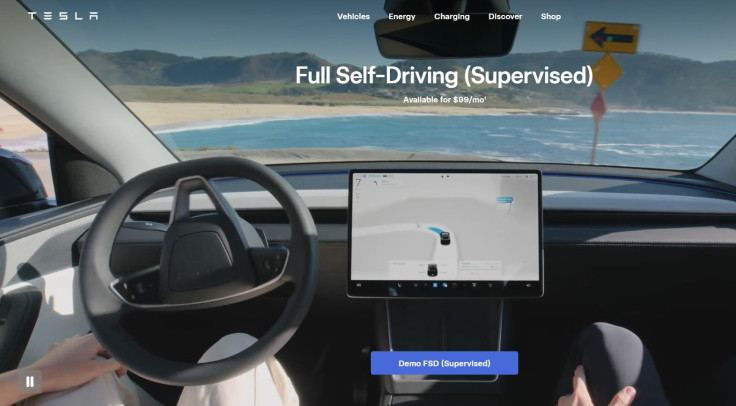
Elon Musk said this weekend that Tesla's Full Self-Driving software will soon be able to automatically steer around potholes, reviving a promise the Tesla and SpaceX CEO first made roughly seven years ago that has yet to materialize.
Musk offered the latest update Sunday night, responding on the social platform X to a user who asked whether FSD would eventually be able to avoid potholes. True to his typically terse style, Musk replied with just two words: "coming soon." The exchange quickly drew attention from Tesla-focused outlets given how long the specific promise has been outstanding.
Potholes remain one of the most persistent and costly road hazards in the United States, capable of damaging tires, wheels and suspension components, and in more severe cases, causing injury to vehicle occupants. Reliable, automated pothole detection and avoidance has proven to be a genuinely difficult engineering problem, requiring a vehicle's software to identify a pothole under varying lighting and road conditions, estimate its depth, location and overall risk level, and then decide in real time whether to slow down, steer around it, or simply drive through it if avoidance isn't feasible.
Musk's pledge traces back years earlier than most casual observers might expect. In 2019, he agreed with a Tesla owner that pothole avoidance would "definitely" improve the driving experience under Autopilot, the company's less capable predecessor to Full Self-Driving. The following year, in February 2020, Musk responded "Yes" when asked whether Tesla vehicles could eventually create and share "micro-maps" containing data on road features such as potholes and stop signs, allowing the broader vehicle fleet to benefit from data collected by individual cars. Neither capability has become a standard, broadly available feature in the six years since.
Despite that long gap, there are indications the feature may genuinely be closer to release this time. Pothole avoidance has been explicitly listed as an "Upcoming Improvement" in Tesla's FSD release notes since the company deployed FSD version 14.3 in April, distributed through software update 2026.2.9.6. That version also included a significant upgrade to Tesla's neural network vision encoder, improving the system's understanding of three-dimensional geometry and difficult road environments, alongside a complete rewrite of the company's underlying AI compiler and runtime software, which Tesla said resulted in a 20% improvement in the system's reaction time. More recent builds, including versions 14.3.4 and 14.3.8 rolling out as part of Tesla's 2026 Summer Update, have continued to list the feature as pending rather than active.
Some drivers have already reported seeing early, inconsistent signs of the capability in action. Tesla vehicles running current FSD versions have occasionally been observed steering slightly to avoid large potholes, including one documented case in which FSD version 14.2.2.5 positioned a vehicle so that a damaged section of road passed cleanly between its tires. It remains unclear whether the software specifically recognized the feature as a pothole or simply treated it as a generic road obstacle, though the behavior suggests the underlying capability may already be partially functional even without a formal rollout.
Unlike some previous Tesla hardware initiatives, pothole avoidance is expected to be delivered as a pure software update rather than requiring new sensors or components, meaning it should eventually become available across Tesla's existing FSD-capable vehicle fleet, including older cars running Hardware 3, once the feature is formally activated.
Musk's latest promise arrives at a notable moment for Tesla's broader autonomous vehicle ambitions. The company recently expanded the operational area for its driverless robotaxi service in Austin, Texas, marking its first such expansion in some time, as Tesla continues working to establish its Cybercab service amid intensifying competition from rival autonomous vehicle operator Waymo. Musk has a long history of publicly discussed self-driving predictions that have taken considerably longer to materialize than initially promised, a pattern extensive enough that it has been documented at length by outside trackers. Even so, Tesla has continued to make incremental technical progress toward full autonomy in the years since Musk's original 2019 pothole comments, even if the specific feature he first teased has, until now, remained conspicuously absent from the company's production software.
© Copyright 2026 IBTimes AU. All rights reserved.