

Plaud Unveils AI Earbuds With Built-In 4G Connectivity That Work Without Needing a Smartphone Nearby
Plaud One Explorer Edition offers global connectivity and AI integration without a smartphone.
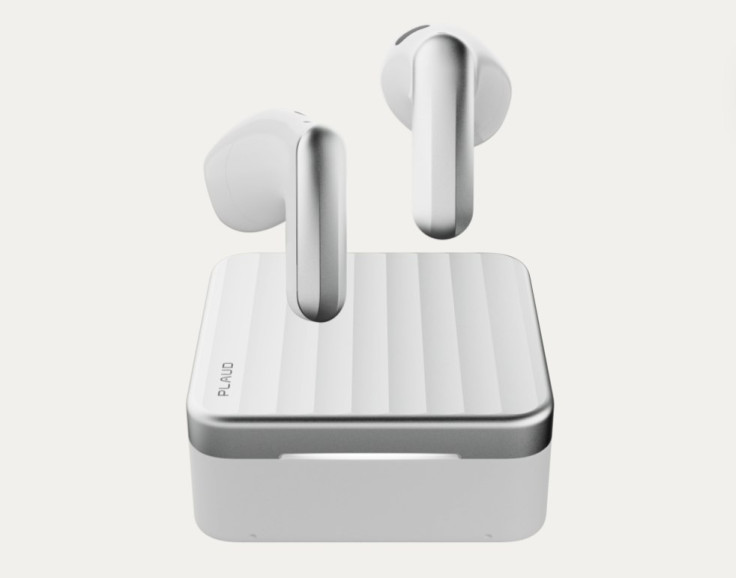
SAN FRANCISCO — Hardware startup Plaud unveiled a new pair of AI-powered earbuds Wednesday that can record, transcribe and summarize conversations without needing a connected smartphone, marking the company's most ambitious attempt yet to build a standalone AI wearable device.
The device, called the Plaud One Explorer Edition, is now available for pre-order at $249.99, with shipments expected to begin in the fourth quarter of 2026, according to Digital Trends. The launch adds a new form factor to Plaud's growing lineup of AI note-taking hardware, following the company's earlier Plaud Note, Note Pro and NotePin devices.
Built to work independently of a phone
Unlike many AI wearables currently on the market, the Plaud One is designed to function without a paired smartphone. The device's charging case includes a built-in eSIM with 4G LTE connectivity, allowing both the earbuds and the case to stay connected and upload recordings for transcription and summarization even when a user's phone is offline or out of range, according to SiliconANGLE.
That standalone connectivity extends across more than 80 countries, according to T3, giving the device global reach without requiring users to rely on Wi-Fi or a tethered device to keep the AI system functioning.
Two ways to record
The Plaud One offers users flexibility in how they capture conversations. The earbuds themselves include microphones for hands-free recording of in-person conversations, phone calls or online meetings, while the charging case features four separate microphones capable of picking up audio from up to 5 meters away, according to T3. Each earbud also includes 16MB of local storage, for 32MB combined, and can record for up to six hours, matching the device's estimated maximum battery life, according to a report from Business Story.
Users who prefer not to wear the earbuds continuously can instead rely on the standalone case to capture conversations, offering what Android Authority described as a more comfortable alternative for extended use throughout a workday.
An AI agent built into the hardware
Central to the Plaud One's pitch is its integration with Plaud Agent, the company's AI assistant system. Users can interact with the agent directly through the earbuds, and the device supports native integration with tools including Gmail, Google Calendar, Notion and Slack, according to SiliconANGLE. The device can also be connected to third-party AI systems, including Anthropic's Claude and OpenAI's ChatGPT.
At launch, the scope of the assistant's capabilities will be somewhat limited. A Plaud spokesperson told TechRadar that "at launch, users can press and hold the Agent Button and speak to the agent," with broader agentic capabilities — allowing the AI to take actions across connected apps based on captured conversations — arriving in a future software update rather than at initial release.
Building memory over time
Plaud has emphasized that the Plaud One's value is designed to compound the more it's used. According to the company, its underlying Plaud Intelligence platform builds persistent memory and context from a user's conversations over time, allowing the AI agent to connect information across separate meetings and conversations to generate more useful follow-ups and reports. "The more that the system can build up memory and context over time, the more useful it becomes," the company said, according to Digital Trends, "because it's able to connect information across conversations and apply workflows better."
That redesigned intelligence platform, along with expanded agentic features, is expected to roll out to Plaud's existing hardware lineup as part of an app update the company has labeled App 4.0, expected to launch in the same timeframe as the Explorer Edition's shipping window.
Pricing and what's included
The $249.99 price for the Plaud One Explorer Edition does not require a separate AI subscription to get started using the device, according to Android Authority. Each unit comes bundled with $200 in Plaud Credits, which buyers can use to access additional AI features and services beyond the base functionality. However, using the built-in 4G standalone connectivity does require a separate wireless service plan.
Privacy and consent built into the design
With AI wearables facing growing scrutiny over privacy concerns — particularly devices like smart glasses that can capture video of people without their knowledge — Plaud has structured the Plaud One around user-triggered recording rather than passive, always-on capture. According to TechRadar, high-stakes actions taken by the AI agent require user approval, recording is manually triggered rather than automatic, and users are responsible for obtaining consent from other parties before recording conversations.
A crowded and unproven market
Plaud's launch arrives in an increasingly crowded field of AI hardware devices attempting to carve out a role beyond the smartphone. TechCrunch noted that competition in the space remains intense, with new hardware note-takers entering the market on a near-weekly basis, and that Plaud's initial rollout of the Explorer Edition will be limited in quantity, suggesting the company is treating the earbud format as something of a trial run before committing more fully to the category.
Despite that uncertainty, Plaud has shown notable commercial traction to date. The company said in June that it had reached an annual run-rate revenue of $100 million, according to TechCrunch, a figure that underscores growing demand for its existing lineup of pin- and clip-style AI notetakers even as the broader category of standalone AI hardware devices has struggled to gain mainstream traction.
Part of a broader industry challenge
Nearly four years after the debut of ChatGPT sparked widespread interest in consumer AI hardware, no company has yet managed to convince a mass audience to replace their smartphone with a dedicated AI gadget, according to Engadget, despite high-profile attempts and failures from companies including Humane and Rabbit. Plaud's approach with the Plaud One differs from those earlier efforts by embedding its AI capabilities into a familiar, already-popular device category — wireless earbuds — rather than introducing an entirely new form factor, a strategy the company appears to be betting will lower the barrier to adoption compared with past standalone AI hardware attempts.
© Copyright 2026 IBTimes AU. All rights reserved.