

NASA's Roman Space Telescope Set to Launch This Week, Aiming to Directly Photograph Faint Exoplanets
Roman Space Telescope to Capture Faint Exoplanets with Unprecedented Precision
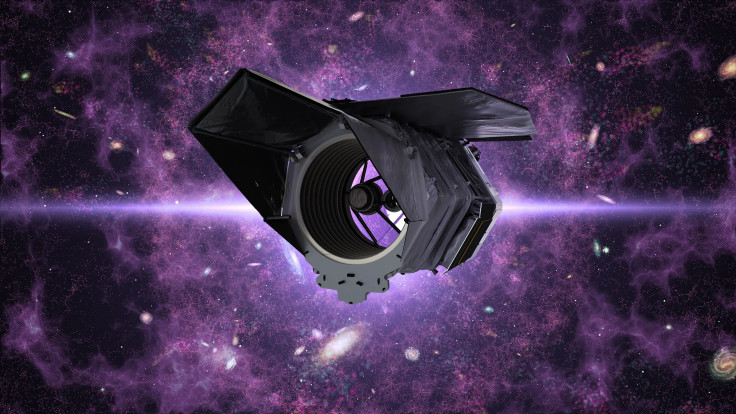
WASHINGTON — NASA's Nancy Grace Roman Space Telescope is scheduled to launch Aug. 30, carrying an instrument designed to directly photograph exoplanets roughly 1,000 times fainter than what has previously been technically possible, a leap researchers say could eventually bring scientists closer to imaging Earth-like worlds orbiting distant stars.
The telescope, developed over roughly a decade under NASA's leadership, is set to lift off at 7:26 a.m. Eastern time. It is named after Nancy Grace Roman, widely regarded as the architect of NASA's modern science program and a key figure in the success of the Hubble Space Telescope.
A destination beyond the moon's orbit
Once launched, Roman will travel to the L2 Lagrange point, a location roughly 1.5 million kilometers, or about 930,000 miles, from Earth along the axis connecting the sun and Earth, positioned on the side facing away from the sun. At that point, the gravitational pulls of the sun and Earth effectively cancel each other out, allowing the telescope to orbit the sun without needing to expend fuel to maintain its position.
A mirror built on Hubble's legacy
Roman's primary mirror measures 2.4 meters, or about 7.9 feet, in diameter — a replica of the mirror used aboard the Hubble Space Telescope. The spacecraft carries two scientific instruments. The first, the Wide Field Instrument, has a detector area roughly 100 times larger than Hubble's and is expected to image an area of the sky 50 times larger than Hubble covered over its entire three-decade mission, accomplishing that feat in just five years. Working alongside the already-orbiting Euclid space telescope, Roman will help scientists search for dark matter, a substance believed to be spread widely throughout the universe.
The Wide Field Instrument's high resolution and sensitivity will also allow researchers to search broad sections of the sky for cooler, less luminous planets that have historically been far harder to detect than hot, bright gas giants. Scientists plan to use two indirect detection methods: the transit method, which looks for the slight dimming of a star's light as a planet passes in front of it, expected to reveal roughly 100,000 new planets; and a technique based on gravitational microlensing, projected to uncover an additional 1,000 exoplanets.
Seeing planets directly for the first time
The telescope's second instrument, the Coronagraph Instrument, or CGI, takes a fundamentally different approach: rather than detecting planets indirectly, it aims to directly image worlds that have already been discovered through other methods. Coronagraphs work by using specialized masks to block the overwhelming brightness of a host star, allowing much fainter objects nearby — such as an orbiting planet — to become visible. Because these distant systems are so far away, the planets typically appear only as tiny points of light next to their obscured host stars.
Previous ground-based coronagraphs have generally only been capable of imaging particularly bright gas giants orbiting far from their stars — planets hot enough to emit detectable infrared light. Roman's CGI is designed to go further, targeting cooler, smaller planets, similar in nature to Jupiter, that primarily reflect their host star's light rather than emit their own heat.
The scale of the challenge is significant. As seen from Earth, the planets Roman aims to image appear roughly a billion times fainter than their host stars — comparable to the brightness difference between Jupiter and the sun. The CGI is engineered to detect point sources of light about a thousand times fainter than instruments have previously managed.
Precision engineering from Germany
Achieving that level of sensitivity required extraordinarily precise alignment of the telescope's internal optical components. The Max Planck Institute for Astronomy in Heidelberg, Germany, built specialized optomechanical hardware known as Precision Alignment Mechanisms, or PAMs, specifically for this purpose. The institute supplied six flight models permanently installed in the coronagraph, along with six additional engineering models used for ground testing, with support from German firm von Hoerner & Sulger in the construction process.
These mechanisms are responsible for keeping the coronagraph's internal masks, filters and mirrors from tilting more than 40 milliarcseconds over an eight-hour observation period — a level of stability roughly equivalent to the angle at which a person standing in Los Angeles would appear if viewed from Heidelberg, Germany.
To ensure the hardware could withstand the demands of spaceflight, engineers built a dedicated "service-life" version of the PAM system and subjected it to more than 27,000 movements during testing — roughly double the stress a flight model is expected to endure. That level of scrutiny reflects a basic reality of the mission: once Roman launches, it cannot be physically repaired or serviced the way Hubble was during its multiple astronaut servicing missions.
Oliver Krause, head of the infrared astronomy research group at the Max Planck Institute for Astronomy, underscored the significance of the instrument's capabilities. "The CGI aboard the Roman Space Telescope is the most sophisticated optical observation instrument," Krause said.
Correcting distortions in real time
Even without atmospheric interference to contend with in space, Roman's optical system still faces internal distortions that must be actively corrected. Engineers addressed this using adaptive optics technology, more commonly associated with ground-based observatories such as the Extremely Large Telescope, which adjusts one of its mirrors a thousand times per second to counteract atmospheric turbulence. Aboard Roman, a small, deformable mirror performs a similar real-time correction — a computationally demanding task given the limited processing power available on a satellite.
What comes next
Following launch, a team of scientists based in the United States, Japan and Europe will spend roughly 90 days gradually bringing the telescope online as it travels toward the L2 Lagrange point, continuously analyzing data transmitted back to Earth throughout the journey. The first scientific images from Roman are expected in early 2027, though some of the mission's observation programs, including a planned survey of the Milky Way's galactic plane in search of previously unknown planets and black holes, are expected to take years to complete.
Scientists involved in the project say the coronagraph's success could pave the way for even more ambitious future instruments, including the proposed Habitable Worlds Observatory, envisioned with a mirror at least 6 meters, or roughly 20 feet, in diameter, aimed at eventually imaging Earth-sized planets around other stars.
© Copyright 2026 IBTimes AU. All rights reserved.