(VIDEO) FCC Approves Space Mirror Satellite Despite Astronomers' Warnings Of Eye Damage And Sky Pollution
Astronomers warn of potential night sky changes and safety risks from Reflect Orbital's satellite project.

The Federal Communications Commission has approved a California startup's plan to launch a satellite designed to reflect sunlight down to targeted spots on Earth at night, a decision that has drawn sharp objections from astronomers who warn the technology could damage eyesight and permanently alter the night sky.
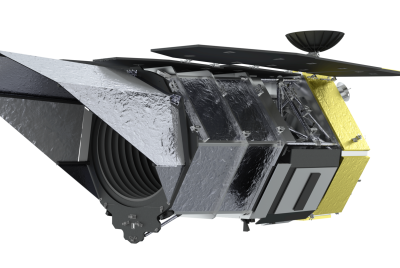
The FCC's Space Bureau approved the application from Reflect Orbital on July 9, clearing the company to launch and operate a demonstration satellite called Eärendil-1 for up to two years. The spacecraft carries an 18-by-18-meter, or roughly 59-by-59-foot, steerable mirror designed to redirect sunlight toward a chosen location on the ground after dark, producing a beam of light roughly five kilometers wide. According to the company, the illumination would be comparable to a full moon spread across several thousand acres, though anyone standing directly in the beam's path could see the satellite shine up to four times brighter than a full moon.
Reflect Orbital has described Eärendil-1 as the first step toward a much larger commercial venture: a planned constellation of as many as 50,000 mirror satellites the company hopes to have in orbit by 2035, offering what it calls "sunlight on demand." The company has pitched potential uses including powering solar farms around the clock, extending daylight hours for agricultural operations, supporting nighttime construction and industrial projects, and assisting search-and-rescue missions during emergencies.
The July 9 approval applies only to the single demonstration satellite and does not authorize the larger constellation Reflect Orbital ultimately hopes to build. The FCC has said any future application for the full-scale system would be evaluated separately, on its own merits, consistent with Commission rules, policy and precedent. Even so, the decision to approve the initial test satellite has alarmed much of the astronomical community, which sees it as a first step toward a system that could fundamentally change the night sky if scaled up.
The American Astronomical Society, the leading professional organization for astronomers in North America, filed formal objections with the FCC ahead of the ruling and expressed dismay after the decision was announced. Among its concerns, the organization specifically warned regulators of the "potential for eye damage to amateur astronomers looking through reasonably sized telescopes" who might inadvertently view the satellite's reflected beam. The organization also criticized the FCC for not requiring a formal coordination agreement to protect federally funded astronomical observatories, a step the Commission has historically required when satellite operators' projects could interfere with facilities backed by the National Science Foundation.
In its ruling, the FCC's Space Bureau concluded that concerns raised by astronomers over light pollution, telescope interference and safety risks fell outside the agency's authority, since its regulatory role is centered on allocating use of radio spectrum rather than evaluating the broader physical or environmental effects of a satellite's operation. That reasoning has become a central point of contention for critics, who argue that no other federal agency currently has clear authority to weigh the night-sky and safety implications of commercial satellite mirror projects, leaving a regulatory gap that could persist even as companies like Reflect Orbital pursue much larger constellations.
The FCC's decision came after it received more than 1,800 public comments on Reflect Orbital's application, with a substantial share expressing concern about the project's potential effects on the night sky and the broader orbital environment. Despite that volume of opposition, the Commission moved forward with approval, a outcome that has left many in the astronomy and dark-sky advocacy communities frustrated with how the review process weighed competing interests.
Samantha Lawler, an associate professor of astronomy at the University of Regina in Saskatchewan, said the FCC's decision to approve the satellite left her deeply unsettled. "Really scares me," Lawler said of the ruling, pointing to what she and other astronomers see as a troubling precedent for how far a single company might be allowed to go in altering the appearance of the night sky before any agency asserts authority to intervene.
Eärendil-1 would not be the first spacecraft built to reflect sunlight toward Earth. In 1993, Russia's Znamya 2 satellite, carrying a 20-meter mirror, briefly swept a patch of reflected sunlight across parts of Europe as part of an early experiment in the same basic concept. What distinguishes Reflect Orbital's project, astronomers say, is the company's ambition to turn the concept into a large-scale commercial service, rather than a one-off demonstration, with a proposed constellation large enough that some astronomical modeling suggests it could raise the natural brightness of the night sky by as much as 200% to 300% if fully deployed.
Light pollution from a constellation of that scale would pose challenges well beyond amateur stargazing. Professional observatories rely on dark night skies to conduct sensitive astronomical research, and even relatively small increases in background sky brightness can degrade the quality of data collected by ground-based telescopes. Astronomers have already raised similar concerns in recent years about the growing number of communications satellites in low Earth orbit, though those objects are typically far less reflective than a purpose-built mirror satellite designed specifically to redirect sunlight toward the ground.
For now, Reflect Orbital has not yet filed an application for its full 50,000-satellite constellation, meaning the broader debate over the project's ultimate scale and oversight remains unresolved. The company is expected to proceed with launching and testing Eärendil-1 under its two-year authorization, a period astronomers and regulators alike are likely to watch closely as a test case for how the U.S. government will handle future proposals involving large-scale orbital reflectors.
© Copyright 2026 IBTimes AU. All rights reserved.
- Recommended For You