Solar Eclipse and Perseid Meteor Shower Peak Set to Collide on the Same Day, August 12 in North America
Witness a Partial Solar Eclipse and the Peak of the Perseid Meteor Shower in One Day
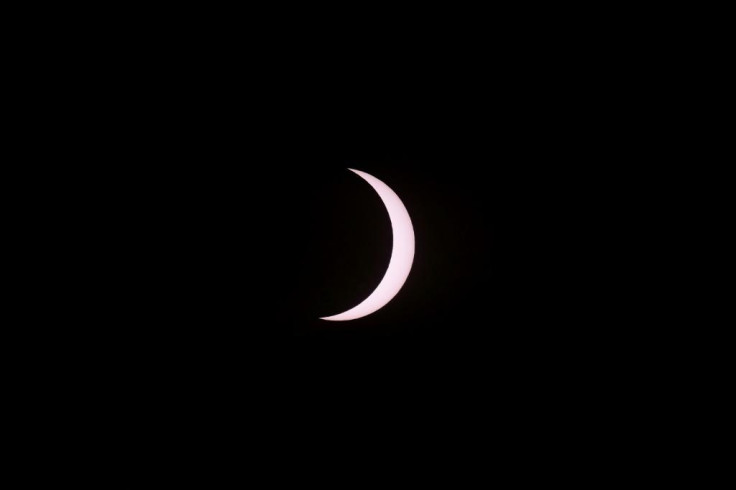
Skywatchers across North America and Europe are set to experience two distinct celestial events within a single day on Wednesday, Aug. 12, as a partial solar eclipse crosses much of the region before darkness brings the annual peak of the Perseid meteor shower under an especially dark, moonless sky.
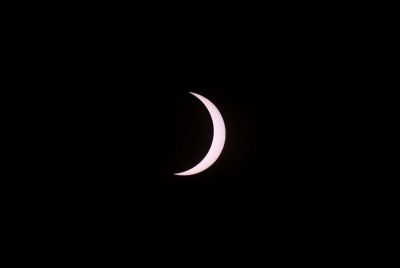
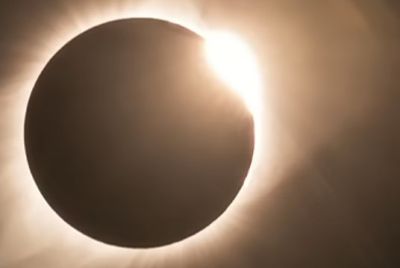
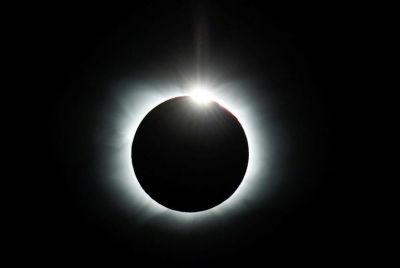
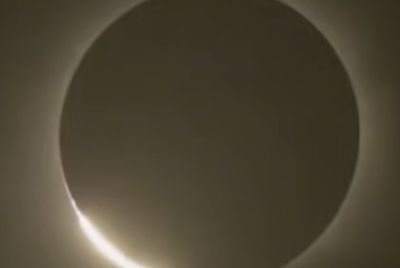
The solar eclipse will unfold first, during daylight hours. A partial solar eclipse will be visible from Alaska, eastern Canada, 26 U.S. states, and most of Europe, though the moon's darkest umbral shadow, the portion of the eclipse that produces total darkness, will miss North America entirely. A narrow path of total solar eclipse will instead pass through eastern Greenland, western Iceland and northern Spain, where the moon will completely block the sun for up to 2 minutes and 18 seconds.
Within North America, the deepest partial eclipse will occur in far northern Canada, while Alaska and the northeastern United States will offer the best viewing opportunities within the country. Fairbanks, Alaska, will see approximately 37% of the sun covered by the moon at around 8:27 a.m. Alaska Daylight Time. Within the contiguous United States, Presque Isle, Maine, will experience the largest partial eclipse, reaching roughly 28% coverage at approximately 1:50 p.m. Eastern time. Boston will see about 16% of the sun covered around 1:53 p.m., while New York City will experience approximately 10% coverage at roughly 1:54 p.m. Eastern time. Because the sun will be positioned high in the sky during the eclipse, viewers will not need to seek out any particular vantage point, with even an ordinary city sidewalk offering adequate viewing conditions.
The eclipse will be considerably more dramatic across the Atlantic. Beyond the narrow path of totality crossing Greenland, Iceland and Spain, much of the rest of Europe will experience a deep partial eclipse. London will see approximately 91% of the sun covered, while Paris will see roughly 92% coverage. Madrid and Barcelona both fall outside the path of totality, but will still experience a partial eclipse covering approximately 99% of the sun.
Proper eye protection remains essential throughout any stage of a partial solar eclipse, since it is never safe to view the sun directly without protection during a partial phase. Certified eclipse glasses meeting the ISO 12312-2 international safety standard are required for safe direct viewing, while any binoculars, cameras or telescopes used to observe the event need securely mounted solar filters attached to the front of their optics. Eclipse glasses saved from the total solar eclipse that crossed North America on April 8, 2024, remain usable, provided they show no scratches, pinpricks or other damage. Skywatchers are advised to check their glasses for damage by shining a flashlight through the lenses to confirm no light passes through, and to replace any glasses in question, purchasing only from reputable manufacturers listed on the American Astronomical Society's official directory of safe solar viewers and filters.
Once the eclipse concludes, skywatchers willing to stay outside after sunset will be rewarded with the second major celestial event of the day. The same new moon responsible for the eclipse will also leave the night sky free of moonlight as the Perseid meteor shower reaches its annual peak overnight between Aug. 12 and 13. That combination of a dark, moonless sky and the meteor shower's peak activity has generated particular excitement among astronomers this year, since bright moonlight typically washes out fainter meteors during peak viewing periods in other years.
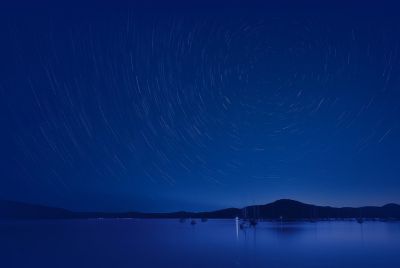
Under exceptionally dark, rural conditions, observers could see as many as 60 to 100 meteors per hour during the Perseids' peak, though a more typical rate under good conditions generally falls between 30 and 50 meteors per hour. Even observers in suburban areas with moderate light pollution should still enjoy a steady, visible stream of shooting stars throughout the night. The best viewing window for the Perseids generally falls after midnight, when Earth's rotation carries observers directly into the densest part of the debris stream left behind by Comet 109P/Swift-Tuttle, the parent comet responsible for the annual meteor shower.
Location plays the single biggest role in determining how many meteors a given observer will ultimately see. Traveling away from the light pollution of towns and cities significantly improves visibility, with national parks, designated Dark Sky Places, DarkSky Preserves and rural coastlines all offering considerably darker skies capable of revealing far more faint meteors than typical suburban neighborhoods. Locations of that kind tend to become crowded during the Perseids' peak each year, so anyone planning to camp overnight at a dark-sky location is advised to book accommodations well in advance. Once situated at a viewing location, allowing at least 20 minutes for eyes to fully adjust to the darkness, and avoiding phone screens during that adjustment period, significantly improves an observer's ability to spot fainter meteors. While Perseid meteors appear to radiate outward from the constellation Perseus, individual meteors can actually appear anywhere across the night sky.
Beyond the eclipse and the meteor shower itself, Aug. 12 offers additional celestial sights for those willing to spend the full day and night observing the sky. The Milky Way will arch prominently across the southern sky from sufficiently dark viewing locations, offering one of the year's best opportunities to observe the galaxy's structure with the naked eye. Venus will also reach a point in its orbit known as dichotomy, appearing extremely bright to the naked eye while showing only half-illumination when viewed through a small telescope, as the planet continues moving closer to Earth in its orbital path.
© Copyright 2026 IBTimes AU. All rights reserved.
- Recommended For You