Australia Records Its First Suspected Mass Bird Flu Die-Off as H5N1 Rapidly Spreads to New Species Nationwide
H5N1 Bird Flu Hits South Australian Coast, Raising Concerns for Wildlife
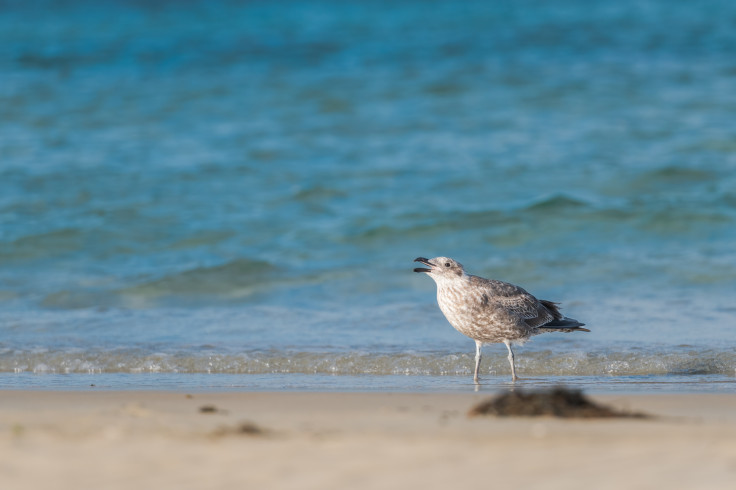
More than 80 dead and dying seabirds have been spotted off the South Australian coast in what authorities suspect is the country's first mass mortality event tied to the H5N1 bird flu virus, just six weeks after the disease first arrived in Australia.
Helicopter surveillance conducted Saturday revealed 49 dead greater crested terns on Baudin Rocks, near Robe, along with 35 additional sick terns showing signs of the disease, according to South Australian authorities. While some of the birds have been collected for laboratory testing, South Australia's chief veterinarian, Skye Fruean, said it was likely the first mass mortality event caused by the virus in the country.
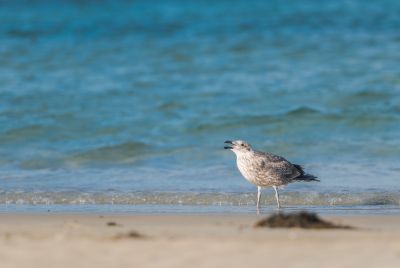
South Australia also reported three suspected positive cases involving other greater crested terns, including one bird found inland at Monarto, an area home to several poultry farms, suggesting the disease has begun moving away from the coastline into new inland territory. Three silver gulls were also reported as suspected positive cases, adding to an earlier silver gull that had already been confirmed positive by Australia's national science agency, the CSIRO, earlier Saturday.
Kate Millar, chief executive of the conservation charity BirdLife Australia, described the developments as a major turning point in the country's outbreak. "Very significant escalation of the bird flu situation in Australia, and a very bleak milestone," Millar said. "Sadly, we're at the beginning of a long and challenging battle and birds and wildlife are going to need all the help they can get."
Jack Gough, chief executive of the Invasive Species Council, said the pattern now emerging in Australia closely mirrors how the disease has spread in other regions previously affected by the virus. "Starting to take off" and "mirroring the experience in South America of early detections, then rapid increases in numbers and spread leading to mass mortality events in wildlife," Gough said. He added that the timing of the suspected mass mortality event, arriving just days after the virus was declared not eradicable in Australia, illustrates how quickly the outbreak could continue escalating. "We are still at the very early stages of this devastating disease spreading, but the possible first mass mortality coming just days after the virus was declared not eradicable indicates how quickly this could escalate," Gough said.
Fruean said there was currently no way to halt the spread of the virus once it establishes itself in a wild bird population, though she noted that ongoing surveillance efforts were successfully tracking the disease's progression. The latest developments came at the end of a significant week for the outbreak, with confirmed case numbers jumping by 20 over just a few days to reach a current total of 53.
Australia had been the last continent in the world to record the arrival of H5N1, a strain of avian influenza that has killed millions of birds and mammals across the globe since it began spreading widely in recent years. Victoria confirmed its first cases of the virulent strain this week, in a greater crested tern found in Portland, joining Western Australia, South Australia, New South Wales and Queensland, all of which have now recorded positive cases of the disease. Victorian authorities said Saturday that samples from five additional crested terns had been sent to the CSIRO's laboratory in Geelong for testing, with preliminary results suggesting further positive cases are likely.
The outbreak has also raised significant concern for one of Australia's endangered species. Five confirmed cases in birds at Seal Bay on Kangaroo Island have heightened fears for the welfare of the area's Australian sea lions, given that tens of thousands of seals have died from the virus in outbreaks elsewhere around the world.
Sean Dooley, national affairs adviser at BirdLife Australia, said the detection of the virus in silver gulls specifically marks a particularly worrying new stage in the outbreak's spread. "When people think of a seagull, they're almost always thinking of the silver gull," Dooley said. He noted the species' wide range and adaptability make it a potentially significant vector for further spread. "They're very common, and primarily they are coastal, but they do come inland and can turn up in Lake Eyre following floods," Dooley said.
Silver gulls represent the second Australian native species confirmed to have contracted the disease, following dozens of earlier detections in greater crested terns. Dooley said it is specifically the scavenging behavior of silver gulls that concerns experts, since the birds commonly feed on dead or dying animals, a habit that makes them especially prone to picking up the virus from other infected birds. Dooley added that silver gulls also forage detritus from lakes and flooded areas, environments known to serve as breeding grounds for the disease. "There is such a large population of silver gulls, and they move into other habitats. They could be the vector that takes bird flu inland," Dooley said. "They're also really successful in urban areas and could bring the disease into those bird populations."
Because Australia is home to a high concentration of unique native bird species, scientists do not yet know how susceptible many of those species will prove to be to the virus, though experts see no clear reason to expect Australian birds would fare better than bird populations affected overseas. Species that flock around water have historically suffered the heaviest losses in other countries, including sandwich terns, black-headed gulls and northern gannets in Europe, along with pelicans in Peru.
Dooley described the mood within BirdLife Australia this week as one of "trying to suppress that sinking, gut-churning feeling," noting that the coastal birdwatching season had been unusually strong this winter, with rare petrels appearing in significant numbers along the east coast. "Now that has been heavily tinged because probably among those were birds carrying H5N1," Dooley said.
© Copyright 2026 IBTimes AU. All rights reserved.
- Recommended For You